Clear Sky Science · en
Seasonal frost improves probiotic and nutrient availability in fermented vegetables
A Cold Surprise in Your Sauerkraut
Many people think of frost as the enemy of fresh produce, but this study reveals an unexpected twist: a brief, natural freeze can actually improve the taste and nutritional qualities of fermented carrots and cabbage. By taking advantage of chilly autumn nights rather than fighting them, farmers and chefs in colder regions may be able to offer more flavorful, nutrient-rich ferments while using fewer environmental resources.
Why Climate and Location Matter for Dinner
Modern food systems often rely on growing crops in huge, centralized hubs that may not match a plant’s preferred climate. Cabbage and carrots, for instance, were historically bred for cool, moist conditions, yet large amounts are now grown in arid places that demand heavy irrigation and fertilizers. This raises environmental concerns, from stressed water supplies to greenhouse gas emissions. The researchers asked whether leaning into colder climates, instead of working around them, could create a different kind of value: vegetables that become tastier and more nutritious precisely because they feel the cold.
Testing Frost in the Field and the Kitchen
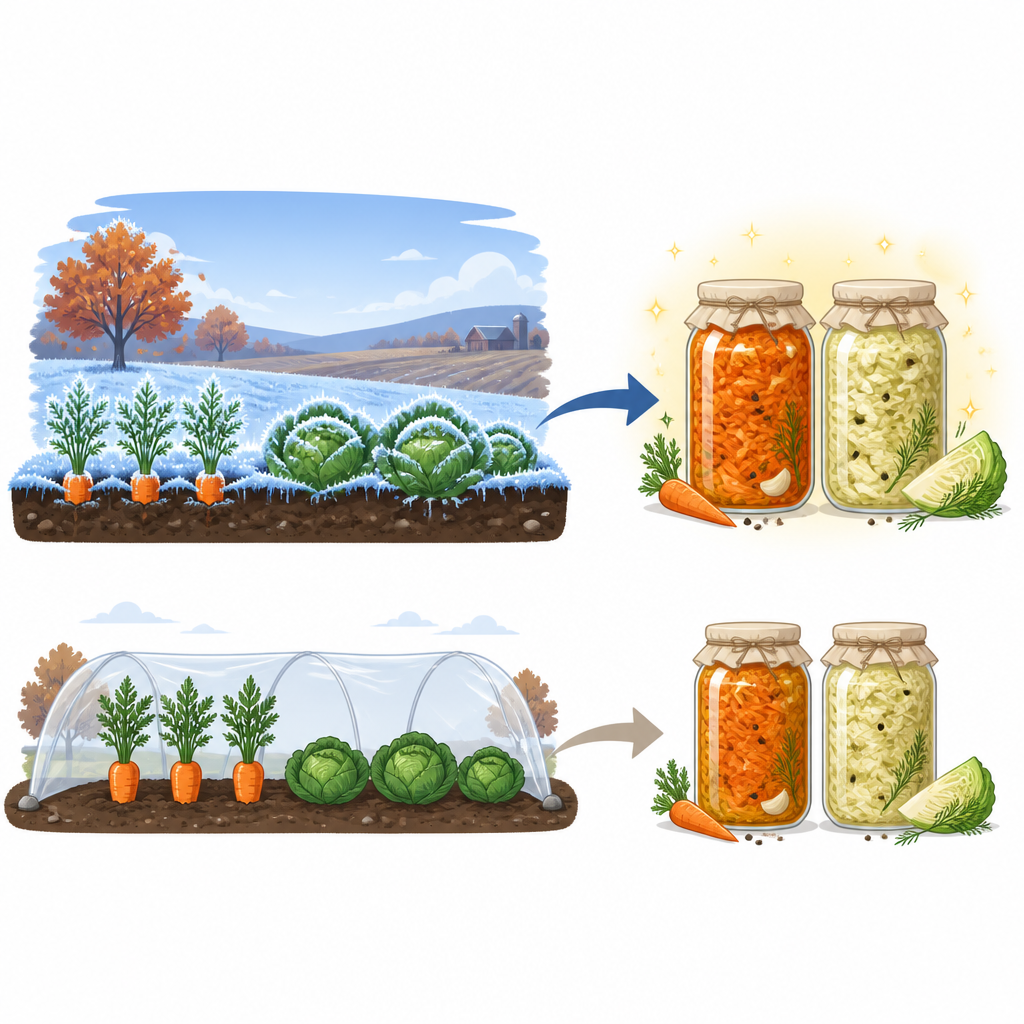
The team worked at a farm and restaurant hub in New York’s Hudson Valley, a region with crisp autumn weather and regular seasonal frosts. They grew the same varieties of carrots and cabbages side by side. Half the plants were left exposed to the first 12 hour frost of the season, while the others were shielded under protective tunnels. The vegetables were then turned into simple salt-only ferments, similar to sauerkraut and pickled carrots, and allowed to bubble away in a cool room until they reached the desired acidity.
Flavor, Friendly Microbes, and Frost
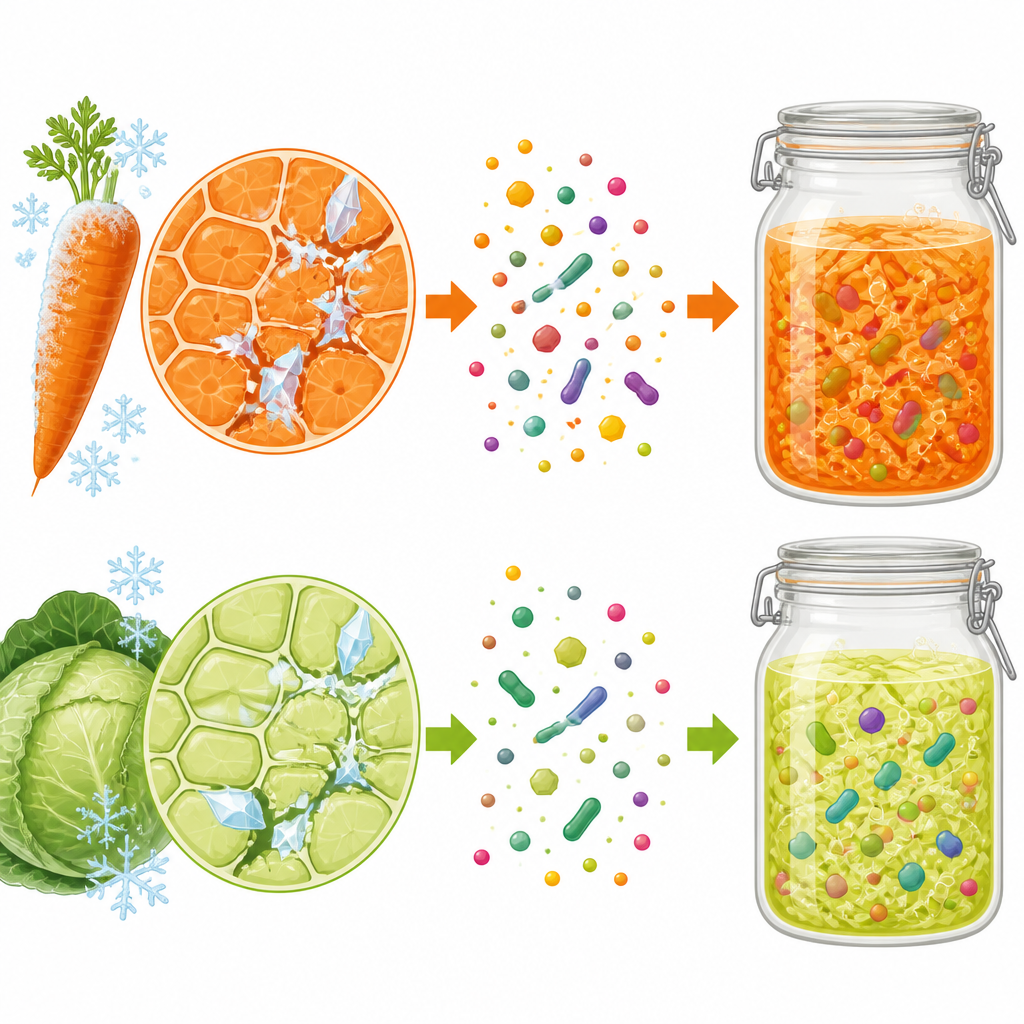
First, chefs tasted the finished ferments without knowing which ones had met the frost. They consistently preferred the frost-treated batches, describing them as brighter, cleaner, and ready to eat sooner than the protected ones. To understand why, the scientists sequenced the DNA of the bacteria and fungi living in the jars. Frost did not reduce the overall diversity of these microbes, but it gently shifted which species showed up. In frosted cabbage, for example, cold-loving bacteria such as Leuconostoc became more common, and in both cabbage and carrot ferments a hardy yeast called Debaryomyces often thrived. These microbes are known to handle cold and salty conditions well and can add layers of aroma and flavor during fermentation.
Vitamins Hidden in the Chill
The story became even more interesting when the team measured fat soluble vitamins inside the finished ferments. They focused on vitamins A and E, as well as two forms of vitamin K that are important for human health and often linked to leafy greens and fermented foods. Frost exposure never harmed vitamin levels in either crop. Instead, carrot ferments made from frosted roots contained more vitamin E and more vitamin K2, a form typically produced by bacteria during fermentation. In cabbage, vitamin levels stayed similar between treatments, but there were hints of higher vitamins A and D3 after frost. At the genetic level, microbes from frost-conditioned samples carried more of the genes involved in building vitamins such as K2 and B12, suggesting that the cold may favor vitamin producing strains or boost pathways that help them thrive.
What This Means for Farmers and Eaters
Putting all the pieces together, the study shows that a single natural frost at harvest can speed up fermentation, sharpen flavor, and in some cases raise key vitamin levels without damaging food safety or quality. For farmers in cooler regions, this turns a risky autumn freeze into a potential selling point: “frost-kissed” ferments that are both distinctive and aligned with the local climate. For eaters, it highlights how the journey from field to jar, including the touch of cold air, can shape the living microbes and nutrients in everyday foods like sauerkraut and pickled carrots.
Citation: Luzmore, A., Grauer, J., Barber, D. et al. Seasonal frost improves probiotic and nutrient availability in fermented vegetables. npj Sci Food 10, 149 (2026). https://doi.org/10.1038/s41538-026-00776-w
Keywords: fermented vegetables, seasonal frost, probiotic microbes, vitamin K2, sustainable farming