Clear Sky Science · en
Molecular sensory science combined with machine learning for exploring key odor-active compounds and aging-feature compounds of Shanxi aged vinegar
A Vinegar with a Story in Its Scent
Anyone who has cooked with vinegar knows its sharp, nose-tingling bite. But in Shanxi aged vinegar, a celebrated staple of Chinese kitchens, that sharpness is wrapped in layers of nutty, roasted, fruity, and woody notes. This study set out to decode that complexity: which tiny airborne molecules actually make Shanxi aged vinegar smell and taste the way it does, how they change during long aging, and whether modern machine learning can spot a chemical signature that reveals how long the vinegar has matured.
From Grain to Deeply Aged Vinegar
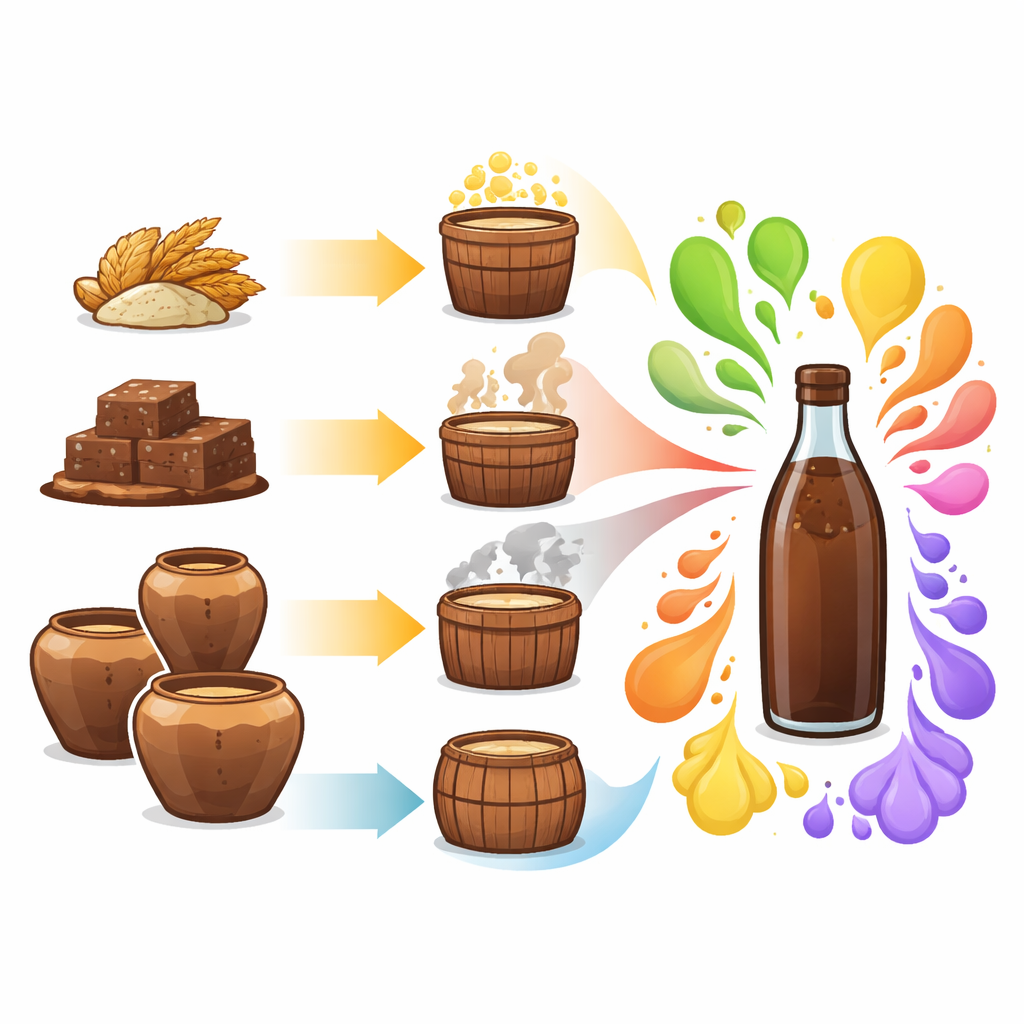
Shanxi aged vinegar begins with humble grains such as sorghum that are transformed through a series of traditional steps: saccharification, alcoholic fermentation, acetic fermentation, high-heat fumigation, and then slow aging that can last a year or longer. The authors traced 152 odor-active compounds across this journey. Some come straight from the grains and starter culture; others are created by microbes as they munch on sugars and amino acids; still others arise when heat and time drive brown, toasty reactions in the vats and aging casks. By following when each compound first rises in abundance, the team grouped them into sources tied to raw materials, to fermentations, or to the smoky fumigation and aging stages.
Finding the Few That Matter Most
Not every detected molecule actually shapes what we smell. The researchers used a combination of approaches from molecular sensory science to pick out the real heavy hitters. First, they measured precise concentrations for 132 odor-active compounds and calculated “odor activity values,” which compare how much of each compound is present to the minimum amount people can smell. Compounds whose values were above one are likely to matter. Second, they used an odor dilution method, gradually weakening extracts until panelists could no longer detect each scent. Bringing these lines of evidence together, they identified 47 key odor-active compounds that define the vinegar’s character.
Building and Taking Apart the Aroma
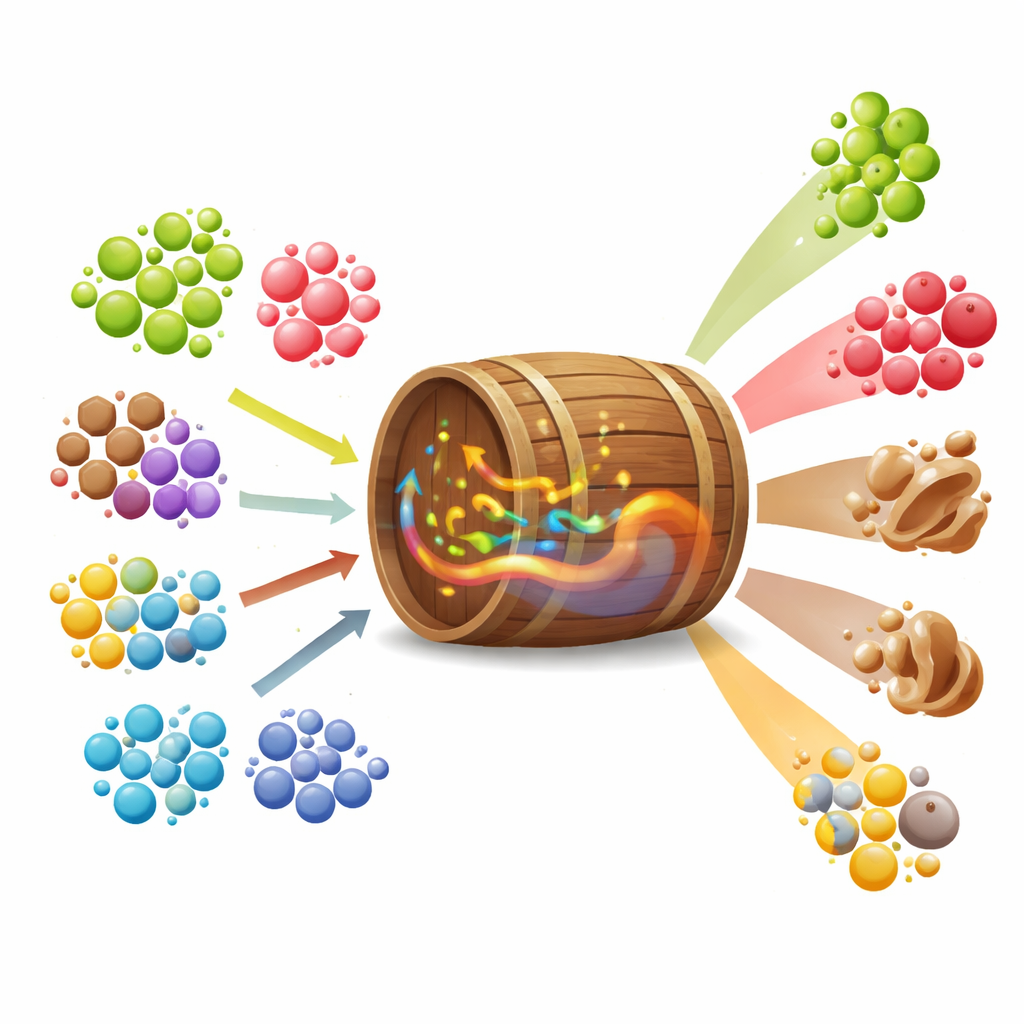
To test whether these 47 compounds truly recreate the real vinegar experience, the team mixed them at their natural levels into a simple vinegar-like base and had trained tasters compare the blend to genuine aged vinegar. The reconstructed aroma closely matched the original in sour, fruity, nutty, caramel, floral, and herbal impressions, confirming that the selection captured the essence of the product. Then the scientists went a step further: they prepared versions of the blend with whole groups of compounds left out—esters, acids, pyrazines, phenols, sulfur compounds, and more—and asked panelists to spot differences. When certain groups were missing, especially ketones, pyrazines, lactones, and acids, tasters reliably noticed. Removing these not only weakened the notes they are best known for, such as sourness or roasted smells, but also shifted other sensations, showing that aroma impressions can reinforce or mask each other in subtle ways.
How Aging Changes Smell and Taste
The work also reveals how time reshapes Shanxi aged vinegar. As the vinegar ages, some compounds increase—such as nutty, roasted pyrazines and certain phenolic molecules linked with smoky, woody impressions—while others, including several fruity esters and creamy lactones, fade. Sensory tests showed that aged vinegar develops stronger sour, nutty, roasty, sulfury, and overall “rich” notes than its fresher counterpart, while bright fruity and caramel tones become less dominant. One standout molecule, tetramethyl pyrazine, not only contributes a roasted, nut-like aroma but is also considered a health-related component; its concentration rose markedly during aging, in line with national quality standards for this vinegar.
Letting Algorithms Smell the Difference
To turn chemistry into a practical quality tool, the researchers fed measurements of key aroma compounds from vinegars aged for different lengths of time into several machine learning models. The goal was to see if a computer could predict how long a vinegar had been aged just from its smell-related chemistry. Among models tested, a method known as K-nearest neighbors performed best. Using an interpretability approach that ranks which features matter most for the model’s decisions, the team highlighted six compounds—methional, 1-dodecanol, acetoin, benzyl acetate, propanoic acid, and trimethyl pyrazine—as especially informative “aging markers.” Together, they form a sort of chemical fingerprint that could help producers classify batches, guard against fraud, and fine-tune flavor development.
Why This Matters for Your Kitchen
For everyday cooks and vinegar lovers, this study explains why well-made Shanxi aged vinegar tastes more than simply sour. A handful of specific molecules, produced by microbes, heat, and long aging, layer on nutty, roasted, fruity, floral, and woody notes. By identifying which compounds matter most and how they track with aging, the work offers a scientific basis for quality control and for future improvements in flavor. In short, it shows that the deep, complex aroma of this traditional condiment is no mystery at all—but the result of a precisely balanced bouquet of tiny molecules that science can now name, measure, and even predict.
Citation: Wang, J., Zhu, B., Wang, X. et al. Molecular sensory science combined with machine learning for exploring key odor-active compounds and aging-feature compounds of Shanxi aged vinegar. npj Sci Food 10, 118 (2026). https://doi.org/10.1038/s41538-026-00772-0
Keywords: Shanxi aged vinegar, food aroma, odor-active compounds, fermented foods, machine learning