Clear Sky Science · en
β-casomorphin-7: a review of occurrence, identification, techno-functionality, and effects on human health
Milk, Tiny Peptides, and Big Questions
Most of us think of milk as a simple, wholesome food. But inside its proteins lie tiny fragments that may subtly influence our digestion, immunity, and even the brain. This review focuses on one such fragment, a seven–amino acid peptide called beta‑casomorphin‑7 (βCM‑7), which behaves a bit like the body’s own opioid messengers. The authors sift through laboratory, animal, and human studies to ask two key questions: when and where is βCM‑7 formed in milk and dairy foods, and what does current evidence really say about its effects on human health?
From Cow Genes to Peptides in Your Glass
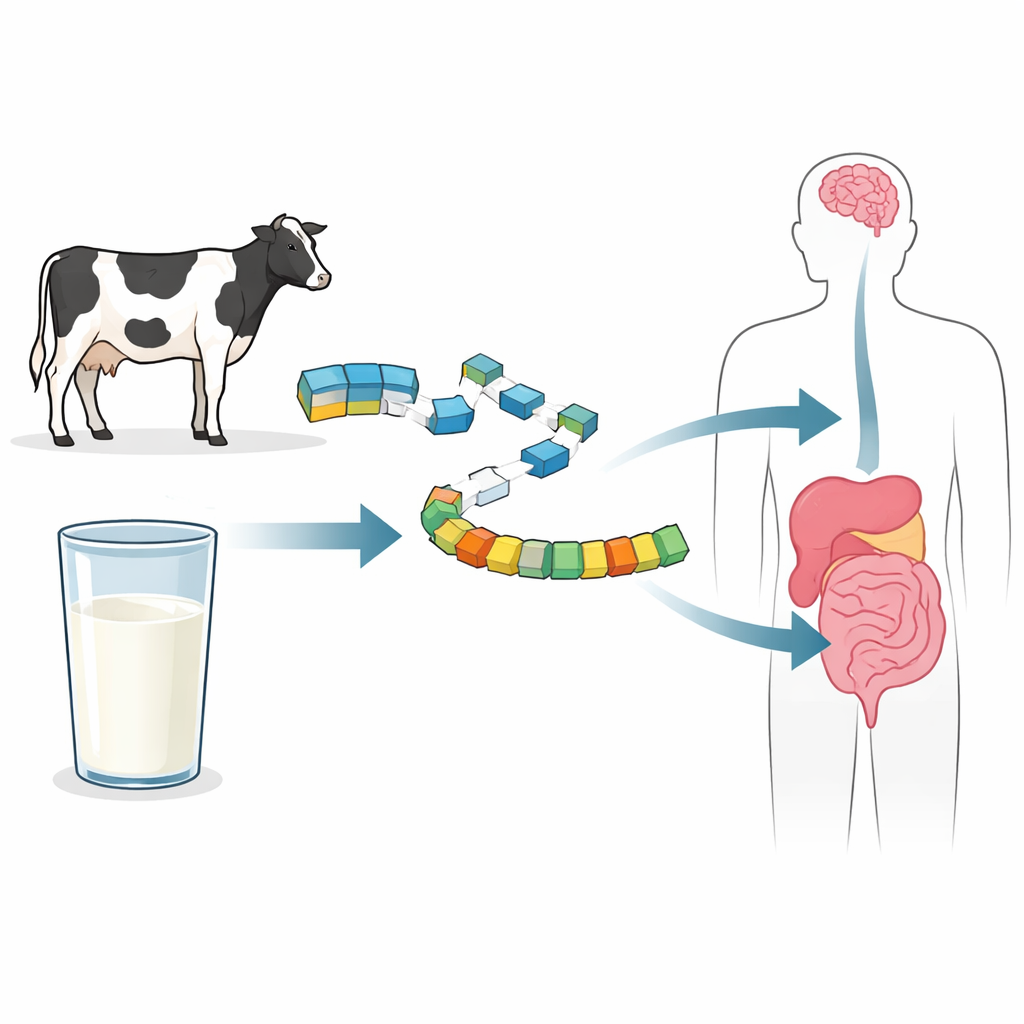
Milk proteins vary from cow to cow, and one particular protein, β‑casein, comes in several genetic versions. Two main forms, called A1 and A2, differ by a single amino acid at one position in the chain. That tiny change alters how digestive enzymes slice the protein: A1 β‑casein is more easily cut to release βCM‑7, whereas A2 β‑casein mostly does not. Breeds common in Northern Europe and many Holstein herds carry more of the A1 form, while Jersey, Guernsey, many Asian and African cattle, and other species such as goats, sheep, buffalo and camels predominantly produce the A2 form. As a result, the amount of βCM‑7 generated during digestion depends strongly on the herd’s genetics and the mix of β‑casein variants in the milk.
Where βCM‑7 Shows Up in Milk and Dairy Foods
Using modern analytical tools such as liquid chromatography coupled to mass spectrometry and immunoassays, researchers have measured βCM‑7 and related peptides in raw milk, infant formula, yogurt, and cheeses. In raw cow’s milk, βCM‑7 is usually present at very low levels, but its concentration can increase several‑fold after simulated digestion, especially in A1‑rich milk. Cheeses and fermented milks contain a wider variety of opioid‑like peptides released by starter cultures and ripening microbes; some blue and Gouda‑type cheeses, made from milk containing both A1 and A2 variants, show measurable βCM‑7 as well as longer precursor fragments. Processing steps matter too: heat treatment can change how easily enzymes later chop β‑casein, while fermentation and cross‑linking enzymes can either create or further break down βCM‑7, so final levels in products are highly sensitive to recipe and processing history.
How βCM‑7 Travels Through the Gut
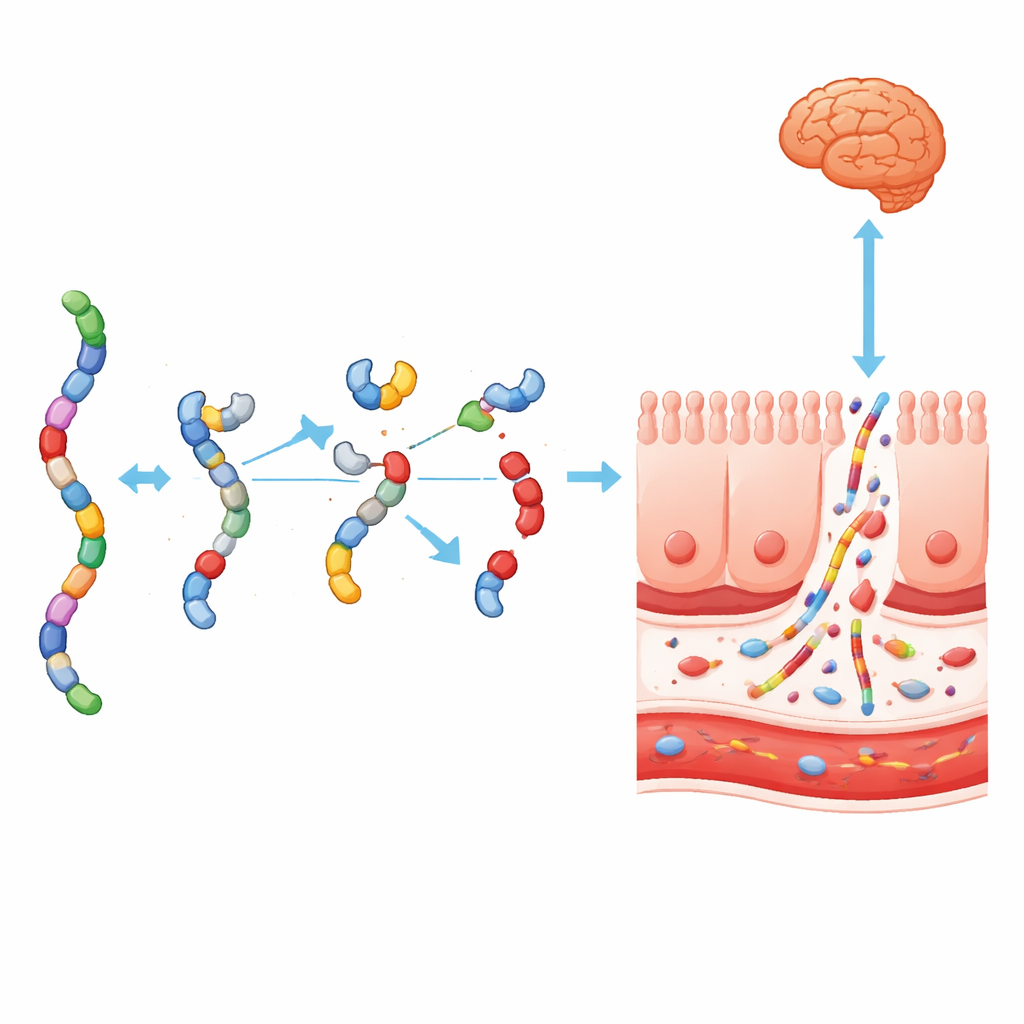
During digestion, stomach and pancreatic enzymes cut β‑casein into shorter pieces, and in A1 milk this can include βCM‑7. Because this peptide is rich in the amino acid proline, it is relatively resistant to many digestive enzymes and may survive long enough to reach the small intestine largely intact. There, specialized enzymes such as dipeptidyl peptidase‑4 gradually trim it, but in test‑tube and cell‑culture models a fraction of βCM‑7 and its fragments can cross the intestinal cell layer and enter the circulation. The peptide binds strongly to μ‑opioid receptors, which are found not only in the brain but along the gut and on immune cells. This has led to the idea that βCM‑7 may alter gut motility, mucus production, immune signaling, or—in theory—brain activity via the gut–brain axis. However, in healthy adults with normal digestive barriers, detectable levels in blood or urine after milk consumption are generally low or absent.
Health Concerns, Hints of Benefit, and the Evidence Gap
The review walks through a long list of proposed links between A1 milk or βCM‑7 and conditions such as digestive discomfort, heart disease, type 1 diabetes, sudden infant death syndrome, and neurodevelopmental disorders including autism and schizophrenia. Many animal and cell studies show plausible mechanisms: βCM‑7 can slow intestinal transit, shift gut immune markers, promote inflammatory signals in experimental models, and interact with neural receptors. At the same time, other experiments suggest potential benefits, such as antioxidant and blood‑pressure–lowering activities or helpful modulation of immune responses. For humans, though, most data are either short‑term trials focused on digestive symptoms, ecological comparisons between countries, or small observational studies using indirect markers. Overall, the authors judge the clinical evidence for both harm and benefit to be limited, inconsistent, and often confounded by other dietary and genetic factors.
What This Means for Shoppers and for Science
For consumers, the key message is that βCM‑7 is a normal digestive product of certain cow’s milk proteins whose levels depend on cow genetics, dairy processing, and individual digestion. Some people who feel uncomfortable after drinking regular milk report milder symptoms with A2‑only milk, but this does not prove that βCM‑7 causes disease in the broader population. For scientists and industry, βCM‑7 represents both a useful probe of how food‑derived peptides interact with the body and a challenge for responsible health claims. The review concludes that only large, carefully controlled human trials—taking into account β‑casein variants, product processing, and individual biology—can clarify whether βCM‑7 has meaningful long‑term effects on health, and whether breeding or processing strategies to reduce it are truly warranted.
Citation: Ali, A.H., Hachem, M., Najjar, Z. et al. β-casomorphin-7: a review of occurrence, identification, techno-functionality, and effects on human health. npj Sci Food 10, 116 (2026). https://doi.org/10.1038/s41538-026-00762-2
Keywords: beta-casomorphin-7, A1 vs A2 milk, milk peptides, gut–brain axis, dairy health effects