Clear Sky Science · en
Lacticaseibacillus rhamnosus H7 shapes flavor-associated microbial-metabolic networks in low-nitrite sausages: insights from a multi-omics correlation study
Why better-tasting sausages matter
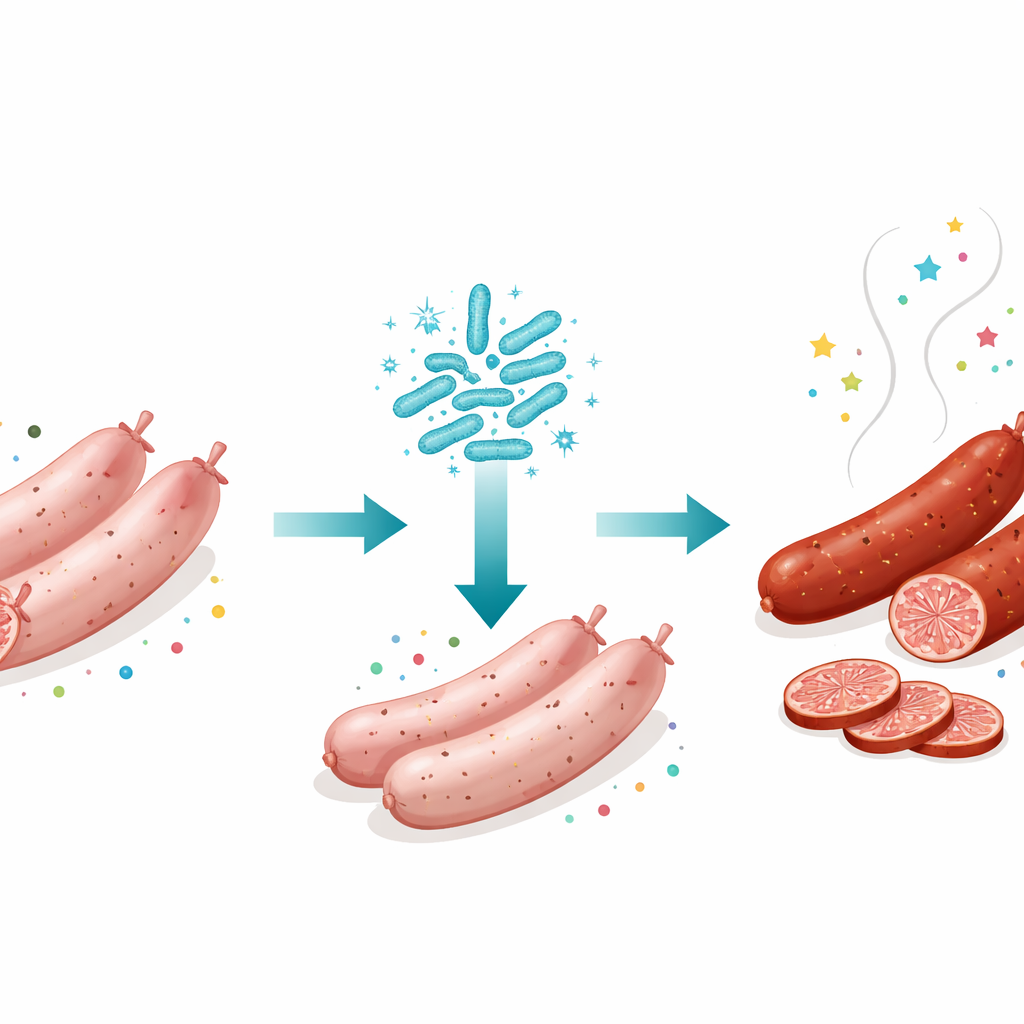
Dry cured sausages owe their color, safety, and signature tang to nitrite, a common curing salt. But nitrite can also form potentially harmful compounds, pushing food makers to cut back on its use. The catch is that low-nitrite sausages often lose their appealing flavor. This study explores whether a helpful bacterium, Lacticaseibacillus rhamnosus H7, can both help manage nitrite and rebuild rich, complex flavor in low-nitrite dry fermented sausages.
A helpful microbe joins the mix
The researchers started by making sausages with and without added nitrite and then introduced L. rhamnosus H7 at two different levels into some of the nitrite-containing batches. Over 12 days of fermentation, they tracked how the overall aroma changed using an electronic nose and gas chromatography–mass spectrometry, tools that can “smell” and identify dozens of airborne flavor molecules. They also monitored which bacteria were present, how proteins were broken down into free amino acids, and how fats and complex lipids were transformed. This multi-angle approach let them see not just what the sausage tasted like in the end, but how the living community inside it built that flavor.
Richer aromas from alcohols, acids, and fruity notes
By the end of fermentation, sausages containing L. rhamnosus H7 had clearly different aroma fingerprints compared with controls. Total volatile flavor compounds were higher, especially certain alcohols, acids, esters, and plant-like terpenes. For example, levels of phenylethanol (which gives rose-like notes), hexanol (green and nutty), and a compound called (E)-2-decenol appeared or increased only when the bacterium was added. Classic sausage acids such as acetic, hexanoic, and butanoic acids were also more abundant, and fruity esters like ethyl hexanoate and ethyl 2,4-hexadienoate rose sharply. Together, these shifts point to a fuller, more complex aroma—one that blends tangy, cheesy, meaty, and fruity impressions.
How protein and fat are quietly reshaped
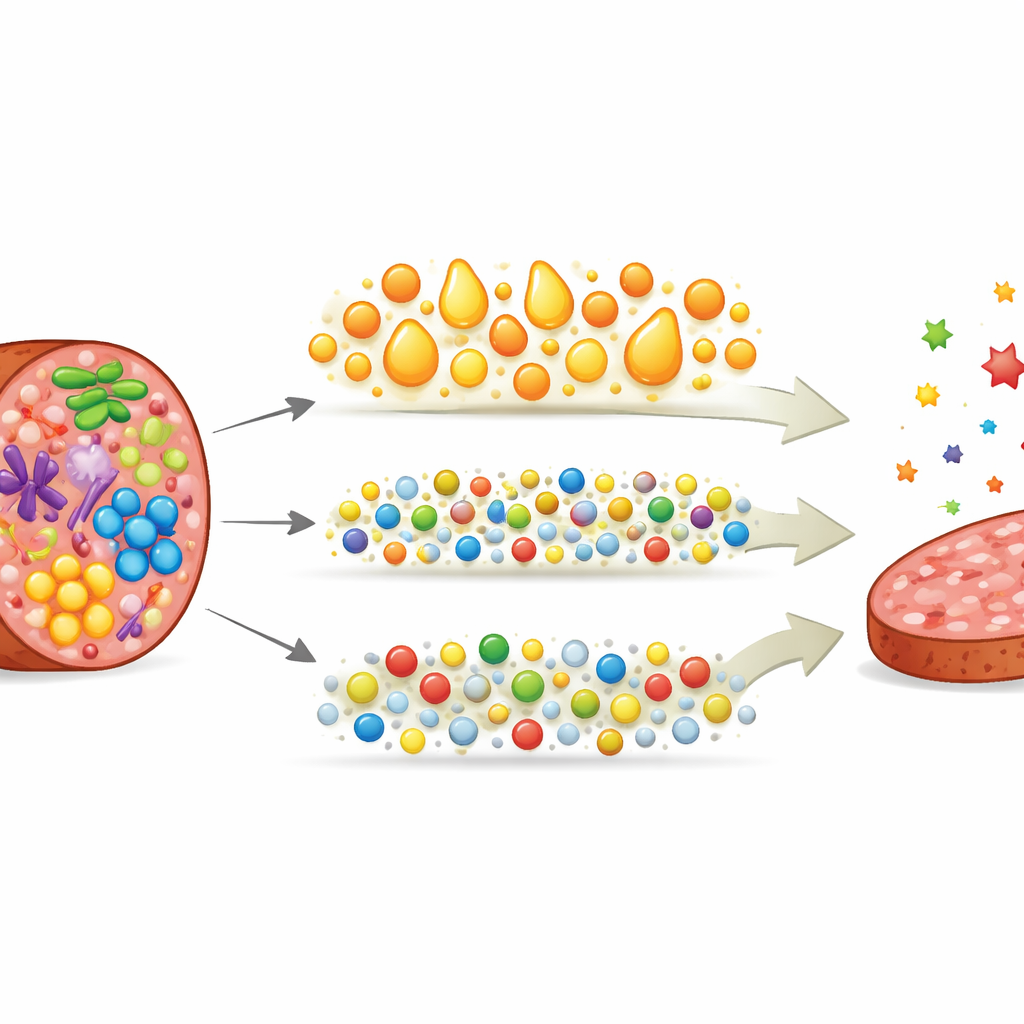
Flavor does not appear out of thin air; it is built from protein and fat. During fermentation, the team observed that total free amino acids increased across all sausages, showing active protein breakdown. Yet the inoculated sausages stood out: they released more amino acids overall while at the same time reducing those linked to bitter tastes. Key building blocks such as glutamic acid and alanine, important for savory notes, remained dominant, preserving the typical character of dry sausages. At the same time, detailed lipid profiling revealed the breakdown of certain phospholipids and triglycerides and the accumulation of specific lipid fragments in the inoculated groups. These changing fat molecules serve as raw material for many aroma compounds, hinting that the added bacterium is nudging fat metabolism down flavor-friendly paths.
A cooperative microbial flavor network
High-throughput DNA sequencing showed that L. rhamnosus H7 successfully colonized the sausage and became a major member of the microbial community without pushing out all native “good” bacteria. Beneficial genera such as Weissella, Lactococcus, and Latilactobacillus persisted and even seemed to thrive alongside it. Statistical links suggested that L. rhamnosus H7 was positively associated with Weissella species, which are known to help release amino acids and shape aroma. Correlation maps tied these microbes to shifts in certain amino acids, lipid types, and the rise of hallmark flavor compounds. The authors propose that enzymes from this microbial alliance steadily convert amino acids and fats into the alcohols, acids, and esters that define the finished product’s smell and taste.
What this means for safer, tastier cured meats
Put simply for consumers, adding L. rhamnosus H7 to low-nitrite dry sausages appears to “coach” the microbial team inside the meat so that it turns proteins and fats into more appealing flavors instead of dull or off notes. The study cannot yet prove each enzymatic step, but it offers a strong, data-backed sketch of how one carefully chosen bacterium can reshape the microbial and metabolic network to restore the complex aroma of traditional sausages while keeping nitrite levels in check. In the long run, such precision use of starter cultures could help the meat industry deliver safer cured products without sacrificing the tastes people love.
Citation: Yue, Y., Guo, S., Liu, H. et al. Lacticaseibacillus rhamnosus H7 shapes flavor-associated microbial-metabolic networks in low-nitrite sausages: insights from a multi-omics correlation study. npj Sci Food 10, 110 (2026). https://doi.org/10.1038/s41538-026-00757-z
Keywords: fermented sausage, lactic acid bacteria, food flavor, nitrite reduction, microbiome