Clear Sky Science · en
2-Ethylhexanol inhibit Botrytis cinerea by interfering in sugar and amino acid metabolism
Why keeping tomatoes fresh matters
Anyone who has bought a box of ripe cherry tomatoes knows how quickly they can turn soft, moldy, and unappetizing. Much of this waste is caused by gray mold, a fast-spreading fungus that spoils fruit after harvest. This study explores a gentle, vapor-based treatment using a naturally occurring substance called 2‑ethylhexanol, asking whether it can both stop the mold and help tomatoes stay firmer and fresher for longer without relying on harsh chemical sprays.
A gentle vapor with a powerful punch
The researchers focused on 2‑ethylhexanol, a fragrant compound already used in food flavorings and produced by some beneficial microbes and plants. Instead of spraying it on, they let its vapors fill the air around the fungus and the fruit, mimicking how it might be used in closed storage boxes. In lab dishes, rising doses of this vapor almost completely shut down the growth of Botrytis cinerea, the fungus that causes gray mold. Its threadlike filaments stopped expanding, and its spores failed to sprout the tiny tubes they need to invade plant tissue, revealing that the vapor acts directly on the pathogen.
Protecting tomatoes during storage
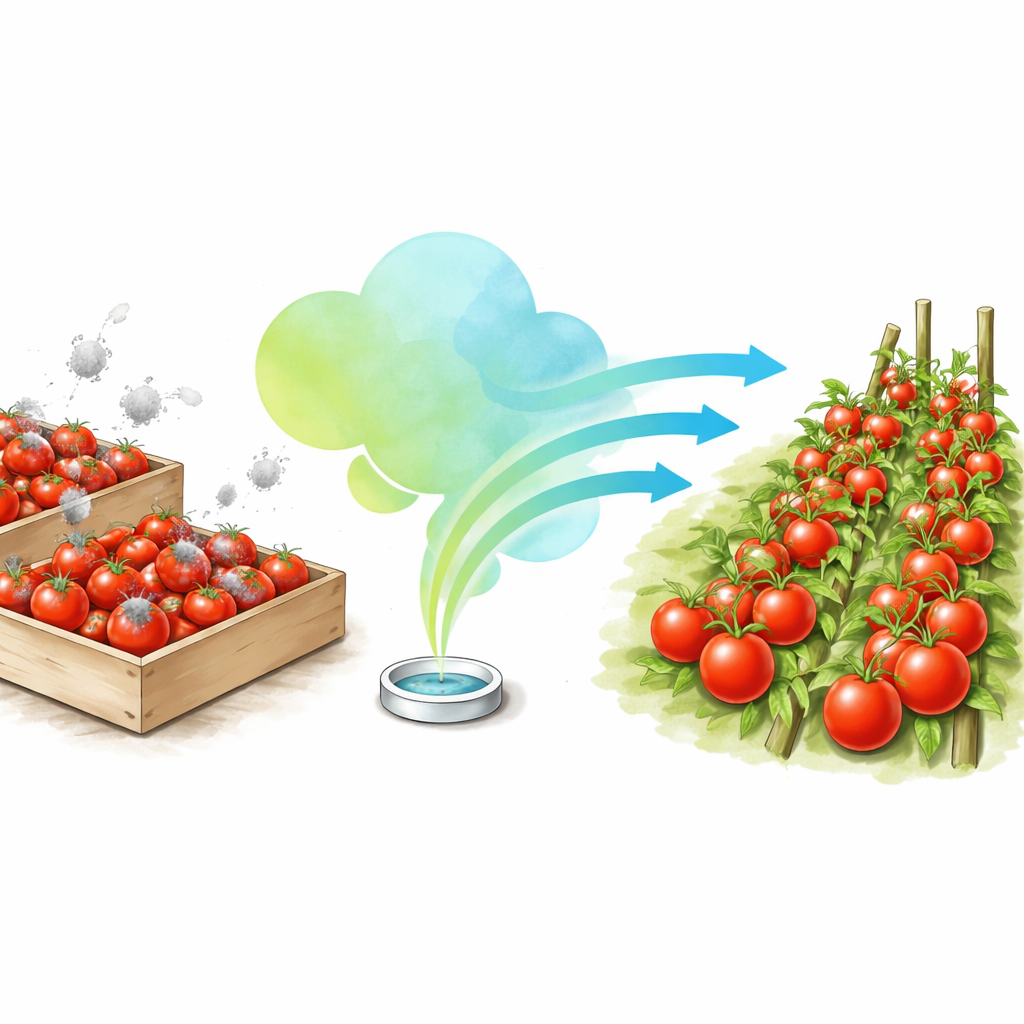
The team then moved from petri dishes to real fruit. Ripe cherry tomatoes were wounded and exposed to the gray mold fungus, with or without surrounding 2‑ethylhexanol vapor. In treated boxes, mold spots grew much more slowly and stayed smaller, cutting disease levels by roughly half compared with untreated fruit. When healthy tomatoes were stored with the vapor but not deliberately infected, they also fared better: fewer fruits decayed over sixteen days, they lost less weight, stayed firmer, and held on to more natural sugars. Measurements of breathing and ripening gases showed that treated tomatoes respired more slowly and released less ethylene, the plant hormone that drives softening and aging, indicating that the vapor gently delayed the ripening rush.
Helping fruit fight back from the inside
Beyond simply slowing metabolism, 2‑ethylhexanol appeared to strengthen the tomatoes’ own defenses. The researchers tracked several antioxidant enzymes that plants use as an internal cleanup crew to neutralize reactive oxygen molecules, which build up during stress and aging. In treated fruit, these enzymes—responsible for disarming aggressive oxygen and peroxide compounds—stayed more active over time. This suggests the vapor helped tomatoes better manage oxidative stress linked to both infection and ripening, giving them extra resilience in storage.
Starving and weakening the fungus

To see what was happening inside the fungus itself, the team examined which genes in Botrytis cinerea switched on or off after brief exposure to the vapor. They found thousands of genes changed their activity, with many involved in basic fuel and building-block use being dialed down. In particular, genes that help the fungus break down sugars and starch-like reserves into usable energy were strongly suppressed, as were genes tied to handling certain amino acids that aid stress tolerance. Microscopy confirmed that spores exposed to the vapor often had damaged outer membranes and were much less viable. Together, these changes paint a picture of a pathogen that is both physically injured and metabolically “starved,” leaving it less able to grow, cope with stress, or invade fruit tissue.
What this means for everyday fruit
In plain terms, the study shows that a naturally derived, food-approved vapor can both knock back a troublesome storage mold and help cherry tomatoes stay firm, sweet, and less prone to decay. 2‑ethylhexanol works on two fronts: it directly injures and starves the fungus, and it slows tomato aging while boosting the fruit’s own protective systems. While more work is needed to adapt this approach for large-scale packing and different fruits, the findings point toward safer, low-residue ways to keep fresh produce appealing for longer and reduce waste from farm to table.
Citation: Wang, Z., Duan, W., Duan, B. et al. 2-Ethylhexanol inhibit Botrytis cinerea by interfering in sugar and amino acid metabolism. npj Sci Food 10, 106 (2026). https://doi.org/10.1038/s41538-026-00753-3
Keywords: cherry tomato storage, gray mold, natural antifungal vapor, postharvest disease control, food quality preservation