Clear Sky Science · en
Geochemical fingerprinting and machine learning for authenticating sparkling wine origins
Why Knowing Your Bubbly’s True Home Matters
When we pop a bottle of sparkling wine—especially a famous name like Champagne—we are paying not just for the drink, but for the place it comes from. Yet counterfeit bottles and misleading labels are increasingly common, threatening both consumers and honest producers. This study shows how tiny chemical traces in wine, combined with modern data analysis, can reliably reveal where a bottle was made, offering a powerful new tool to protect wine lovers and winemakers alike.
The Problem of Fake Bubbles
The global market for sparkling wine has grown rapidly, particularly in luxury segments. That success has attracted fraud: cheap wines can be passed off as prestigious ones, or bottles can falsely claim to come from protected regions such as Champagne or Burgundy. Traditional defenses—paper records, shipping documents, and official labels—can all be forged. Regulators and producers therefore need ways to test the wine itself, rather than the paperwork, to check whether the stated origin is genuine.
Reading the Land Inside the Wine
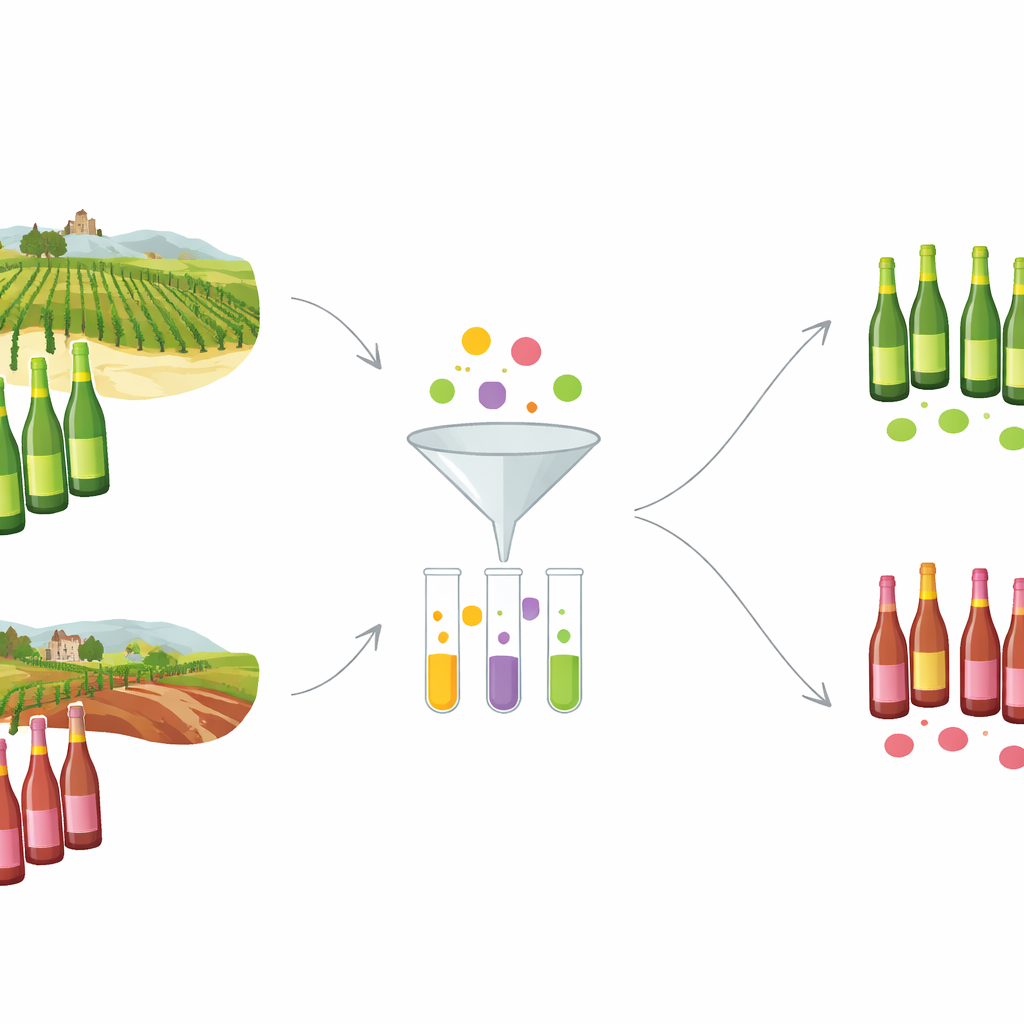
Every vineyard sits on a unique mix of rocks and soils, and those underground features leave faint but measurable marks in the grapes and, eventually, the wine. The researchers focused on French sparkling wines from Champagne and Burgundy, regions with contrasting geology: chalk in Champagne and clay-limestone in Burgundy. They measured a set of chemical clues, including the ratio of two forms of strontium and the amounts of several trace elements such as rubidium, manganese, and boron. These geochemical fingerprints capture the environmental “accent” of each region, in much the same way that a person’s speech reflects where they grew up.
Teaching a Simple Model to Spot the Difference
To turn these chemical patterns into a practical test, the team used machine learning—computer methods that learn from data. They chose a straightforward approach called logistic regression, favored because its decisions can be easily interpreted by regulators and producers. Using 75 authentic bottles (66 from Champagne and 9 from Burgundy), they repeatedly split the data into training and testing sets, and used a technique that balances the two regions so that the rarer Burgundy samples would not be overshadowed. Across thousands of test runs, the model achieved very high accuracy in telling the two regions apart, confirming that the wines carry clear signatures of their true origin.
Finding a Cheaper Chemical Shortcut
One obstacle to routine testing is cost. Measuring strontium isotope ratios with very high precision is extremely reliable, but each sample can cost around 300 euros. The study carefully compared all measured features one by one and in combination. Strontium isotopes alone identified origin almost perfectly, but the concentration of rubidium—much cheaper to measure—performed nearly as well. Using only rubidium still classified wines correctly over 90 percent of the time while cutting analytical costs by about 75 percent. Combining rubidium with a few other elements further improved performance, offering flexible options depending on budget and required certainty.
Beyond Champagne: A Wider Safety Net for Food
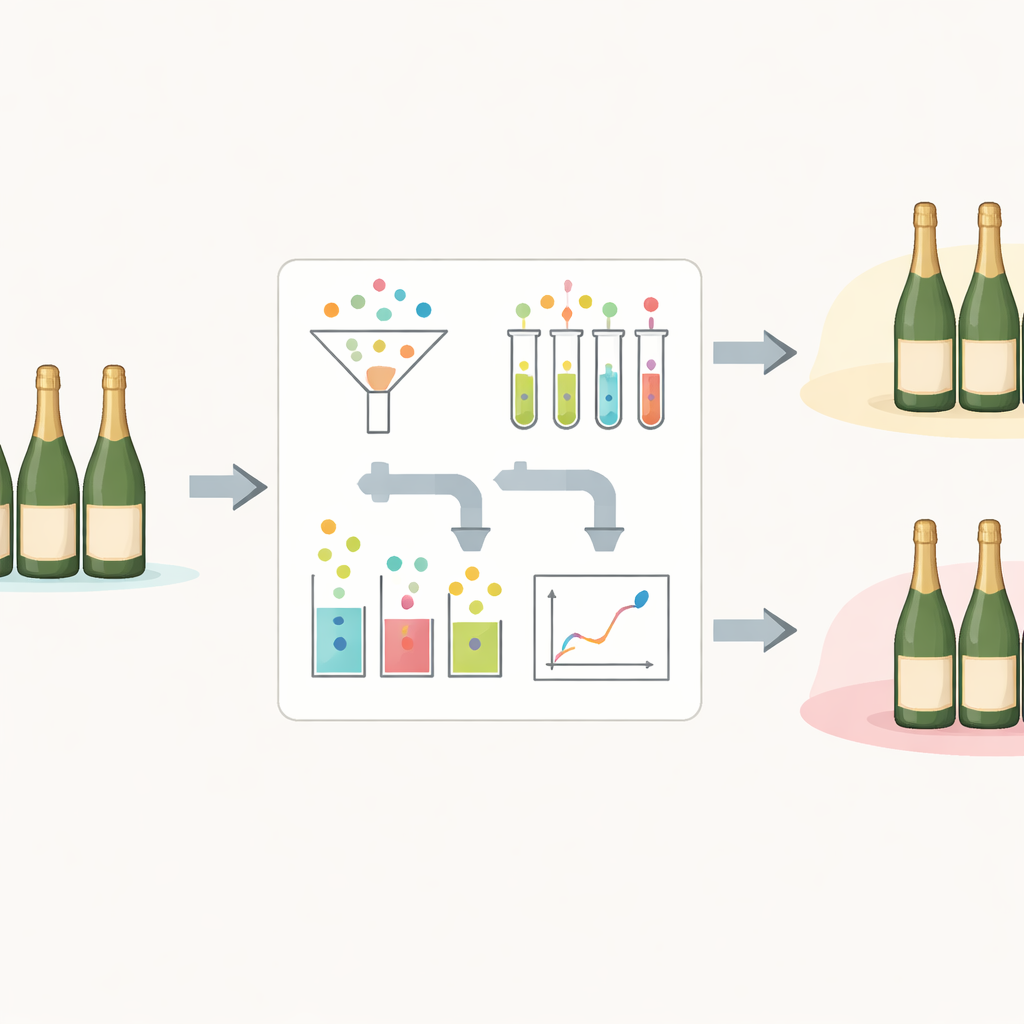
Although this work focused on sparkling wine, the framework is designed to be transferable. The same blend of chemical fingerprinting and transparent data analysis could help protect other high-value foods—such as olive oil, honey, or coffee—from origin fraud. The authors also highlight remaining challenges: their dataset covers only two French regions, and future work must consider changing climate, year-to-year variation, and consistent measurement standards across laboratories. Still, the study demonstrates that the story of the land is preserved in every bottle, and that by listening closely to these subtle chemical traces, we can make global food markets more honest, traceable, and worthy of consumer trust.
Citation: Lu, Y., Doerr, C. & Sebilo, M. Geochemical fingerprinting and machine learning for authenticating sparkling wine origins. npj Sci Food 10, 109 (2026). https://doi.org/10.1038/s41538-025-00635-0
Keywords: wine authentication, geochemical fingerprinting, sparkling wine, food fraud, machine learning