Clear Sky Science · en
Clozapine prescribing in Germany: temporal trends and regional variations, 2012–2022
Why this matters for mental health care
Clozapine is a powerful medicine for people with schizophrenia whose symptoms do not improve with other drugs. These patients often face severe distress, higher suicide risk, and frequent hospital stays. You might expect that such a helpful treatment would become more common over time, especially once guidelines highlight its importance. This study asks a simple but important question: in everyday practice across Germany, is clozapine actually being used where it is needed?
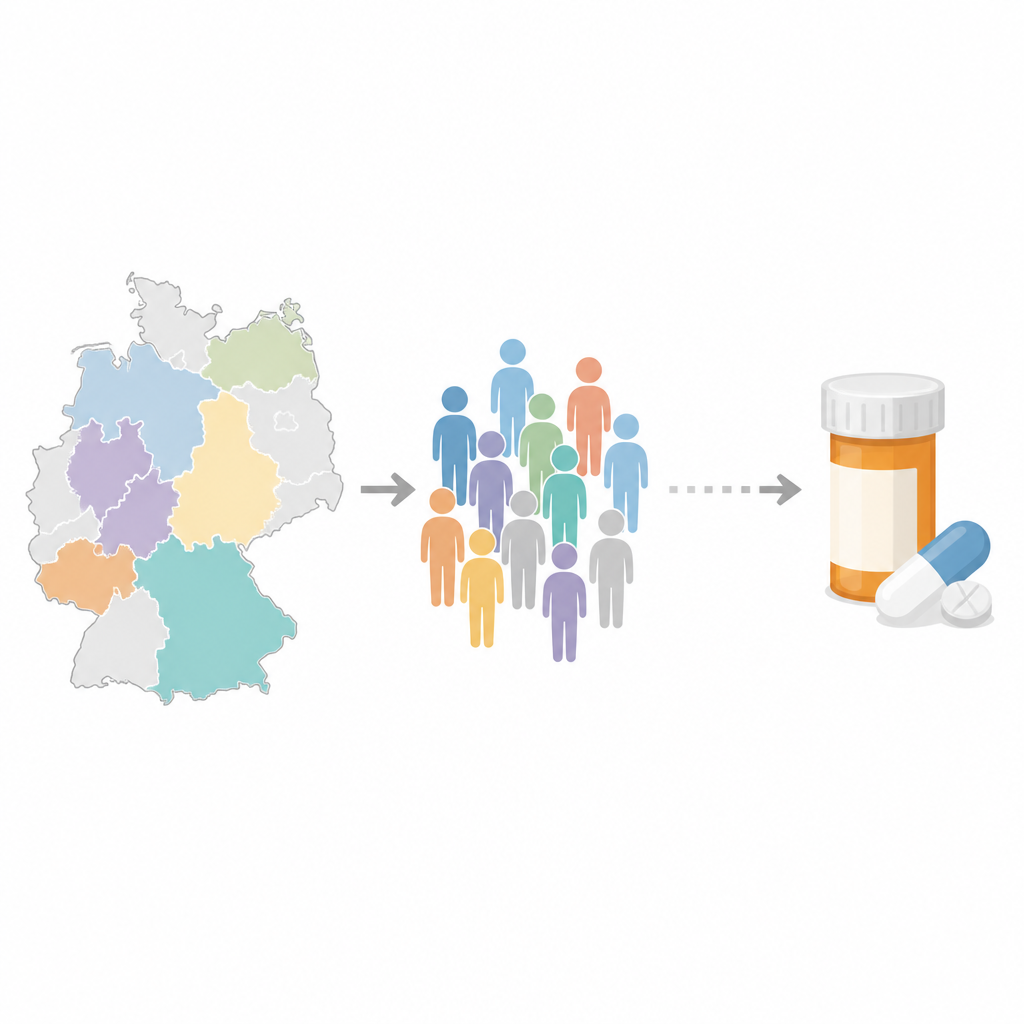
Looking at real life prescription data
The researchers used health insurance records from around one fifth of the German population between 2012 and 2022. These records show which medicines people received from doctors in outpatient care. Focusing on people under 65 years old, they counted how many individuals had at least one clozapine prescription each year, and how many started clozapine for the first time after at least a year without it. They also looked at differences by age, sex, city versus rural areas, local income level, and by small regions called districts.
Use of clozapine is going down, not up
Despite stronger recommendations in treatment guidelines since 2019, clozapine use did not increase over the decade. Instead, the share of people receiving it fell by 16 percent, and the number of new starters dropped by 41 percent. Men were more likely than women to receive clozapine, but both groups showed declines. The sharpest drops were seen in younger adults: women in their 30s and men in their late 20s to early 30s. These are ages when early and effective treatment can shape the course of illness for decades, so a decline here is especially worrying.
Cities, wealth, and local differences
Clozapine use also varied by where people lived. Large cities had the highest rates overall, but they also showed some of the largest declines over time. Regions with higher socioeconomic status saw steeper drops than more deprived areas. When the team zoomed in to the district level in 2022, the differences were striking. In some districts, only a handful of people per 100,000 received clozapine, while in others the rate was almost 40 times higher. Such a wide spread is unlikely to reflect real differences in how many people actually need the drug; it points instead to differences in how doctors and services approach this treatment.
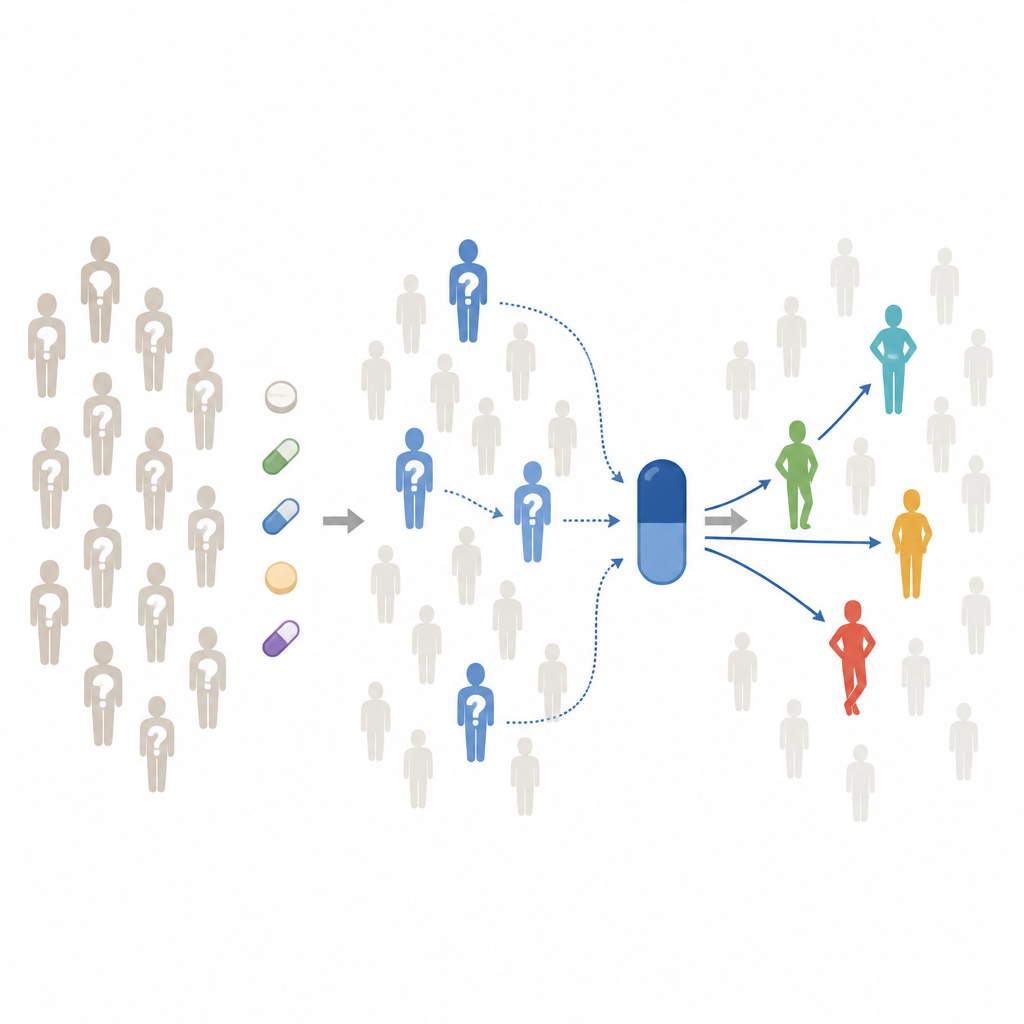
Possible reasons and what they mean
The authors consider several possible explanations. A slight decline in the number of people treated for schizophrenia over the same years might explain part of the trend, but not all of it. Overall antipsychotic use in Germany has not fallen, which suggests that patients are receiving other drugs rather than clozapine. Fewer people are starting clozapine, while those already on it seem to stay on treatment longer. Earlier studies and surveys suggest that many psychiatrists are wary of clozapine because of safety monitoring, side effects, bureaucracy, and stigma around severe mental illness, even though patients who take it often report high satisfaction.
What this means for patients and policy
In plain terms, the study concludes that clozapine appears to be underused across most of Germany, and that where a person lives strongly influences their chance of receiving it. At the same time, new rules that simplify blood monitoring and expert guidance on safer, less burdensome follow up may help remove some barriers. The authors argue that better training for psychiatrists, specialized teams for treatment-resistant schizophrenia, and stronger patient advocacy are needed so that more people who could benefit from clozapine are at least offered this option. The key message is that an effective, life-saving medicine is not reaching many of the patients who need it, and this gap calls for focused changes in practice and policy.
Citation: Scholle, O.H.F., Riedel, O., Qubad, M. et al. Clozapine prescribing in Germany: temporal trends and regional variations, 2012–2022. Schizophr 12, 44 (2026). https://doi.org/10.1038/s41537-026-00763-w
Keywords: clozapine, treatment-resistant schizophrenia, antipsychotic prescribing, Germany, regional variation