Clear Sky Science · en
Machine learning-based predictive models and subtypes patterns in peripheral blood of schizophrenia based on a machine learning computational framework
Why blood can help decode a complex mind disorder
Schizophrenia is a serious mental illness that can disrupt thoughts, emotions, and daily life, yet doctors still rely mostly on observing behavior to diagnose it. This study asks a simple but powerful question: can an ordinary blood sample reveal hidden biological patterns that help detect schizophrenia earlier and sort patients into more tailored treatment groups?
Looking for clues in a tube of blood
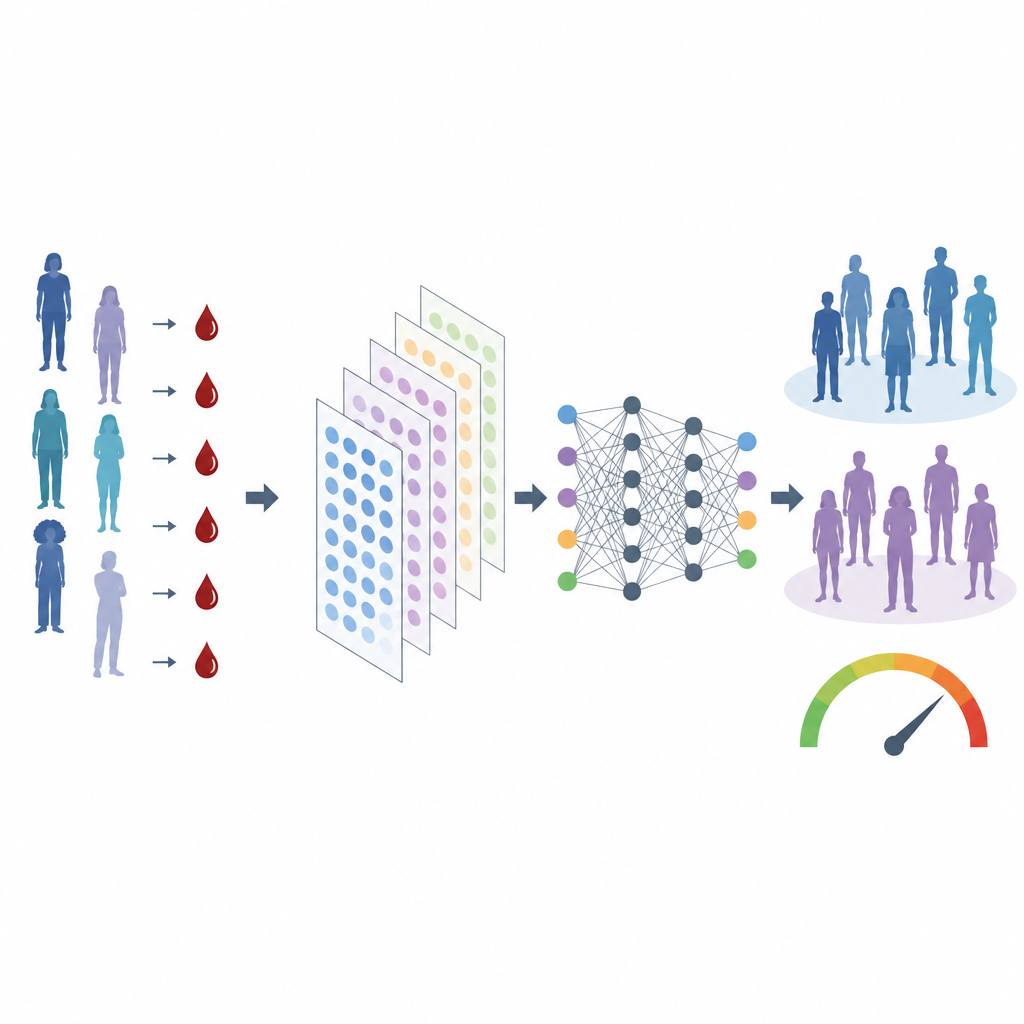
The researchers began by gathering several existing datasets in which blood from people with schizophrenia and healthy volunteers had already been analyzed for gene activity. Each gene can be thought of as a tiny switch that is turned up or down. By combining thousands of these switches from five separate studies and correcting for technical differences, the team created a large, unified map of gene activity in peripheral blood. They then searched for genes that consistently behaved differently in patients compared with controls, focusing on those linked to inflammation, immune responses, and how cells process fats and other molecules.
Teaching computers to spot a hidden signature
Because no human can easily see useful patterns across so many genes at once, the team turned to machine learning, a branch of computer science that lets algorithms learn from data. They tested 12 different machine learning methods and many ways of combining them, ultimately settling on a pairing that selected the most informative genes and then built a classifier around them. This process led to a compact set of 16 genes whose combined activity pattern could reliably distinguish schizophrenia patients from healthy people across eight different datasets. The authors then transformed this 16-gene “signature” into a graphical scoring tool, called a nomogram, that could in principle help clinicians estimate the likelihood that a given blood sample comes from someone with schizophrenia.
What the key genes say about the body
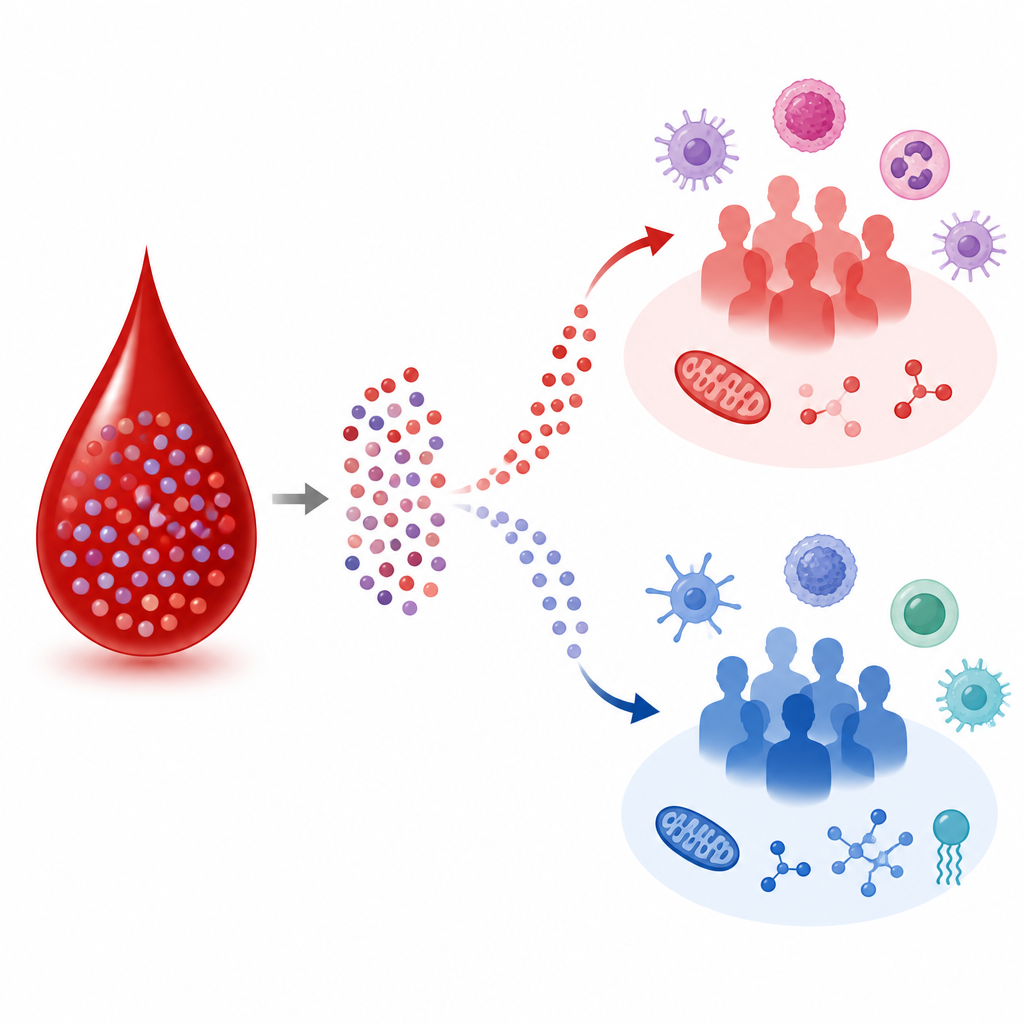
The 16 genes highlighted by the model are not random. Many are tied to the immune system, cell stress responses, and how the body handles fats and signaling molecules. One gene in particular, called AZI2, stood out as central to the signature. Its activity was strongly connected to pathways that control inflammation and immune cell behavior, and to how cells respond to signals that tell them to grow, divide, or die. When the team examined patterns of immune cells inferred from the blood data, they found shifts in several types of white blood cells in schizophrenia, supporting a picture in which the immune system is persistently altered in the disorder.
Two biological flavors of the same diagnosis
Having a diagnostic signature is useful, but schizophrenia is known to be highly varied from one person to another. To probe this diversity, the researchers used unsupervised clustering methods, which group samples by similarity without being told who is a patient or what their symptoms are. These methods split the schizophrenia group into two main blood-based subtypes, and further into finer subgroups. One pattern was more strongly linked to changes in metabolism, such as how cells use energy and fats, while the other was more tied to inflammation and immune activity. The groups also differed in sets of proteins and gene pathways related to blood clotting, brain signaling, and responses to infection, hinting that patients who share the same clinical label may in fact have different underlying biology.
What this could mean for future care
Taken together, this work suggests that a small panel of genes measured from a simple blood draw may help support schizophrenia diagnosis and, perhaps more importantly, reveal biologically distinct subtypes of the illness. While further testing in larger, carefully followed patient groups is needed before such tools can be used in clinics, the study offers a roadmap toward more personalized psychiatry, in which treatment decisions are guided not only by symptoms but also by the body’s molecular signals.
Citation: Li, Z., Sun, Q., Li, H. et al. Machine learning-based predictive models and subtypes patterns in peripheral blood of schizophrenia based on a machine learning computational framework. Schizophr 12, 46 (2026). https://doi.org/10.1038/s41537-026-00744-z
Keywords: schizophrenia, blood biomarkers, machine learning, gene expression, immune system