Clear Sky Science · en
Impaired bone healing upon neutrophil-specific adrenoreceptor beta 2 knockout in non-osteoporotic and osteoporotic mice
Why broken bones heal differently
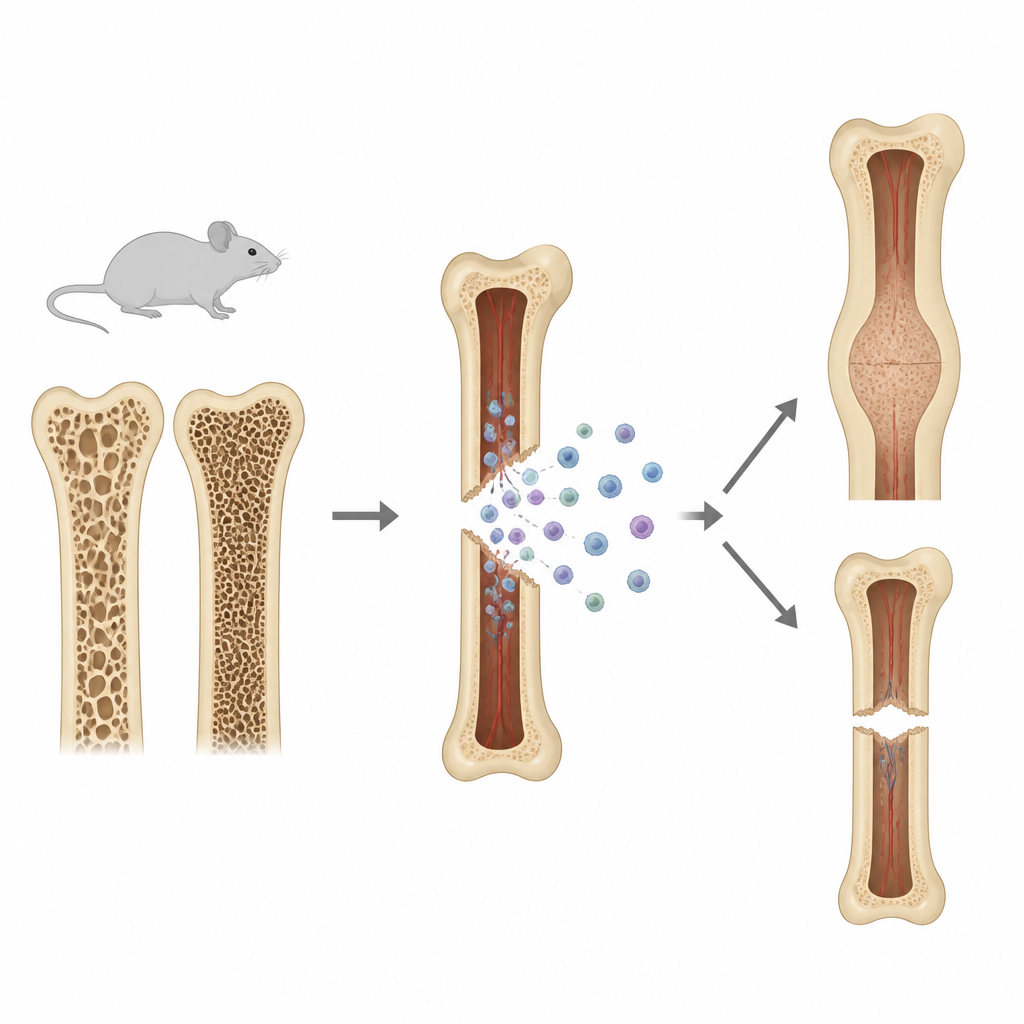
When a bone breaks, the body launches a rapid immune response to clean up damage and start repair. In older people, especially women after menopause, this process often slows, making fractures harder to heal. This study in mice asks a simple but important question: how do early immune cells that rush to a fracture help or hinder the rebuilding of bone, and what happens if one of their key control switches is turned off?
The quiet conversation between bone and immune cells
Bone is not a static material but a living tissue constantly rebuilt by cells that remove old bone and lay down new bone. Immune cells, better known for fighting germs, also send signals that nudge this balance toward bone loss or bone gain. After menopause, falling estrogen levels make the body slightly more inflamed all the time, tipping the scales toward bone loss and raising the risk of fractures. Earlier work showed that in osteoporotic mice, more short-lived immune cells called neutrophils crowd into the early fracture site and that blocking certain stress hormone signals could reduce this rush.
A targeted change in one immune cell type
To probe this further, the researchers bred mice in which neutrophils lacked a specific "receiver" for stress hormones, known as the beta 2 adrenergic receptor. These animals were compared with normal littermates. The team first looked at overall bone structure and the mix of immune cells in healthy, uninjured animals. They found that knocking out this receptor in neutrophils did not greatly disturb the broader immune system and caused only small changes in male bone structure, such as slightly thicker outer bone. Female mice with intact bones showed no clear differences, suggesting that everyday bone maintenance can cope with this targeted change.
When fractures reveal hidden roles
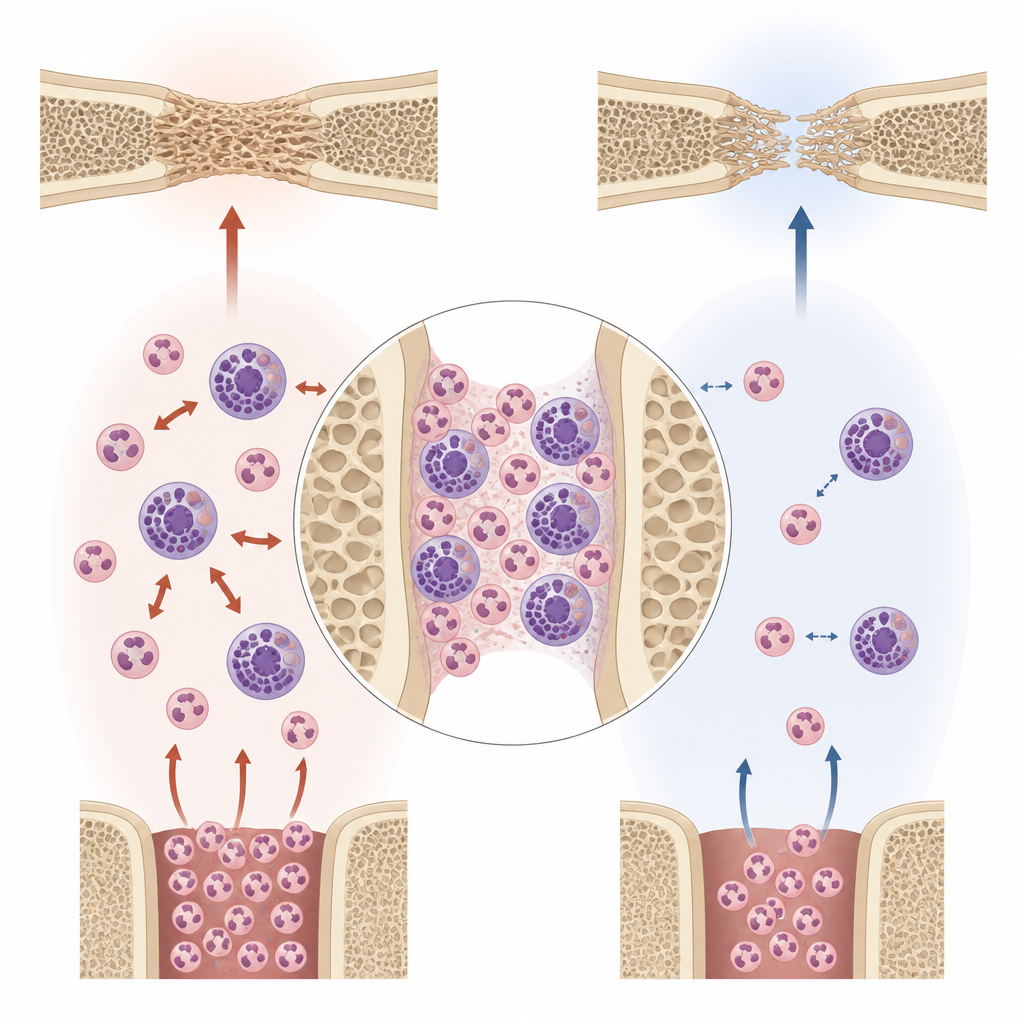
The real test came when the scientists created a standardized femur fracture in female mice, some with normal hormone levels and others made osteoporotic by removal of the ovaries. As expected, osteoporotic animals had weaker bones and healed more poorly than non osteoporotic controls. Surprisingly, mice lacking the stress hormone receptor on neutrophils did not heal better. Instead, in both healthy and osteoporotic conditions, these mice formed smaller, less complete bridges of new bone across the break, filled with more soft connective tissue. Early after fracture, far fewer neutrophils reached the injury site, while other immune cells such as macrophages appeared unchanged.
An unexpected partnership with mast cells
To understand why fewer neutrophils led to worse healing, the team isolated these cells from bone marrow and analyzed which genes were switched on or off. The altered pattern suggested reduced capacity for movement and activation, as well as changes in molecules that influence another immune cell type, the mast cell. Mast cells are best known from allergy, but they also shape bone turnover and fracture repair. In the mutant mice, mast cell numbers in bone and in the healing callus were reduced, and gene pathway analysis pointed to weaker activation of these cells. Microscopy showed neutrophils trapped inside mast cells at the fracture site, a recently described form of interaction. Together, the findings indicate that stress hormone signaling in neutrophils helps organize a finely tuned partnership with mast cells during the early phase of repair.
What this means for bone healing
For non specialists, the take home message is that the first immune cells to reach a broken bone are not just cleanup crews; they also send signals that guide other cells and set the stage for successful regrowth. Turning off one hormone switch on neutrophils, which seemed at first like it might protect fragile bone, instead disrupted their timing and their dialogue with mast cells, leading to slower and poorer healing in both normal and osteoporotic mice. The study suggests that both too much and too little immune activity can be harmful, and that future treatments for osteoporotic fractures will need to respect this delicate balance rather than simply blocking inflammation across the board.
Citation: Dieterich, S., Gläser, N., Kölbl, C. et al. Impaired bone healing upon neutrophil-specific adrenoreceptor beta 2 knockout in non-osteoporotic and osteoporotic mice. npj Regen Med 11, 24 (2026). https://doi.org/10.1038/s41536-026-00481-y
Keywords: bone healing, osteoporosis, neutrophils, mast cells, fracture repair