Clear Sky Science · en
Robust quality factor assessment of high-coherence superconducting qubits
Why this matters for future quantum computers
Quantum computers built from superconducting circuits are getting good enough that tiny imperfections in the materials now limit how long quantum information can survive. This paper tackles a surprisingly basic problem that slows progress: it is actually very hard to measure, in a reliable way, how good a single quantum bit really is. The authors introduce simple electrical tricks that make these measurements faster, more stable, and more informative, offering a clearer path to building better quantum hardware.
The problem with fickle quantum bits
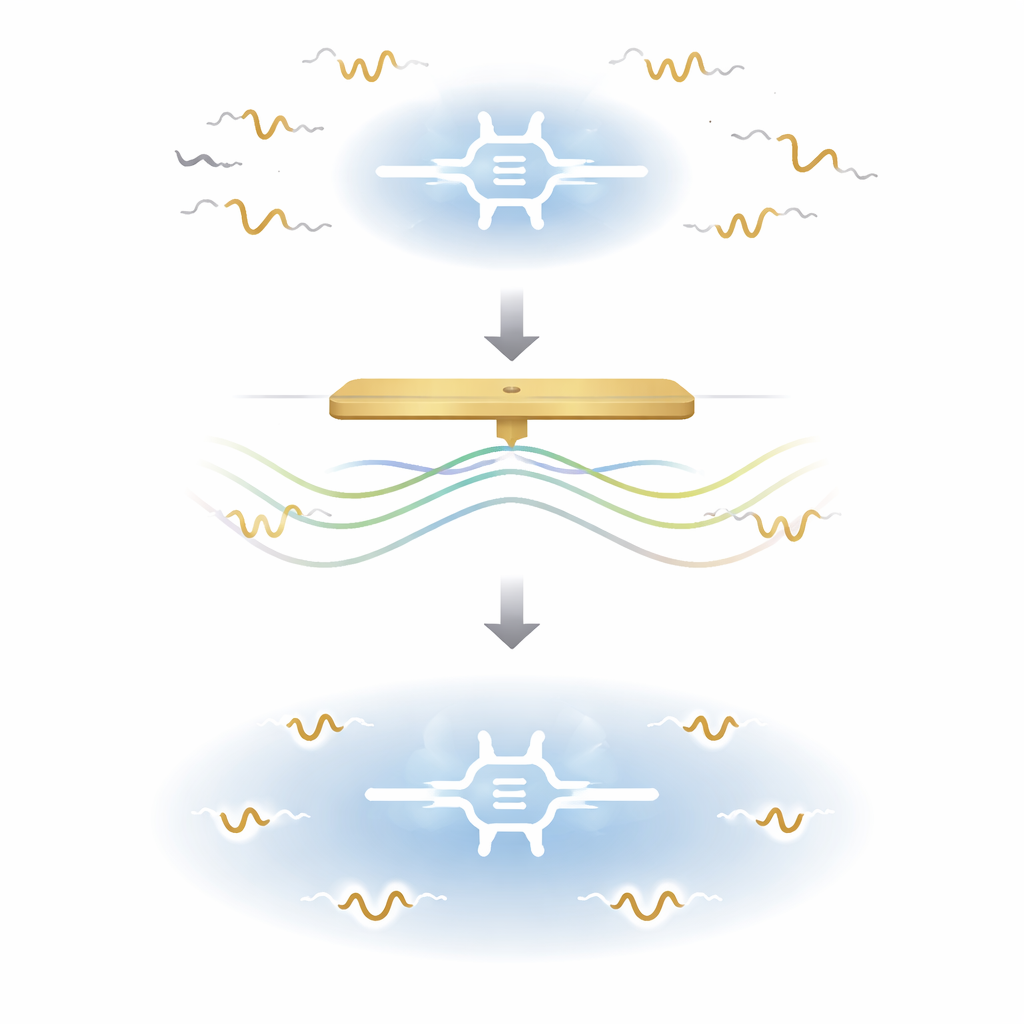
Superconducting quantum bits, or qubits, store information in delicate electrical states that eventually lose energy and relax back to rest. The key figure of merit is how long this takes, known as the relaxation time, and closely related to a "quality factor" that tells engineers how well the qubit holds its energy. In state-of-the-art devices, this time is already in the millisecond range. But there is a catch: it fluctuates dramatically over hours and days, making it difficult to decide whether a new material or manufacturing step has truly improved things. These fluctuations are believed to arise from countless tiny defects in the surrounding materials that behave like simple on–off systems and randomly interact with the qubit.
Using gentle nudges to probe hidden defects
The authors exploit a key property of these defects: their behavior can be shifted by electric fields. They place a small control electrode near each qubit, electrically isolated but able to apply fields across the surfaces where defects tend to live. By changing the voltage, they gently move the defect energies relative to the qubit, which in turn changes how strongly they steal energy from it. This allows the team to effectively “tune through” many different microscopic configurations that the qubit might otherwise encounter only slowly and unpredictably over time.
Two ways to tame the randomness
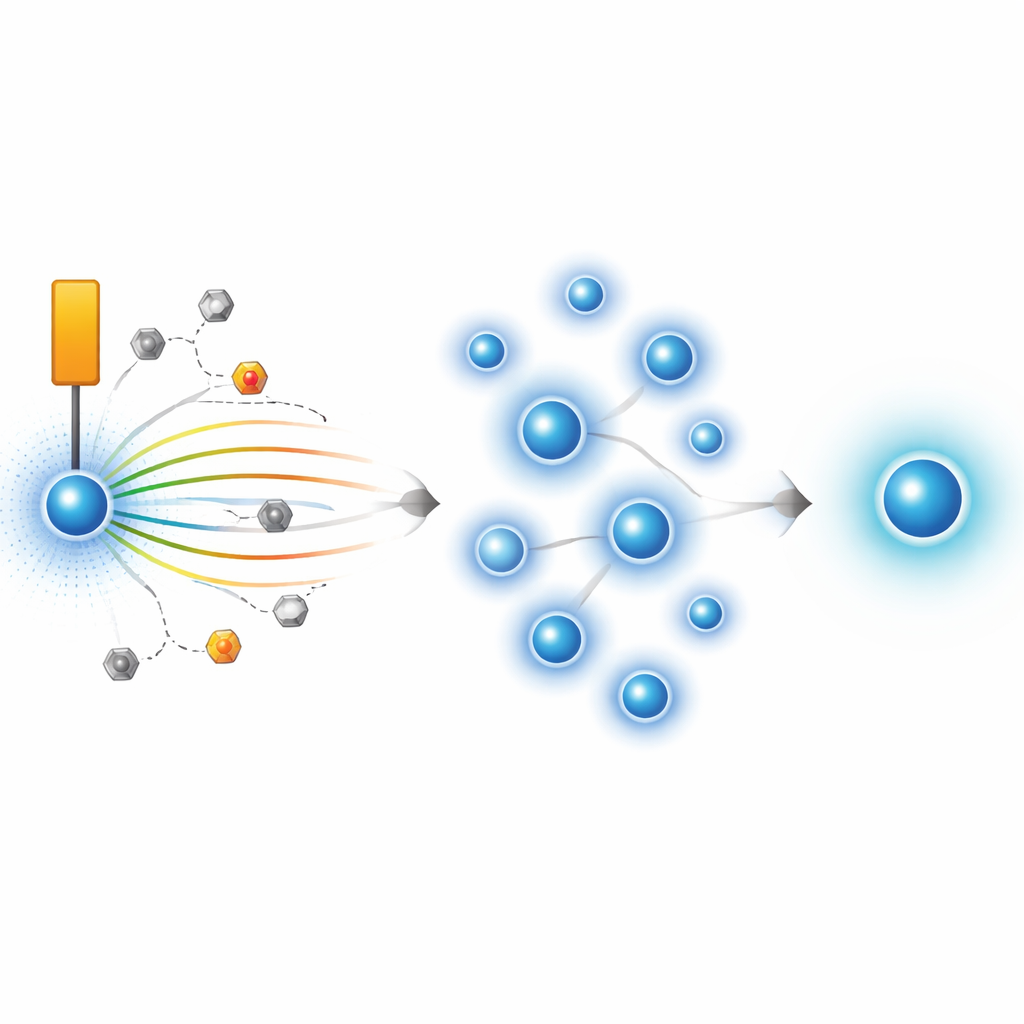
With this control handle, the researchers introduce two complementary measurement schemes. In the first, they apply a very slow, low-frequency alternating voltage during a relaxation-time experiment. As the field sweeps back and forth, it causes the nearby defects to sample many states while the qubit decay is being recorded. The result is a measured lifetime that is remarkably stable over time and serves as a robust average of all the relevant microscopic configurations. In the second scheme, they repeatedly pick a random static voltage, measure the qubit lifetime quickly, then jump to a new random setting. This “fast-random” approach reveals the full spread of possible lifetimes the qubit can have when different defects are brought into or out of resonance.
Seeing the full picture of qubit performance
Comparing many devices, the authors find that the stable value obtained with the slow alternating field matches the harmonic average of the lifetimes seen in the fast-random scans. This shows that the alternating-field method truly captures the underlying distribution of loss processes, while delivering a clean number that engineers can compare across devices and fabrication methods. They also demonstrate a practical optimization routine: by randomly searching over voltages until a long lifetime appears and then holding that setting, they keep a qubit’s relaxation time above one millisecond for nearly three days. In another set of experiments, the improved stability lets them cleanly uncover trends in quality factor versus qubit frequency and temperature, including subtle extra loss at intermediate temperatures that would have been obscured by ordinary fluctuations.
What this means for building better machines
To a lay reader, the main message is that the authors have found a way to turn an unruly, constantly changing property of quantum hardware into a reliable, quickly measured quantity. By using small electric fields to shuffle and average over the behavior of microscopic defects, they can characterize how “good” a qubit really is with far fewer measurements or devices. This not only helps compare different manufacturing approaches but also opens the door to actively choosing operating conditions that give each qubit a longer life. As quantum processors scale up and qubits become ever more refined, such control and clarity in measuring their performance will be crucial for turning laboratory demonstrations into dependable quantum machines.
Citation: Dane, A., Balakrishnan, K., Wacaser, B. et al. Robust quality factor assessment of high-coherence superconducting qubits. npj Quantum Inf 12, 62 (2026). https://doi.org/10.1038/s41534-026-01199-x
Keywords: superconducting qubits, qubit coherence, two-level systems, quantum hardware characterization, electric field control