Clear Sky Science · en
The risk of osteoporosis in COPD: An analysis of sex differences and mediating effects based on NHANES
Why Breathing Troubles Can Weaken Bones
Chronic obstructive pulmonary disease (COPD) is best known for making it hard to breathe, but its effects reach far beyond the lungs. This study explores how COPD is linked to osteoporosis—a condition where bones become thin and fragile—and why that link may be especially important for older men. Using large, nationally representative U.S. data, the researchers ask not only whether COPD and osteoporosis tend to occur together, but also what everyday factors, like long-term steroid medicines and poor sleep, might help explain the connection.
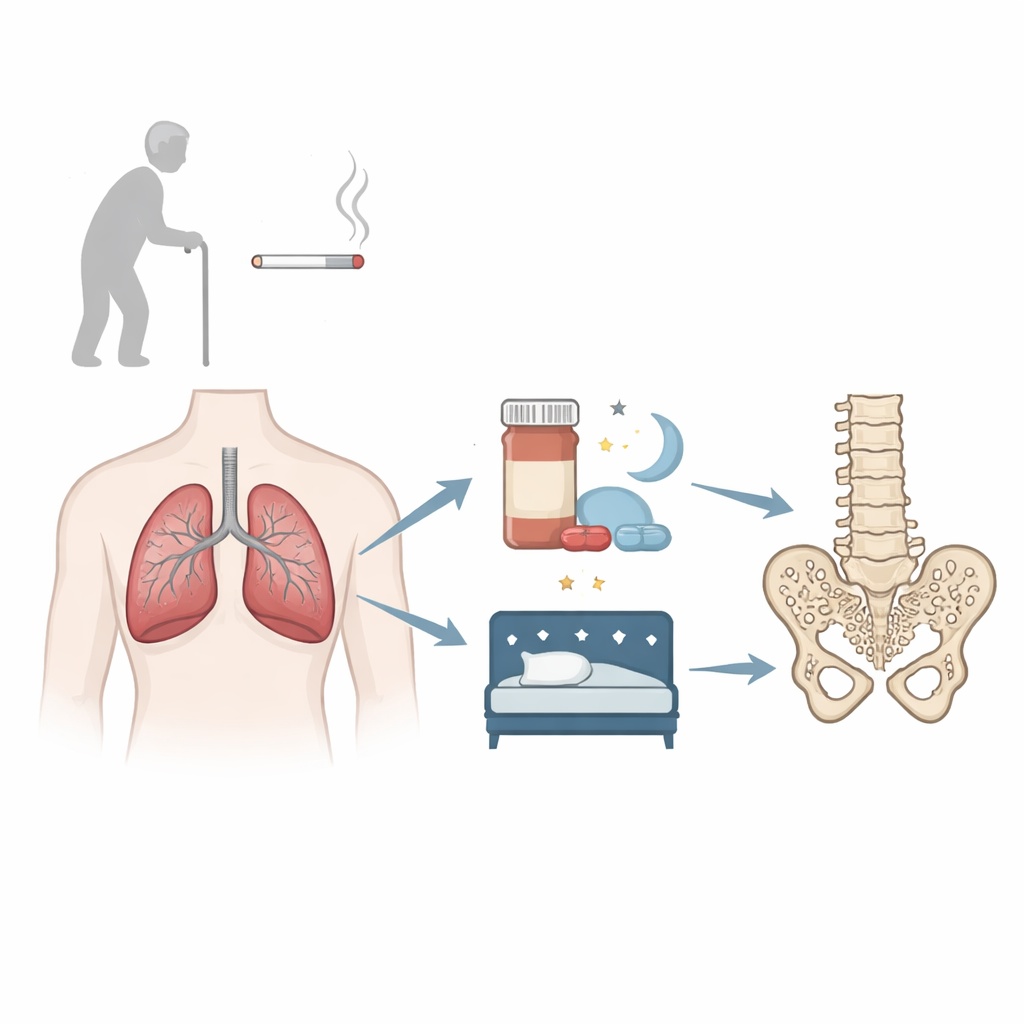
Who Was Studied and What Was Measured
The team drew on data from 8,274 adults aged 50 and older who took part in several cycles of the National Health and Nutrition Examination Survey (NHANES) between 2005 and 2018. Participants reported whether a doctor had ever told them they had COPD or osteoporosis. In addition, many underwent bone scans of the hip using a technique called DXA, which measures bone mineral density and offers an objective gauge of bone strength. The researchers also collected information on age, sex, race, smoking, body weight, exercise, income, education and common diseases like high blood pressure and diabetes, allowing them to separate the effect of COPD from these overlapping risk factors.
How Lung Disease and Bone Loss Are Connected
After taking account of major differences between people with and without COPD, the researchers found that COPD was still clearly associated with a higher chance of osteoporosis. Overall, older adults with COPD had more than twice the odds of reporting osteoporosis compared with those without COPD. When the team focused on bone scan results, they again found that people with COPD tended to have slightly lower bone density in the hip, supporting the idea that their bones were objectively weaker, not just more likely to be diagnosed.
Why Men May Face a Hidden Risk
When the researchers looked at men and women separately, an intriguing pattern emerged. Although osteoporosis is usually thought of as a women’s disease—especially after menopause—the relative impact of COPD on osteoporosis appeared stronger in men. Men with COPD had almost five times the odds of osteoporosis compared with men without COPD, while women with COPD had not quite twice the odds compared with women without COPD. At the same time, analyses based on bone density suggested clearer differences among women than men, hinting that diagnosis thresholds, typical bone levels and sample size may all shape how risk shows up in the data. Together, these findings suggest that bone problems in men with COPD may be underestimated in everyday practice.
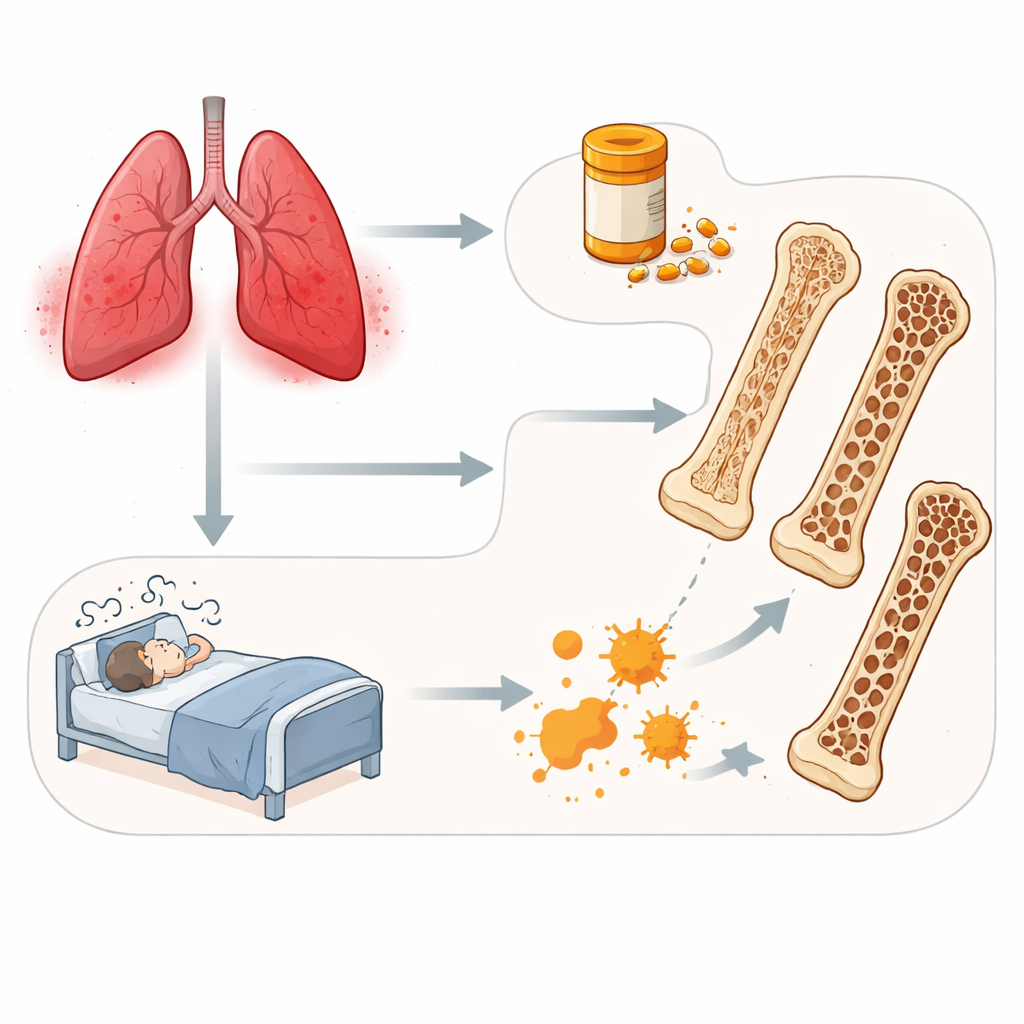
Medicines, Sleep, and Vitamin D
The study also examined three everyday factors that might help carry the influence of COPD to the skeleton: long-term use of steroid tablets such as prednisone, sleep problems and blood levels of vitamin D. People with COPD were much more likely to report prolonged prednisone treatment and chronic sleep difficulty, and both of these were linked to higher osteoporosis risk. Using mediation analyses, the authors estimated that prednisone use explained about 5% of the COPD–osteoporosis link and sleep problems about 9%. In contrast, vitamin D levels did not meaningfully bridge the gap between lung disease and bone loss. In fact, people with osteoporosis often had higher vitamin D levels and supplement use, likely because they were already being treated for fragile bones.
What This Means for Patients and Clinicians
For a layperson, the message is straightforward: serious lung disease can quietly weaken bones, and this deserves attention, especially in older men and in anyone with COPD who takes steroid tablets or struggles with poor sleep. While this cross-sectional study cannot prove that COPD directly causes osteoporosis, it strongly underscores that the two conditions travel together and that medication exposure and sleep quality are part of the story. The authors argue that people with COPD should be routinely considered for bone health checks and preventive care, and that future long-term studies should clarify exactly how inflammation, medicines, sleep and possibly the gut microbiome combine to turn breathing trouble into brittle bones.
Citation: Gao, Y., Li, Z., Wu, J. et al. The risk of osteoporosis in COPD: An analysis of sex differences and mediating effects based on NHANES. npj Prim. Care Respir. Med. 36, 26 (2026). https://doi.org/10.1038/s41533-026-00490-w
Keywords: COPD, osteoporosis, bone density, glucocorticoids, sleep disorders