Clear Sky Science · en
The rise of artificial intelligence in respiratory primary care and pulmonology: a scoping review
Smarter Breathing Care in Everyday Clinics
Breathing problems such as asthma, chronic obstructive pulmonary disease (COPD), and lung infections touch hundreds of millions of people worldwide. This article explores how artificial intelligence (AI) is quietly moving from research labs into the doctor’s office, emergency room, and even our homes to help spot lung disease earlier, guide treatment, and ease the workload on already stressed health professionals. For readers, it offers a glimpse of how digital “co-pilots” may soon help family doctors and lung specialists deliver faster, more accurate, and more personalized care, without replacing the human relationship at the heart of medicine.

How Smart Tools Learn to Read the Lungs
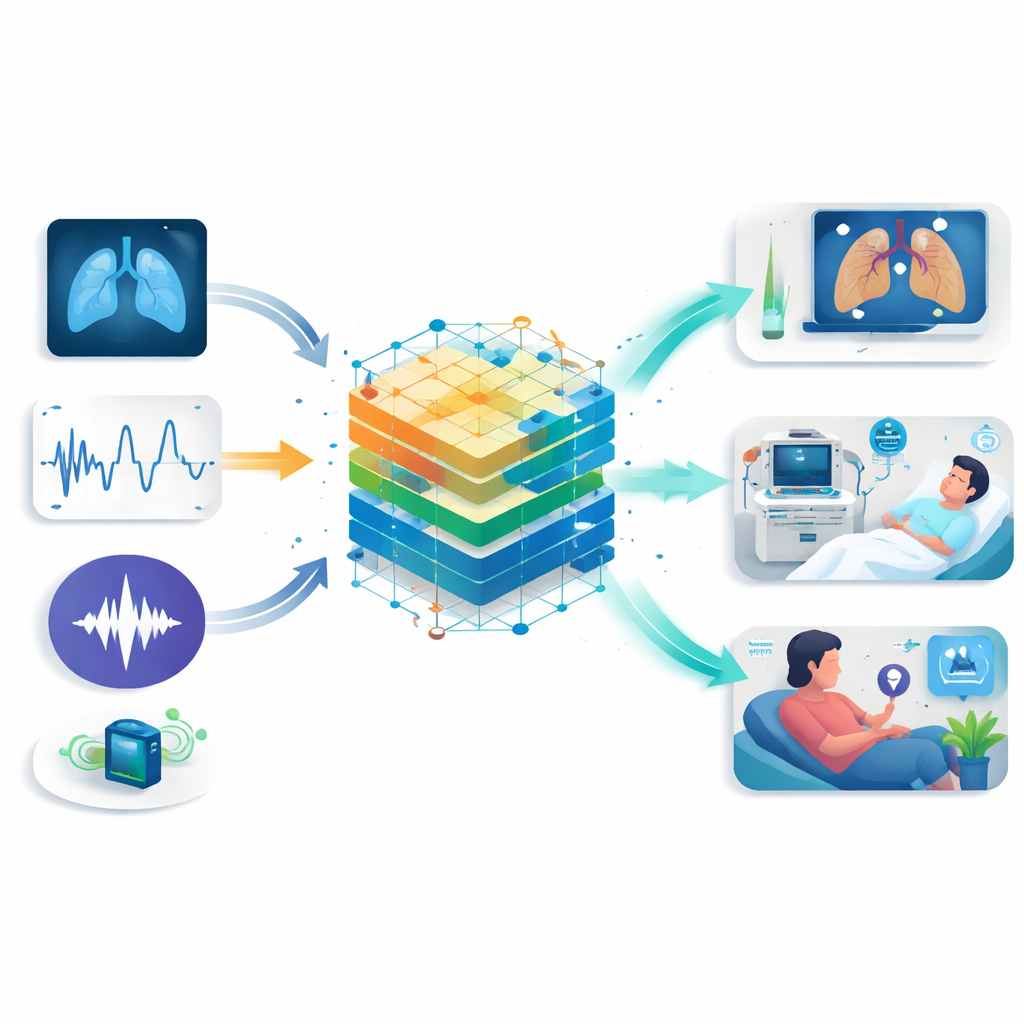
The review begins with a short history of AI in lung medicine, from early “expert systems” that followed hand-written rules to today’s powerful machine-learning models and large language models. Modern AI can learn patterns directly from huge collections of chest X-rays, CT scans, breathing tests, sound recordings, and electronic health records. Respiratory medicine is unusually rich in this kind of data: images of the chest, standardized lung function curves, recordings of coughs and breath sounds, and continuous streams from wearables and home monitors. This combination of detailed snapshots and long-term tracking makes lung care a natural testing ground for AI systems that can recognize subtle warning signs, group patients into meaningful subtypes, and predict who is likely to worsen.
Helping Doctors See More in Scans and Breathing Tests
One major theme is how AI supports diagnosis. Deep-learning programs already help radiologists sort chest X-rays, flagging normal images so that urgent, abnormal ones jump to the front of the queue, sharply cutting the time it takes to read critical cases. Similar tools can highlight patterns of COVID-19 pneumonia or judge whether tiny nodules on CT scans are likely to be early lung cancers. In lung function laboratories and primary care clinics, algorithms watch how patients blow into spirometers, detect technical errors, and classify common disease patterns—sometimes performing on par with, or better than, specialists. Together, these systems promise more consistent test quality and fewer missed or delayed diagnoses, especially where trained experts are scarce.
Listening to Coughs, Following Patients Home, and Protecting Populations
Beyond hospital walls, AI turns simple devices into powerful health tools. Smartphone microphones and wearables can capture coughs, breathing, and speech, allowing algorithms to detect episodes automatically and search for sound “fingerprints” of disease. Home sensors and portable lung monitors, combined with weather and air quality data, can forecast flare-ups in asthma or COPD and warn patients and clinicians days in advance. Telehealth platforms and chatbots extend this support, guiding self-management, triaging concerns, and helping people adjust medicines between clinic visits. At the population level, machine learning helps track outbreaks such as COVID-19, design targeted lung-health campaigns, and uncover patterns of vaping and tobacco use in young people that standard surveys might miss.
Opportunities, Risks, and Fair Access
The authors are careful to stress that most of these tools remain in the research or early pilot stage, and that safe, fair use is not guaranteed. Many models have been tested only in limited settings and may fail when used elsewhere or as technology and diseases change over time. If training data underrepresent certain groups—such as children, older adults, or marginalized communities—AI could amplify existing inequalities in lung care. Large language models and other generative tools can also make confident but incorrect suggestions about diagnoses or treatments. To guard against harm, the article calls for rigorous multi-center testing, continuous monitoring for drifting performance, clear explanations of how systems reach their conclusions, and strict rules that keep clinicians in charge of final decisions.
What This Means for Future Lung Care
In closing, the review paints a cautiously optimistic picture. With thoughtful design, careful testing, and strong privacy and fairness protections, AI could take over much of the repetitive, data-heavy work that now consumes clinicians’ time. That would free primary care providers and lung specialists to focus more on listening to patients, explaining options, and tailoring care. Rather than replacing doctors, AI is presented as a set of new instruments—like better stethoscopes and sharper imaging lenses—that, when used wisely, can make breathing care faster, more accurate, and more personal for people living with lung disease.
Citation: Soriano, J.B., Lumbreras, S. The rise of artificial intelligence in respiratory primary care and pulmonology: a scoping review. npj Prim. Care Respir. Med. 36, 21 (2026). https://doi.org/10.1038/s41533-026-00487-5
Keywords: artificial intelligence in healthcare, lung disease, respiratory diagnostics, telehealth monitoring, asthma and COPD