Clear Sky Science · en
A cough sound-based deep learning algorithm for accessible prompt detection of chronic obstructive pulmonary disease with smartphones
Turning a Simple Cough into a Health Clue
Chronic lung diseases are common, but the tools to diagnose them often require a hospital visit, bulky machines, and trained staff. This study explores a much simpler idea: could a short, voluntary cough recorded on an ordinary smartphone help flag people who may have chronic obstructive pulmonary disease (COPD)? If so, millions of people could be screened quickly and cheaply, especially in places where access to specialist care is limited.
Why COPD Is Hard to Catch Early
COPD is a long-lasting lung disease that makes breathing difficult and is a leading cause of illness and death worldwide. Many people with COPD do not know they have it, in part because early symptoms can be vague and easy to ignore. The standard test, spirometry, measures how much air a person can blow out, but it needs special equipment, trained staff, and a cooperative patient. These requirements make it hard to use widely, especially in older adults and in clinics with limited resources.
Listening Closely to the Sound of a Cough
Scientists have learned that lung problems can subtly change both voice and cough sounds. Narrowed airways, inflammation, and extra mucus all affect how air moves through the chest and throat. Earlier research showed that simple computer programs could pick up patterns related to diseases such as COPD, pneumonia, and tuberculosis. However, these older methods relied on hand-picked sound features and small data sets, which limited how well they worked in real-world settings.
Building the Cough Search Phone Tool
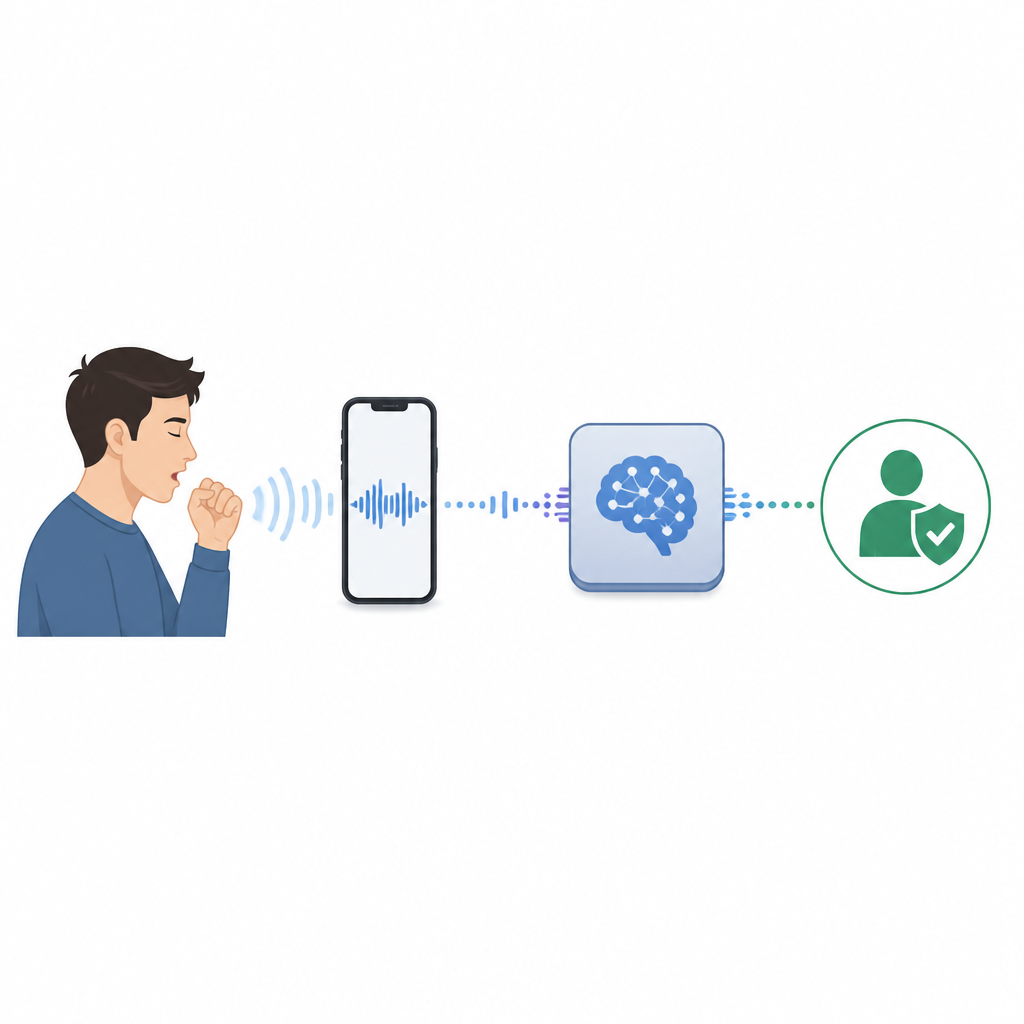
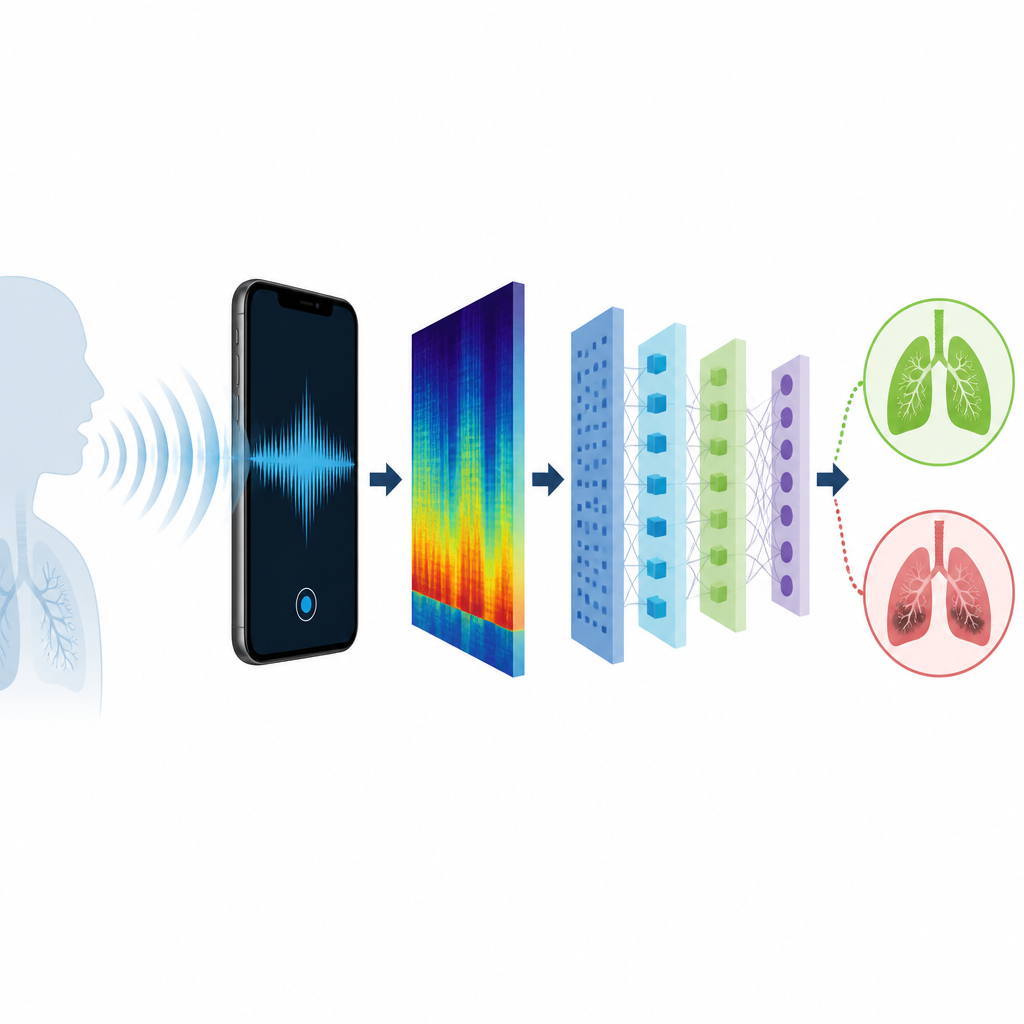
The authors created a smartphone-based system called Cough Search that listens to voluntary coughs and decides whether they are more likely from someone with COPD or without it. First, a quality control module filters out unusable sounds such as throat clearing, background noise, or incomplete coughs. The remaining cough bursts are turned into colorful sound maps called spectrograms, which show how sound energy is spread over time and frequency. These spectrograms are then fed into a powerful deep learning model based on transformer technology, trained to spot patterns that differ between COPD and non-COPD coughs.
Testing the Tool in Hospitals and Clinics
The team trained and tuned the system on cough recordings from more than 2,800 adults at a large hospital in Shanghai, then tested it prospectively at four hospitals, including district-level centers. In total, 722 people in the external test group were included, 105 with confirmed COPD and 617 without. Compared with standard clinical diagnoses based on expert review and breathing tests, Cough Search correctly separated COPD from non-COPD most of the time. It reached an area under the curve of 0.94, with about 92% sensitivity (catching people who truly had COPD) and 86% specificity (avoiding false alarms) in the external group, and similar results in the internal tests.
How Well It Works Across Different People and Devices
The researchers checked whether the tool behaved fairly across age, sex, smoking history, and disease stage. Performance was strongest in people with more severe COPD, where sensitivity was above 91% for advanced stages and still high for moderate disease. The model worked on various smartphone brands and in both top-tier and district hospitals. Some unevenness remained: accuracy was slightly lower in older adults, women, and people with very early-stage disease, and certain other lung problems, such as bronchiectasis, could still confuse the system. Analyses of the model’s internal features showed that it mainly relied on specific time windows and low-pitch parts of the cough, which match what doctors know about how COPD changes airflow.
What This Could Mean for Everyday Care
In plain terms, the study shows that a quick cough into a smartphone can give a surprisingly reliable signal about whether someone may have COPD, especially when the disease is moderate or severe. While it cannot replace full medical evaluation or detailed breathing tests, this kind of tool could serve as an easy first check in community clinics, pharmacies, or even at home. Used in this way, Cough Search might help shorten the long delay between the first symptoms and a firm diagnosis, giving people a better chance to manage their lung health earlier.
Citation: Zhou, J., Huang, J., Wang, Q. et al. A cough sound-based deep learning algorithm for accessible prompt detection of chronic obstructive pulmonary disease with smartphones. npj Prim. Care Respir. Med. 36, 32 (2026). https://doi.org/10.1038/s41533-026-00486-6
Keywords: COPD, cough analysis, smartphone screening, deep learning, respiratory health