Clear Sky Science · en
Usability of the test of adherence to inhalers toolkit to patients with COPD in Kyrgyzstan
Why this matters for everyday breathing
For millions of people living with chronic obstructive pulmonary disease (COPD), a small inhaler can mean the difference between climbing a flight of stairs and struggling for breath. Yet around the world, especially in low- and middle-income countries, many patients do not use their inhalers as prescribed. This study from Kyrgyzstan explores a practical tool designed to help doctors understand why patients miss doses and to offer simple, tailored solutions—turning a checklist into a real-world guide for better breathing.

A common lung illness with hidden hurdles
COPD is a long-term lung condition that makes it hard to exhale air, often leaving people short of breath, tired, and prone to flare-ups. Inhaled medicines can ease symptoms and reduce hospital visits, but only if taken regularly and correctly. In Kyrgyzstan, as in many low- and middle-income countries, patients face many obstacles: limited access to specialist care, the high price or scarce supply of newer inhalers, complex treatment schedules, and a simple fact of human nature—people often stop taking medicine when they start to feel better, or when they doubt it is helping.
From score sheet to action plan
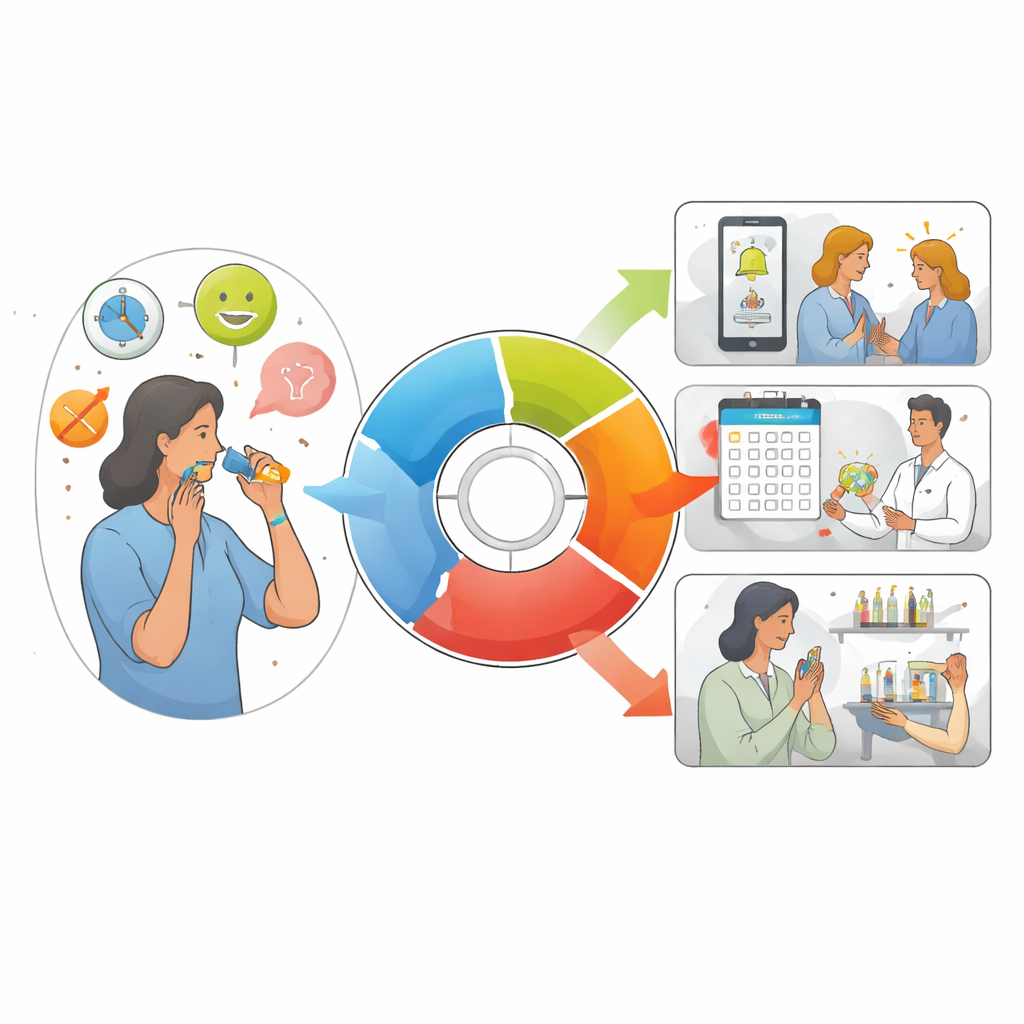
Doctors already use a short questionnaire called the Test of Adherence to Inhalers (TAI) to ask patients about how they use their inhalers. The TAI can show whether someone often forgets doses, stops when feeling well, skips puffs, or struggles with inhaler technique. However, the original test stops at diagnosis: it flags problems but does not say what to do next. To bridge this gap, researchers in the Netherlands created a “Toolkit” that links each type of problem to specific, evidence-based solutions, such as reminder strategies, simple education, or hands-on inhaler coaching. The Kyrgyz team translated this Toolkit into Russian, adapted it to local practice, and then tested whether busy frontline doctors could actually use it with their patients.
Trying the toolkit in real clinics
The study took place at the main national center for heart and lung care in Bishkek, which serves people from all regions of Kyrgyzstan. Twelve healthcare professionals—nine doctors and three residents—were trained for one hour on using the TAI questionnaire and the Toolkit. They then applied it in routine visits with 100 adults who had COPD confirmed by lung function testing. Patients filled in the TAI and basic health questions, after which their doctor reviewed the answers and picked one or more matching support strategies from the Toolkit. These ranged from drawing up a simple medication plan, to setting up reminders, to extra inhaler teaching at the bedside.
What patients and doctors thought
The researchers then asked the doctors to rate how easy the Toolkit was to use, using a standard measure called the System Usability Scale. On this 0–100 scale, scores above 68 are considered good; the Toolkit scored about 75 on average, suggesting it fit reasonably well into day-to-day practice. Almost all doctors—over 90 percent—said they were satisfied with it. They most often used medication plans and counseling or reminder strategies, particularly for patients who admitted to skipping doses, taking fewer puffs, or using their inhaler incorrectly. Patients, for their part, gave the approach very high marks, with average satisfaction close to 9 out of 10, and all reported being pleased with the advice they received during the visit.
What the results reveal about inhaler use
Beyond usability, the study painted a sobering picture of how COPD medicines are used in this setting. Seventy percent of patients showed signs of poor adherence on the TAI, and some of the most common problems were stopping the inhaler when feeling better, doubting its benefit, or not taking the right dose at the right time. Many patients relied on older, short-acting inhalers taken several times a day, rather than newer long-acting medicines that require fewer doses. This pattern likely reflects cost and supply problems but also makes it easier for patients to forget or cut corners. The Toolkit helped doctors target these issues with low-cost, behavior-focused solutions, even when newer drugs or digital devices were not available.
A practical step toward better daily breathing
To a layperson, the main message is straightforward: understanding why people do not take their inhalers properly is only half the battle. This study shows that a simple, structured guide can help doctors in a resource-limited country quickly turn that understanding into practical help—reminders, clearer instructions, and realistic treatment plans. While this short-term project did not yet prove that the Toolkit reduces hospital stays or saves lives, it demonstrated that both doctors and patients in Kyrgyzstan found it useful and easy to work with. With further testing over longer periods and in other countries, this kind of approach could become a low-cost way to help people with COPD breathe easier, even where health systems and medicine supplies are under strain.
Citation: Tabyshova, A., Turarova, T., Boven, J.F.M.v. et al. Usability of the test of adherence to inhalers toolkit to patients with COPD in Kyrgyzstan. npj Prim. Care Respir. Med. 36, 27 (2026). https://doi.org/10.1038/s41533-026-00480-y
Keywords: COPD, inhaler adherence, Kyrgyzstan, low-resource healthcare, patient counseling