Clear Sky Science · en
Genetic variation in antidiabetic drug targets: associations with Parkinson’s disease risk and age at onset
Why this research matters
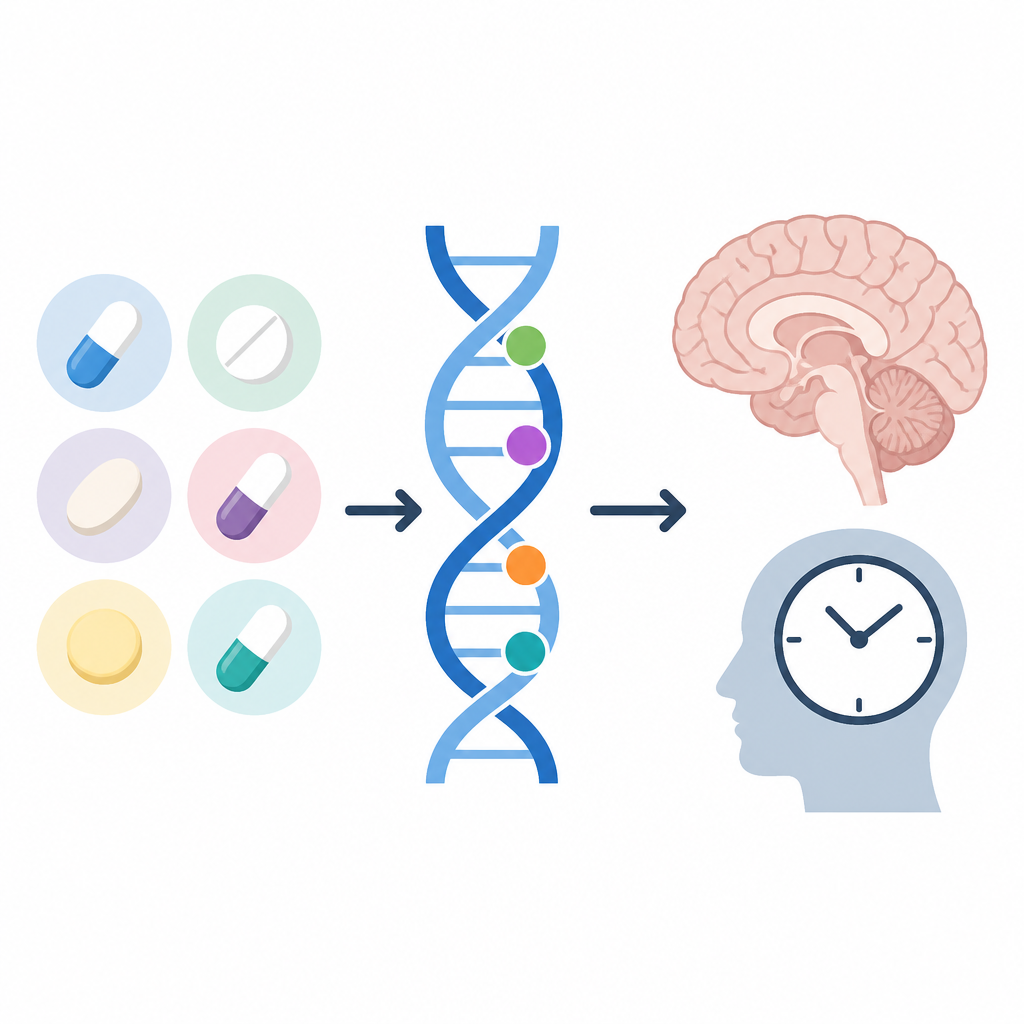
People with type 2 diabetes are often treated with long-term medications, and several studies have hinted that some of these drugs might also protect against Parkinson’s disease, a common movement disorder of aging. If true, doctors could use familiar diabetes medicines to lower the chances of Parkinson’s or delay its start. This study asks a simple but important question: when we look directly at human genetics on a very large scale, do we find evidence that diabetes drug targets are truly linked to Parkinson’s risk or the age when symptoms begin?
Shared threads between two common diseases
Parkinson’s disease and type 2 diabetes may seem unrelated, but they share several biological features, such as problems with energy-producing parts of cells and long-lasting inflammation. Because of these overlaps, scientists have explored whether drugs used to control blood sugar might also benefit the brain. Earlier observational studies and small clinical trials suggested that medicines like metformin, GLP-1 receptor agonists, and thiazolidinediones could lower the risk of Parkinson’s or slow its course. However, other studies have shown no effect or even potential harm, leaving patients and clinicians with a confusing mix of results.
Using genetics as a natural experiment
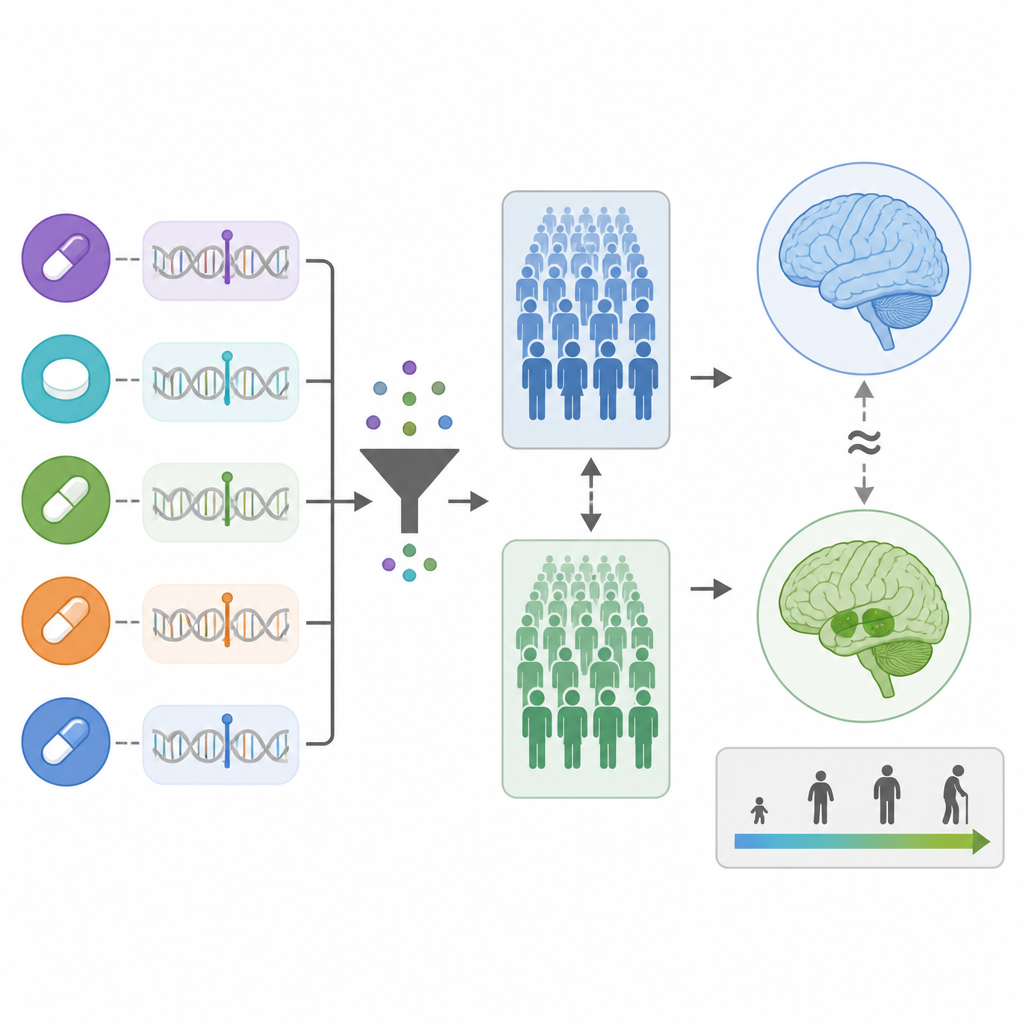
To cut through this confusion, the researchers used a method called Mendelian randomization, which treats natural genetic variation as a kind of lifelong, built-in trial. Instead of looking at who happened to take which drug, they focused on tiny genetic differences that influence the same proteins and pathways targeted by major diabetes drug classes, including metformin, insulin and its analogues, GLP-1 receptor agonists, sulfonylureas, thiazolidinediones, and others. They first identified genetic markers near the relevant genes and made sure these variants were strongly linked to blood sugar-related measures and to how actively those genes are used in different tissues. This careful selection was designed to mimic how the drugs act in the body while avoiding unrelated genetic effects.
Testing links to Parkinson’s risk and timing
The team then combined genetic data from two very large international collaborations on Parkinson’s disease, covering over 42,000 people with Parkinson’s and more than 457,000 without it, plus over 37,000 patients with information on the age when their symptoms started. They checked whether people who carried genetic variants that imitate the effect of stronger diabetes drug action were less likely to develop Parkinson’s or tended to get it later in life. They also ran a series of quality checks, such as confirming that these variants behaved as expected for type 2 diabetes risk and that they were not linked to unrelated conditions like childhood asthma.
What the genetic evidence shows
Across multiple statistical approaches and both large datasets, the researchers found no convincing evidence that genetic variation in the targets of these diabetes drugs changes the chance of developing Parkinson’s or shifts the age at which it begins. A single genetic marker related to metformin’s main target showed a small hint of reduced risk, but this signal disappeared after correcting for the large number of tests performed. Likewise, there was no stable signal for sulfonylureas, GLP-1 receptor agonists, insulin, or thiazolidinediones. The results held up when they examined different subsets of the data, looked for shared genetic signals between traits, and tested what happened when individual genetic markers were removed from the analysis.
What this means for patients and future research
For now, this large genetic study suggests that commonly used diabetes drugs, at least through their main biological targets, are unlikely to play a major causal role in preventing Parkinson’s disease or delaying its onset. That does not rule out all possible benefits in specific groups or through other, more complex pathways, but it does weaken the idea that repurposing these medications is a straightforward strategy for Parkinson’s prevention in the general population. The authors argue that future efforts to find protective drugs for Parkinson’s should look beyond the diabetes medicines studied here and explore other biological systems that may offer more promising routes to delay or reduce the burden of this disease.
Citation: Vincze, K., Szwajda, A., Ploner, A. et al. Genetic variation in antidiabetic drug targets: associations with Parkinson’s disease risk and age at onset. npj Parkinsons Dis. 12, 127 (2026). https://doi.org/10.1038/s41531-026-01398-5
Keywords: Parkinson’s disease, type 2 diabetes, drug repurposing, genetic study, Mendelian randomization