Clear Sky Science · en
The epitranscriptomic m6A RNA modification modulates the synapse in ageing and in a mouse model of synucleinopathy
How tiny RNA tags may shape brain aging
Parkinson’s disease is best known for its movement problems, but long before nerve cells die, their connections, called synapses, start to falter. This study asks whether a subtle chemical tag on RNA, the molecule that helps turn genes into proteins, could be one of the hidden switches that tunes synapses as the brain ages and in a mouse model of Parkinson’s-like disease.
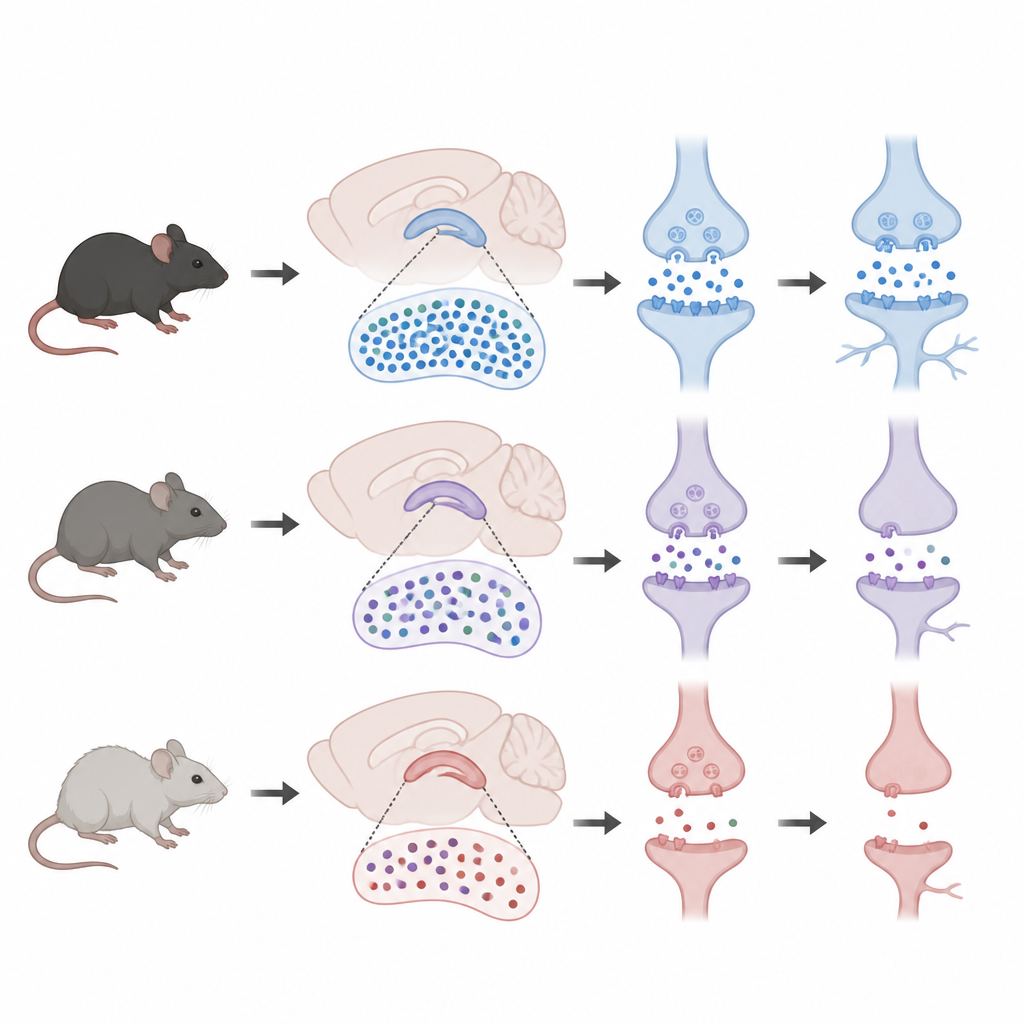
Chemical tags that fine tune gene messages
Every cell in the body uses RNA to carry information from DNA to the protein-making machinery. The RNA letters themselves can be chemically marked. One of the most common marks, known as m6A, acts a bit like a highlighter that helps control how long an RNA lasts, where it travels in a cell, and how efficiently it is read. Special proteins add these marks (often called writers), remove them (erasers), or recognize them (readers). In the brain, m6A marks are especially interesting because they can rapidly adjust which proteins are produced at synapses, where nerve cells pass signals to one another.
Tracking RNA marks in healthy and sick brains
The researchers studied mice engineered to produce a human version of alpha synuclein, a protein that clumps in Parkinson’s disease. These mice develop movement problems and nerve changes as they age. The team compared them with normal mice at young adulthood and at an older age. Using a technique that pulls down only m6A-marked RNA for sequencing, they drew a map of which gene messages carried these marks in a key brain region. They also measured total m6A levels and examined where the writer METTL3, the reader YTHDF1, and the eraser FTO sit within different brain areas and in cultured nerve cells.
Synapses show shifting RNA marks with age
In normal aging mice, most gene messages that changed their m6A status became more heavily marked over time. Many of these RNAs were tied to synaptic functions such as organizing synapses, transporting cargo along axons, and shaping the tiny spines that receive signals. In the alpha synuclein mice, the pattern was different. When young, they showed extra m6A marks on many synapse-related RNAs compared with controls. By old age, however, many of these same synaptic messages lost m6A marks instead. This switch from higher to lower marking suggests that the disease-related protein and aging together rewire how gene messages at synapses are tagged.
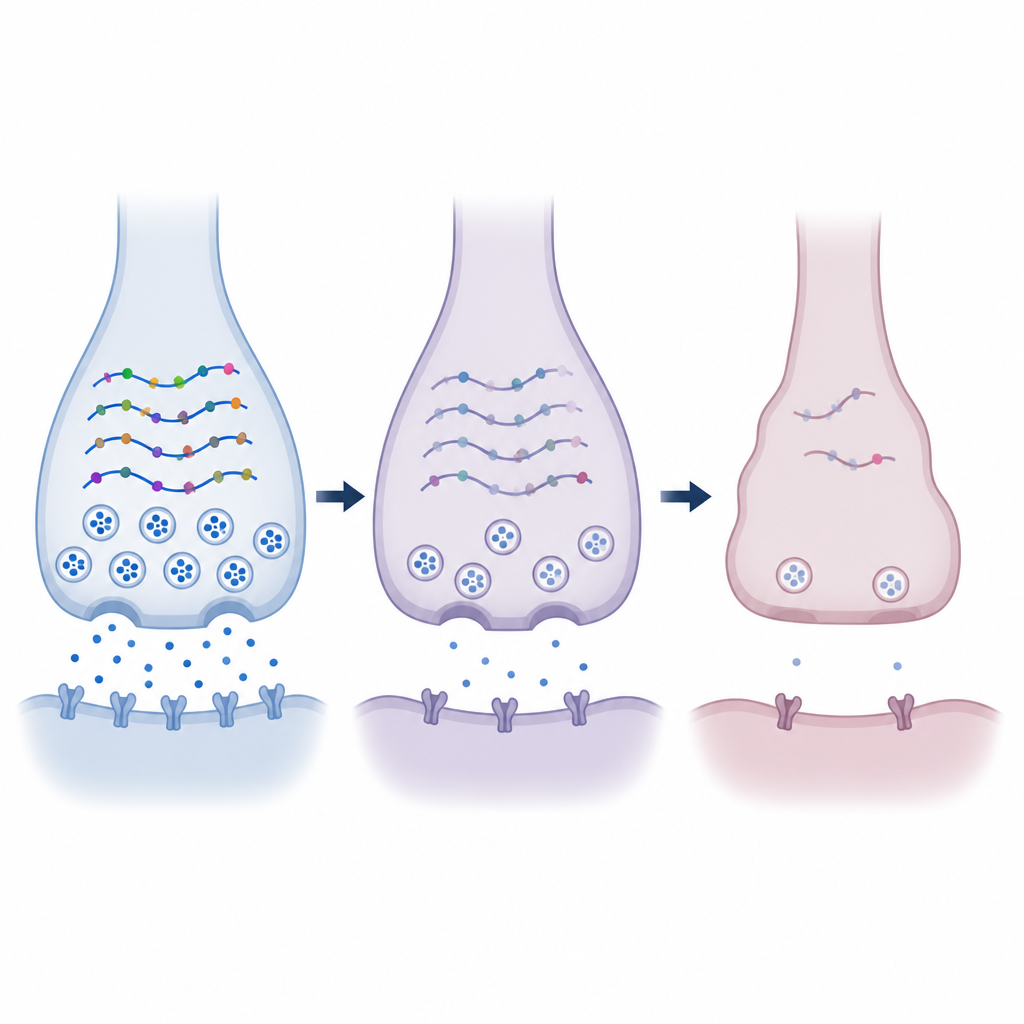
Same toolkit, different placement at the synapse
Surprisingly, the overall levels of the writer, reader, and eraser proteins did not change much across brain regions or with age in either mouse group. Instead, where these proteins were located seemed to matter. METTL3 appeared not only in the cell nucleus, where many RNA marks are added, but also at the postsynaptic side of connections, hinting that tagging of RNAs can occur right where signals are received. In nerve cells from alpha synuclein mice, METTL3’s presence at the postsynaptic site was reduced, even though its total amount in the cell stayed similar. At the same time, these diseased neurons actually had more synapses than normal, which may reflect an early attempt by the brain to compensate for altered signaling.
What this means for brain health
Taken together, the results suggest that m6A marks on RNA help shape synapse behavior during normal aging and in conditions that mimic Parkinson’s disease. Rather than a simple gain or loss, the pattern of RNA tagging shifts over time and across brain regions, particularly affecting gene messages that work at synapses. The finding that a key writer protein is specifically reduced at the postsynaptic site, while overall protein levels stay steady, points to the importance of where in the cell these regulators sit. Understanding how this local RNA marking system is disturbed by alpha synuclein could eventually open new paths for therapies that aim to stabilize synapses and slow neurodegeneration.
Citation: Chopra, A., Xylaki, M., Yin, F. et al. The epitranscriptomic m6A RNA modification modulates the synapse in ageing and in a mouse model of synucleinopathy. npj Parkinsons Dis. 12, 117 (2026). https://doi.org/10.1038/s41531-026-01362-3
Keywords: Parkinson’s disease, RNA methylation, synapse, brain aging, alpha synuclein