Clear Sky Science · en
Physiotherapy interventions for balance impairments in Parkinson’s disease: evidence from a systematic review and dose-response meta-analysis
Why Balance Matters in Everyday Life
For many people living with Parkinson’s disease, feeling unsteady on their feet is one of the scariest parts of the illness. Trouble with balance can lead to falls, injuries, and a loss of confidence in simple activities like getting out of a chair or walking across a room. Medicines that help with tremor and stiffness often do little for balance, so patients and families naturally ask what else can be done. This article reviews how different types of physiotherapy exercises affect balance in Parkinson’s disease and how much training might be needed to make a real difference.
Looking Across Many Exercise Programs
To get a clear picture, the researchers combined results from 30 clinical trials that together included almost 3,000 people with Parkinson’s disease, most in their late sixties with mild to moderate symptoms. In every study, participants were randomly assigned either to an exercise program that targeted balance or to some kind of comparison condition, such as usual medical care, stretching, or a different style of exercise. Balance was measured with well-known clinical tests that capture how safely someone stands, turns, and moves from sitting to walking. By pooling data from all these trials, the authors could estimate how much physiotherapy typically improves balance, rather than relying on any single small study.
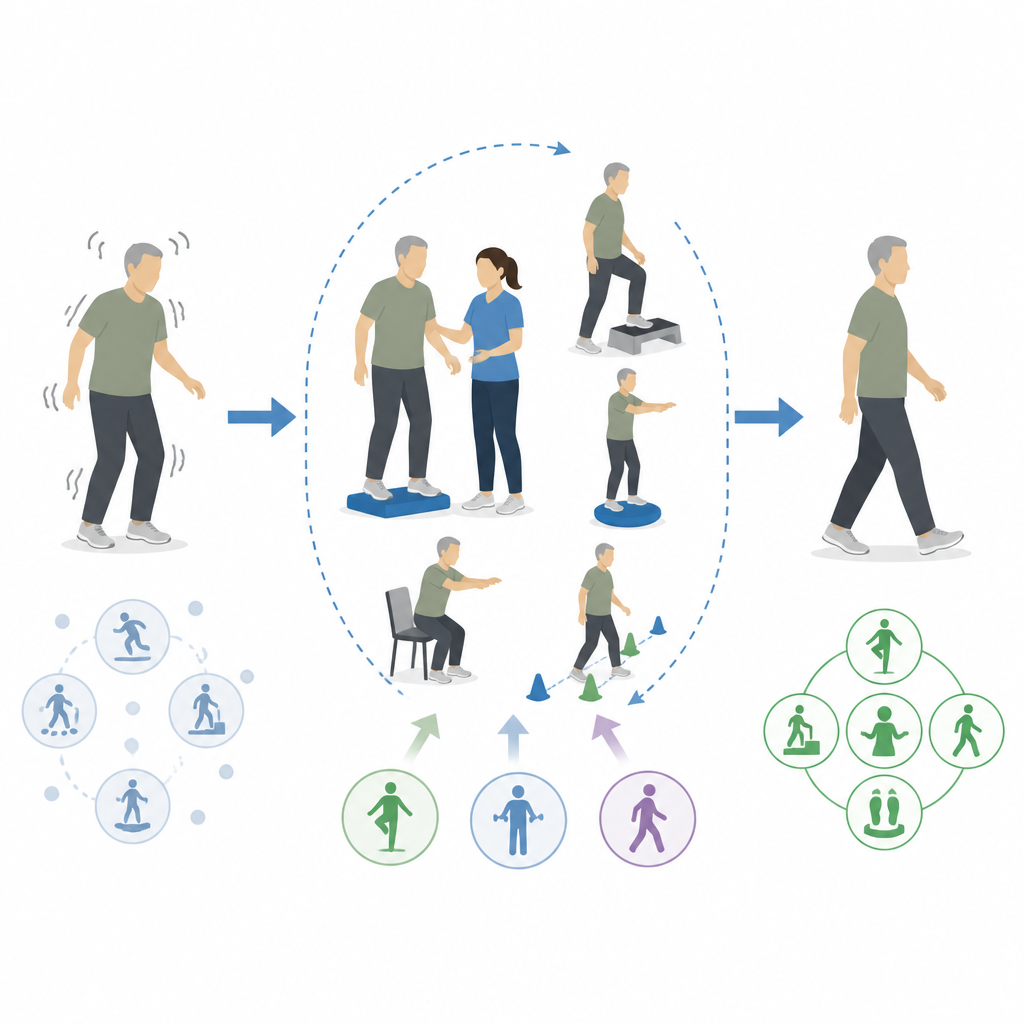
What Types of Exercise Help the Most
Overall, people who took part in physiotherapy aimed at balance showed moderate improvements compared with control groups. Gains were especially clear on practical tests like the Berg Balance Scale, which looks at standing and stepping tasks, and the Timed Up and Go test, which times how long it takes to stand up, walk a short distance, turn, and sit down again. Programs that focused directly on balance skills worked best. These sessions often challenged people to adjust to changing surfaces, shift their weight, react to small pushes, or combine walking with another task, all in a structured and progressively more difficult way. Exercise plans that mixed several elements such as strength, endurance, and balance also helped, but their impact on balance alone tended to be slightly smaller, likely because practice time was spread across many goals.
How Much Exercise Is Enough
A key question for therapists and patients is how much training is needed to see benefits. Across the trials, total supervised exercise time varied widely, from as little as six hours to as much as sixty. Sessions usually lasted between half an hour and an hour, two or three times per week, over several weeks or months. When the authors compared exercise dose with balance gains, they did not find a simple pattern where more hours always meant better results. Instead, many different schedules produced similar improvements. This suggests that how exercises are designed and progressed may matter as much as, or more than, total time spent. The review also found that people with more advanced movement problems, and those at both the younger and older ends of the age range, often benefited the most, perhaps because they had more room to improve or responded differently to intensive practice.
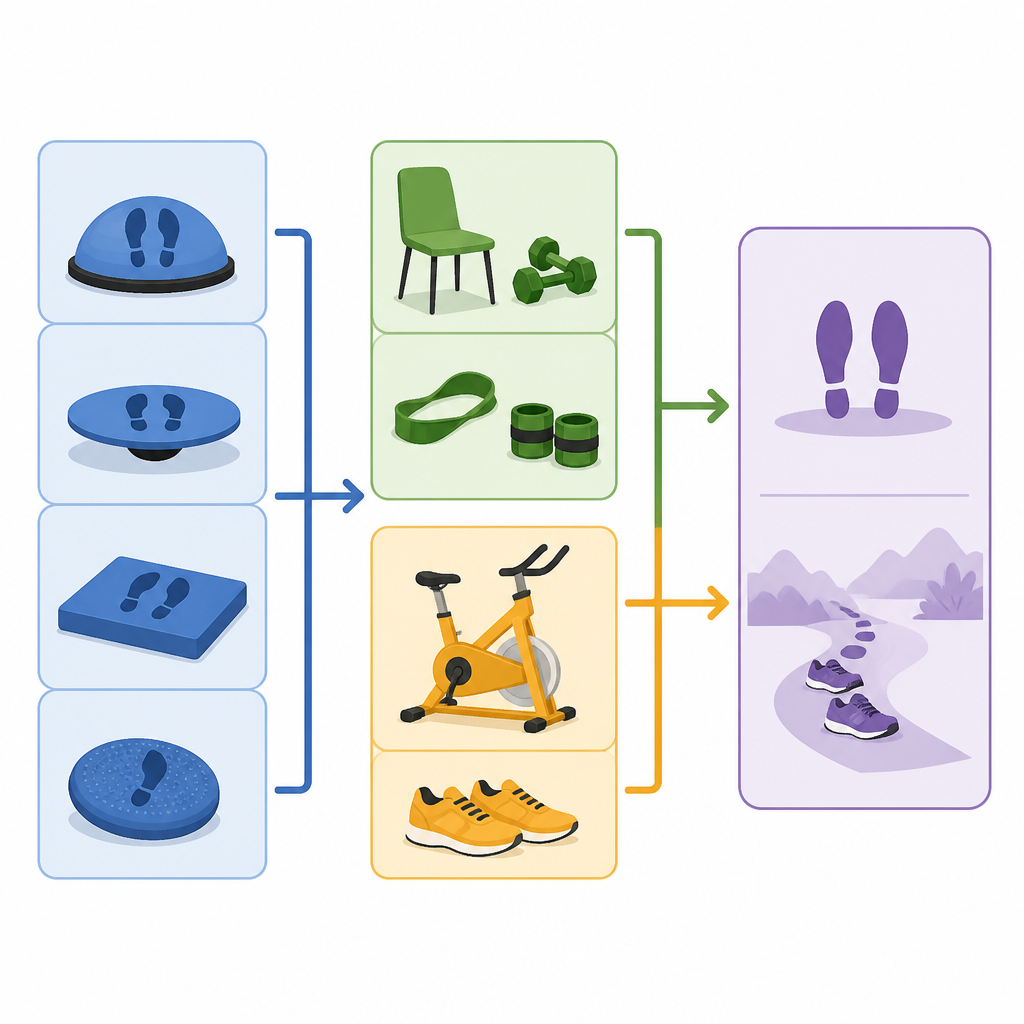
Limits of the Current Evidence
Despite the encouraging results, the evidence is not perfect. Many trials differed in exactly how they described their programs, how closely they monitored what participants actually did, and which balance tests they chose. Some did not fully report all planned results. When the quality of the evidence was rated using a standard grading system, most outcomes were judged to be low or very low certainty, meaning that future, better-designed studies could shift the estimates. The review also noted that balance-specific benefits did not always translate into broad changes on general motor scales, and that researchers still lack biological markers that could indicate who is most likely to respond to a given type of training.
What This Means for People with Parkinson’s
For people with Parkinson’s disease, this work reinforces an important message: structured physiotherapy that directly targets balance can make everyday movements safer and more confident, even when medication alone falls short. While there is no single recipe for the perfect dose of exercise, programs that regularly challenge standing and walking skills in a progressive, task-focused way are likely to help. Because age and disease severity influence how much benefit each person receives, tailoring exercises to individual needs and abilities is crucial. The authors call for future trials that test different amounts and types of balance training head to head, using clearer descriptions and longer follow-up. In the meantime, integrating personalized, balance-focused physiotherapy into routine care appears to be a sound strategy for reducing fall risk and supporting independence.
Citation: Cardini, R., Gervasoni, E., Giannoni-Luza, S. et al. Physiotherapy interventions for balance impairments in Parkinson’s disease: evidence from a systematic review and dose-response meta-analysis. npj Parkinsons Dis. 12, 118 (2026). https://doi.org/10.1038/s41531-026-01326-7
Keywords: Parkinsons disease, physiotherapy, balance training, fall prevention, exercise therapy