Clear Sky Science · en
Integrative clinical and genomic analyses reveal a causal role of GPNMB in the bone-brain axis of Parkinson’s disease
Why bones might matter to the brain
Parkinson’s disease is usually thought of as a brain disorder that affects movement and, over time, thinking and mood. Yet many people with Parkinson’s also have weaker bones and a higher risk of fractures. This study asks a surprising question: could chemical messengers released by bone help drive changes in the brain that lead to Parkinson’s disease, and even help explain why bone loss and Parkinson’s so often go hand in hand?
A closer look at bone messengers
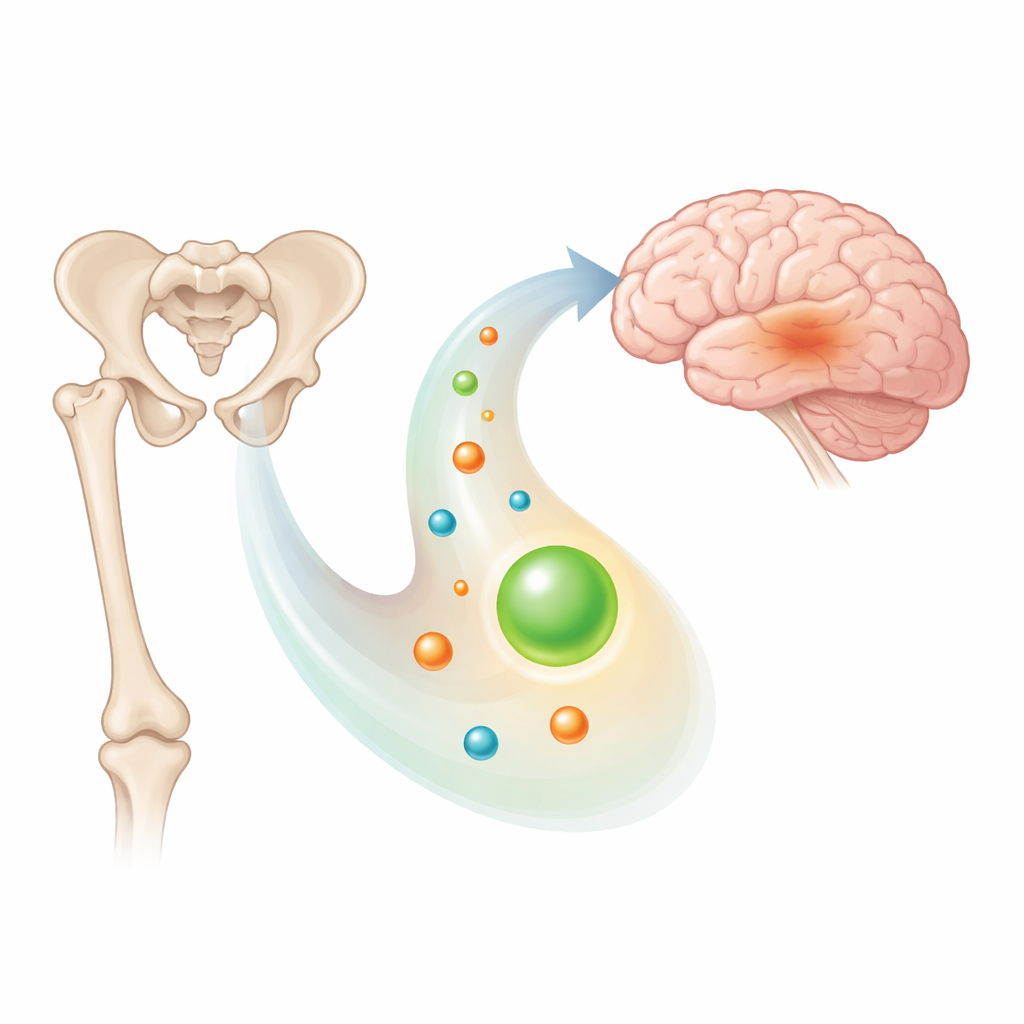
Our bones are not just rigid supports; they constantly send out signaling molecules, sometimes called bone hormones, into the bloodstream. These substances help control how bone is built and broken down, but recent work hints they may also talk to the brain. The researchers focused on eight such bone-derived molecules in the blood of 40 people with Parkinson’s disease and 40 similarly aged healthy adults. They measured the levels of each molecule, checked how they related to memory, thinking, and movement scores, and examined bone density in a subset of participants. To go beyond simple associations, they also used large genetic databases to ask whether differences in these molecules are likely to play a causal role in Parkinson’s, rather than merely reflecting damage that has already occurred.
One standout signal from bone
Among all the measured molecules, one called GPNMB clearly stood out. People with Parkinson’s had higher blood levels of GPNMB than healthy volunteers. Those with more GPNMB tended to have worse daily functioning, poorer thinking scores, and more severe movement problems. Another molecule, sclerostin, showed the opposite pattern: higher levels went along with milder symptoms and better cognition, although its overall blood level did not differ between patients and controls. Several other bone messengers showed little or no consistent link to how advanced the disease was. These patterns suggested that GPNMB, in particular, might be tied to harmful processes in Parkinson’s disease.
Genetic clues that point to cause, not just correlation
To test whether GPNMB might actually help cause Parkinson’s, rather than simply rise as a by-product, the team turned to genetic tools. They used naturally occurring DNA differences that influence blood levels of GPNMB as a kind of built-in randomized experiment. Across hundreds of thousands of people in two large genetic studies of Parkinson’s disease, variants that raise GPNMB levels were linked to a higher risk of developing Parkinson’s. Multiple independent methods gave similar answers. A separate analysis showed that the same genetic signal near the GPNMB gene appears to control both GPNMB levels and Parkinson’s risk, making it unlikely that the connection is a fluke. Together, these lines of evidence point to GPNMB as a probable causal player in the disease process.
The bone–brain axis and bone strength
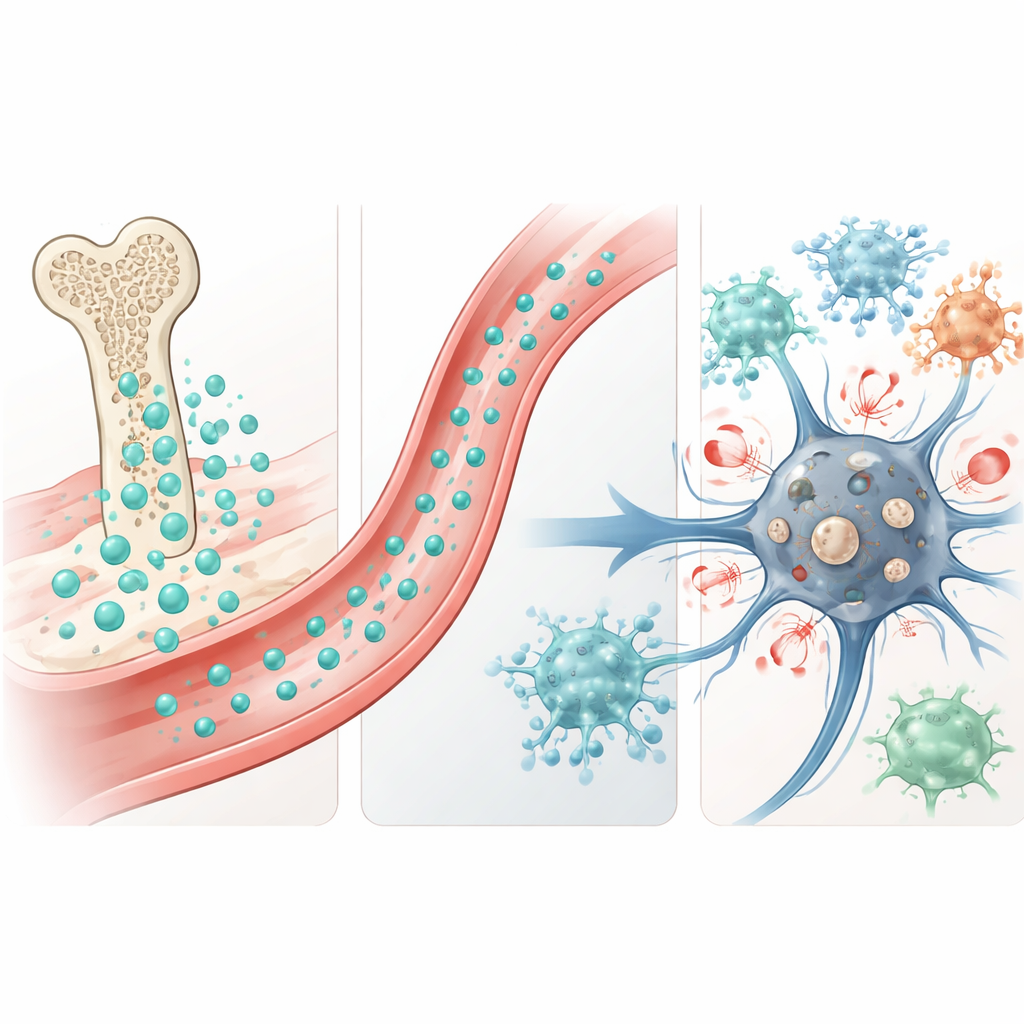
Because many people with Parkinson’s have reduced bone density, the researchers also explored how bone strength, GPNMB levels, and disease risk might interact. Hip bone density was somewhat lower in the Parkinson’s group, though not enough to reach standard statistical cutoffs in this modest sample. When they modeled the data more flexibly, they saw an “n-shaped” curve: as bone density scores rose from low to moderate levels, both Parkinson’s risk and GPNMB levels tended to fall; beyond a certain point, the trend flattened or reversed. In people whose bone density was closer to normal, higher bone strength was linked to lower GPNMB, whereas in those with clearly low bone density, the relationship flipped. These intricate patterns hint that shifts in bone health might influence GPNMB and, through it, the brain.
What this could mean for patients
For non-specialists, the take-home message is that this study strengthens the idea of a “bone–brain axis” in Parkinson’s disease. The findings suggest that GPNMB, a protein released in part by bone and also active in brain immune and waste-clearing cells, is not just a marker but likely helps drive the disease. While much work remains, GPNMB could become a blood-based indicator for Parkinson’s risk or progression and a potential target for new treatments. The complex links between bone density, GPNMB, and Parkinson’s also raise the possibility that protecting bone health might, in time, be part of a broader strategy to reduce vulnerability to this debilitating brain disorder.
Citation: Guo, X., Wei, P., Shi, W. et al. Integrative clinical and genomic analyses reveal a causal role of GPNMB in the bone-brain axis of Parkinson’s disease. npj Parkinsons Dis. 12, 111 (2026). https://doi.org/10.1038/s41531-026-01325-8
Keywords: Parkinson’s disease, bone–brain axis, GPNMB, bone mineral density, neurodegeneration