Clear Sky Science · en
LRRK2 kinase mediates increased GCase activity in microglia in response to IFNγ-induced proinflammatory stimulation
Why Brain Immune Cells Matter in Parkinson’s
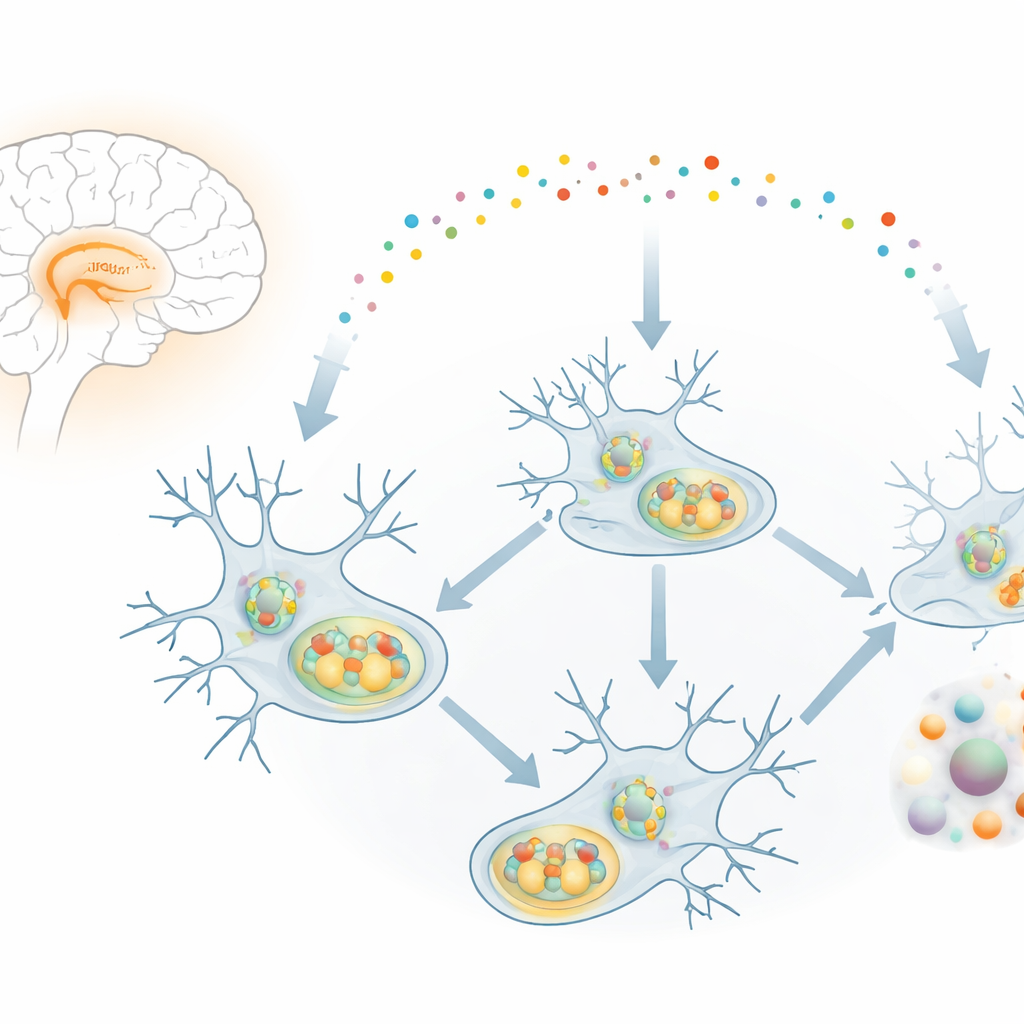
Parkinson’s disease is best known for its tremors and movement problems, but deep inside the brain a complex conversation is happening between nerve cells and the immune-like cells that support them. This study zooms in on those support cells, called microglia, to ask how inflammation might change the way they handle cellular "garbage"—and what that could mean for people who carry certain Parkinson’s‑linked gene variants. Understanding this crosstalk could help doctors decide which patients might benefit most from emerging targeted drugs.
Two Genes That Shape Parkinson’s Risk
Over the past decade, researchers have learned that changes in two genes, LRRK2 and GBA1, are among the most common genetic contributors to Parkinson’s disease. GBA1 encodes an enzyme known as glucocerebrosidase, or GCase, which works inside recycling compartments called lysosomes to break down fatty molecules. People with Parkinson’s, including many who do not carry GBA1 mutations, often have lower GCase activity, hinting that sluggish cellular recycling may be a widespread problem. LRRK2, in contrast, produces a signaling protein (a kinase) that helps regulate many cell processes, including those involving lysosomes and the immune system. Yet previous studies have disagreed on whether LRRK2 activity helps or harms GCase function, and the answer has seemed to depend on which cells and tissues were examined.
Building Patient Microglia in the Lab
To tackle this puzzle, the authors generated microglia from human induced pluripotent stem cells, which are reprogrammed from blood cells and then coaxed to develop into different cell types. They created lines carrying three different LRRK2 variants: the common disease‑linked change p.G2019S, another risk‑raising change called p.M1646T, and a "protective" pair of linked variants (p.N551K‑p.R1398H) associated with lower Parkinson’s risk. Using CRISPR editing, they also made matching control lines in which these variants were corrected, ensuring that the only important genetic difference between each pair was the LRRK2 change itself. These microglia expressed high levels of both LRRK2 and GCase, providing a relevant human model of brain immune cells.
Quiet Conditions Show Little Impact
First, the team asked what happens under calm, non‑inflamed conditions. They measured how strongly LRRK2 was signaling by tracking phosphorylation of a downstream protein called Rab10, and confirmed that p.M1646T boosted this signal while the protective haplotype reduced it; interestingly, p.G2019S did not clearly increase Rab10 phosphorylation in these cells. Despite these shifts in kinase activity, GCase protein levels and its lysosomal activity remained essentially unchanged across all variants. Short‑term treatment with potent LRRK2 inhibitors also failed to alter GCase function or the amount of lysosomal material, suggesting that in resting microglia, dialing LRRK2 up or down does not meaningfully change how GCase works.
Inflammation Flips the Switch
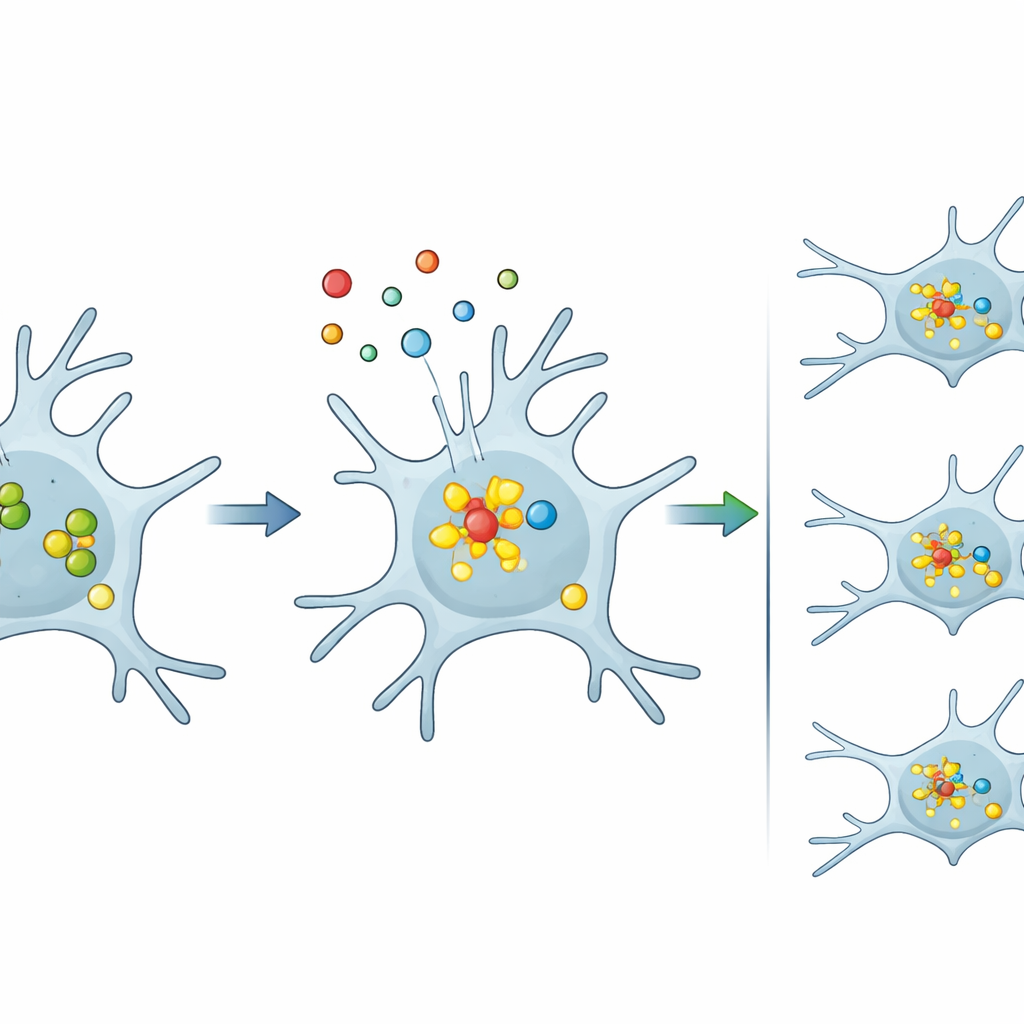
The picture changed once the researchers mimicked neuroinflammation by treating microglia with interferon‑gamma, a pro‑inflammatory molecule found at elevated levels in Parkinson’s brains. Under this stress, GCase activity in lysosomes rose noticeably, even though the total amount of GCase protein and overall lysosomal content stayed the same. Blocking LRRK2 with an inhibitor blunted this activity boost, indicating that LRRK2 signaling helps drive the enzyme’s heightened performance during inflammation. The team also saw that inflammatory stimulation made LRRK2 itself more abundant and more active, and increased Rab10 phosphorylation, strengthening the link between this kinase pathway and GCase under these conditions. Yet measures of general lysosomal protein breakdown and acidity changed only subtly, implying a selective tuning of GCase rather than a broad overhaul of the cell’s recycling machinery.
Genetic Variants Shape the Inflammatory Response
Finally, the study examined how the different LRRK2 variants influenced this inflammation‑induced boost in GCase. All microglial lines showed higher GCase activity after interferon‑gamma exposure, but the size of the increase depended on the variant. Cells carrying the p.M1646T risk variant showed a stronger rise in GCase activity than their corrected controls, consistent with their higher LRRK2 activity. In contrast, microglia with the protective haplotype displayed lower GCase activity after stimulation than their control lines, with evidence pointing specifically to the p.N551K change as the main driver. The p.G2019S variant again behaved similarly to its isogenic control in this microglial model. In every case, LRRK2 inhibition tended to dampen the inflammation‑driven GCase increase, underlining the functional link between the kinase and the lysosomal enzyme.
What This Means for Future Parkinson’s Treatments
These findings suggest that the relationship between LRRK2 and GCase is not fixed but depends strongly on the inflammatory state of microglia. In resting cells, LRRK2 activity alone does little to GCase, but during inflammation—an important feature of Parkinson’s disease—heightened LRRK2 signaling helps ramp up GCase activity. For patients who carry both GBA1 and LRRK2 variants, this could mean that certain LRRK2 changes partly offset the harmful effects of reduced GCase function by boosting lysosomal cleanup when inflammation strikes. As drugs targeting LRRK2 and GCase move through clinical testing, understanding how these pathways interact in specific cell types and under inflammatory stress will be essential for tailoring therapies to the right patients and disease stages.
Citation: MacDougall, E.J., Chen, C.XQ., Deneault, E. et al. LRRK2 kinase mediates increased GCase activity in microglia in response to IFNγ-induced proinflammatory stimulation. npj Parkinsons Dis. 12, 99 (2026). https://doi.org/10.1038/s41531-026-01310-1
Keywords: Parkinson’s disease, microglia, LRRK2, glucocerebrosidase, neuroinflammation