Clear Sky Science · en
Machine learning prediction of discharge destination in patients with Parkinson’s disease; a nationwide cohort study
Why hospital discharge matters for people with Parkinson’s
For families living with Parkinson’s disease, a hospital stay often raises a worrying question: will their loved one be able to come home, or will they need to move to a nursing facility or face life threatening complications? This study uses modern computer tools to estimate those chances early during a hospital stay, offering doctors, patients, and caregivers more time to plan for what comes next.
Looking across hospitals nationwide
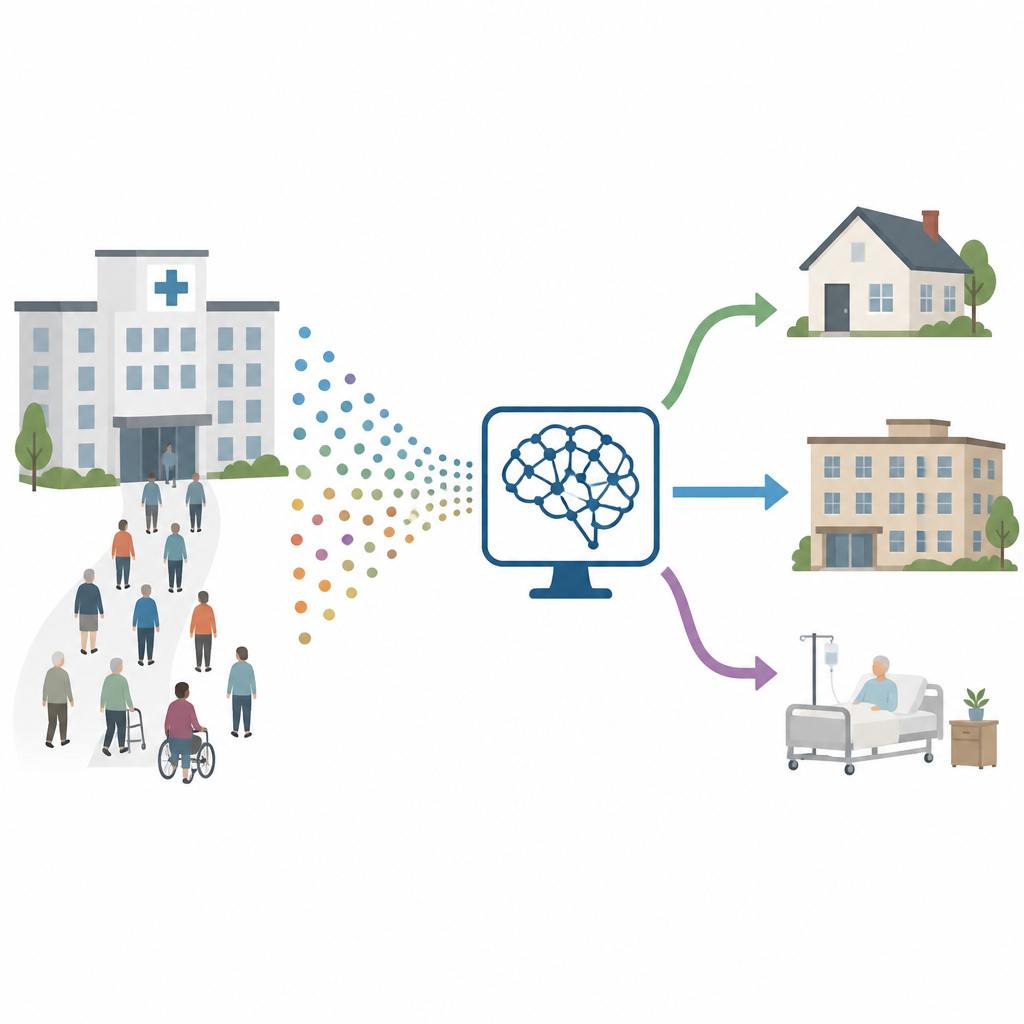
The researchers analyzed records from a large United States hospital database that captures roughly a quarter of all admissions nationwide. They focused on more than 280,000 people aged 50 and older who were hospitalized with Parkinson’s disease between late 2017 and mid 2023. For each person, they looked only at the first hospital stay in that period and grouped the final outcomes into three simple categories: going home, moving to some type of care facility, or dying in the hospital. Nearly half of patients went home, almost as many went to a facility, and about one in fourteen died before discharge.
Patterns in who goes home and who does not
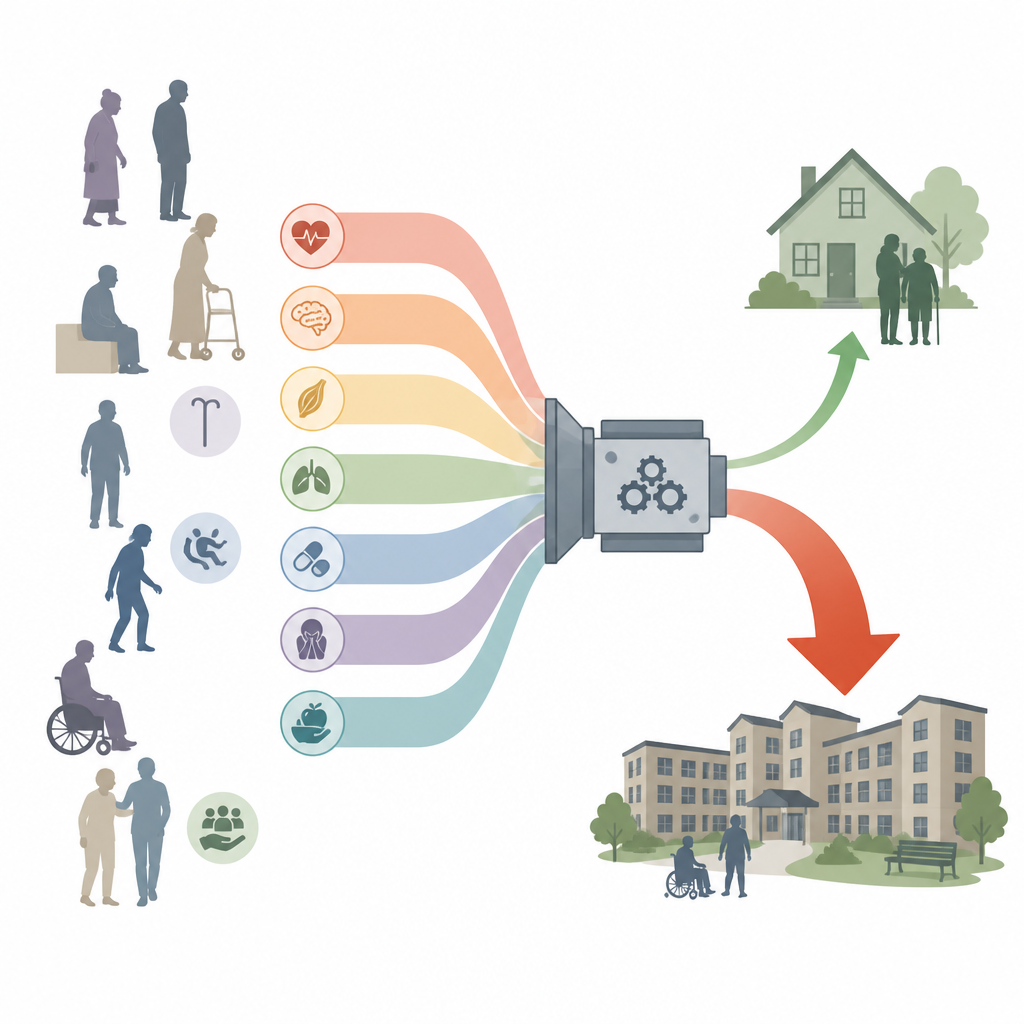
People who were sent to a facility tended to be older and more medically fragile than those who went home. They more often had dementia, trouble swallowing, pneumonia from food or drink entering the lungs, or a recent fracture or fall. They were also more likely to be unmarried and to have come to the hospital from another healthcare facility, not directly from home. Their hospital stays were longer, and they received more rehabilitation therapy. Patients who died in the hospital had the highest rates of dementia and serious lung infection, highlighting how advanced illness and complications shape these outcomes.
Teaching computers to recognize risk
To turn these patterns into practical tools, the team trained machine learning models, a type of computer program that learns from data, to predict each of the three discharge outcomes. Using most of the admissions to train the models and the rest to test them, the programs reached good accuracy for all three categories. For example, the model predicting who would go home correctly separated home discharges from other outcomes about three quarters of the time. A similar model for moves to a facility performed just as well, and the model predicting in hospital death did slightly better. These models were checked over different time periods and slightly different ways of grouping insurance types, and their performance held up, suggesting that they are reasonably stable.
A simple bedside score for facility risk
Because doctors and nurses need tools they can understand quickly, the researchers also built a simpler, more transparent risk score focused on predicting discharge to a facility. This score used seven easily recognized features: a history of fracture, dementia, arriving as a transfer from another facility, a history of falls, type of insurance, marital status, and the region of the country where the hospital is located. Each factor adds or subtracts points, and the total score places patients into low, medium, or high risk groups. In this study, people in the low risk group had about a forty percent chance of facility discharge, while those in the high risk group had nearly a three in four chance.
What this means for patients and families
These tools do not decide where any one person must go after a hospital stay, but they can act like an early warning light. By highlighting patients with Parkinson’s who are more likely to need intensive support or face serious complications, the models and the seven item score can prompt earlier talks about rehabilitation, home help, or long term care. Used alongside clinical judgment and family preferences, such data driven approaches may help hospitals organize safer, more personalized discharge plans and better match limited care resources to the people who need them most.
Citation: Kamo, H., Mehta, T.R., Remz, M. et al. Machine learning prediction of discharge destination in patients with Parkinson’s disease; a nationwide cohort study. npj Parkinsons Dis. 12, 120 (2026). https://doi.org/10.1038/s41531-026-01309-8
Keywords: Parkinson’s disease, hospital discharge, machine learning, risk prediction, post acute care