Clear Sky Science · en
Age at onset of Parkinson’s disease modulates the sphingolipid-dopaminergic interplay in autonomic progression
Why the timing of symptoms matters
Parkinson’s disease is best known for tremor and stiffness, but many people also struggle with invisible problems like low blood pressure, constipation, and thinking changes. This study asks a simple but important question: does it matter for these problems whether Parkinson’s symptoms begin earlier or later in life? By following people over five years and tracking both brain scans and a fat-like substance in spinal fluid, the researchers show that age at onset shapes how nerve chemistry and body control systems interact as the disease unfolds.
Two flavors of Parkinson’s
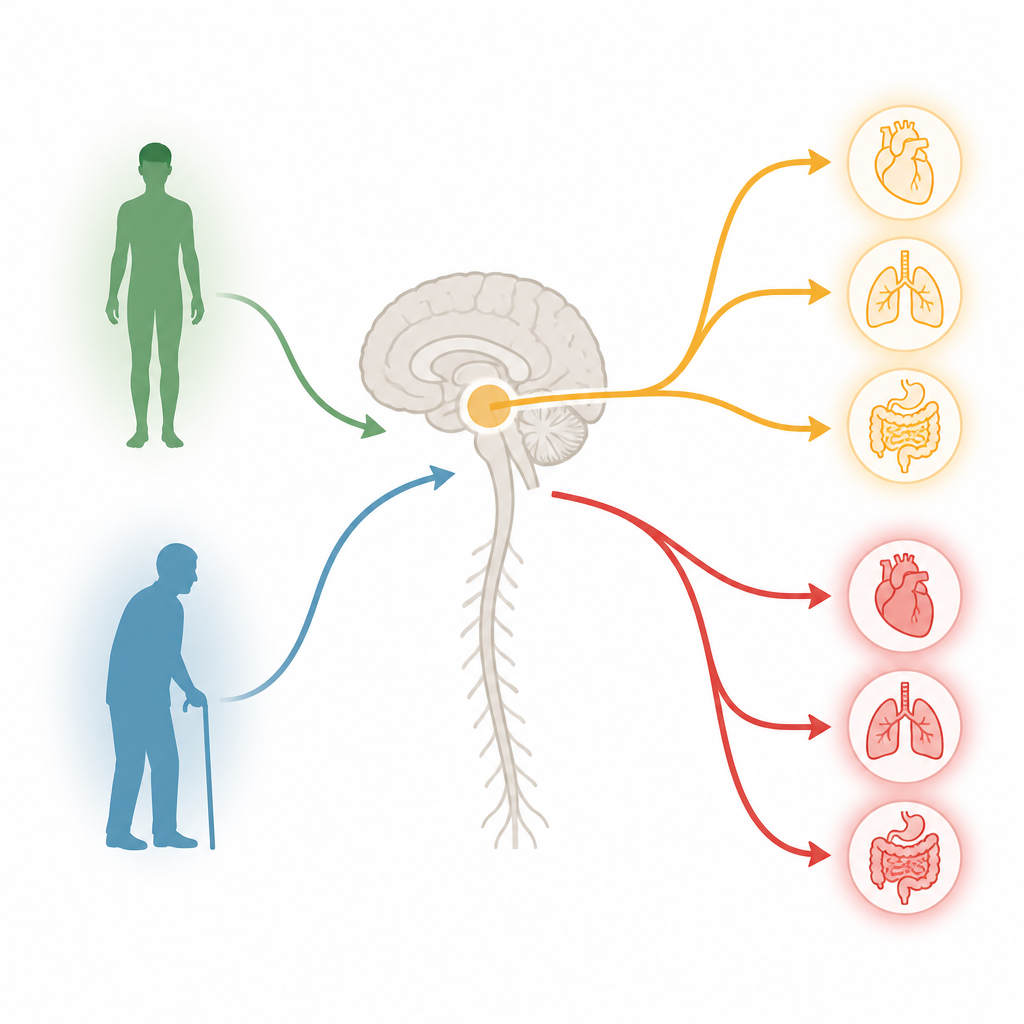
The team drew on data from the international Parkinson’s Progression Markers Initiative, focusing on 290 people newly diagnosed with Parkinson’s and 109 healthy peers. They split patients into early-onset Parkinson’s, with symptoms starting at or before age 50, and late-onset Parkinson’s, with symptoms beginning after 50. At the start, the two patient groups had similar movement problems, but the younger group did better on tests of memory, attention, and language. A key difference emerged in a specific fat-like molecule in the spinal fluid called C16 glucosylceramide and in brain scans that measure how many working dopamine transporters remain in deep brain regions that control movement and many automatic body functions.
A nerve fat with a mixed reputation
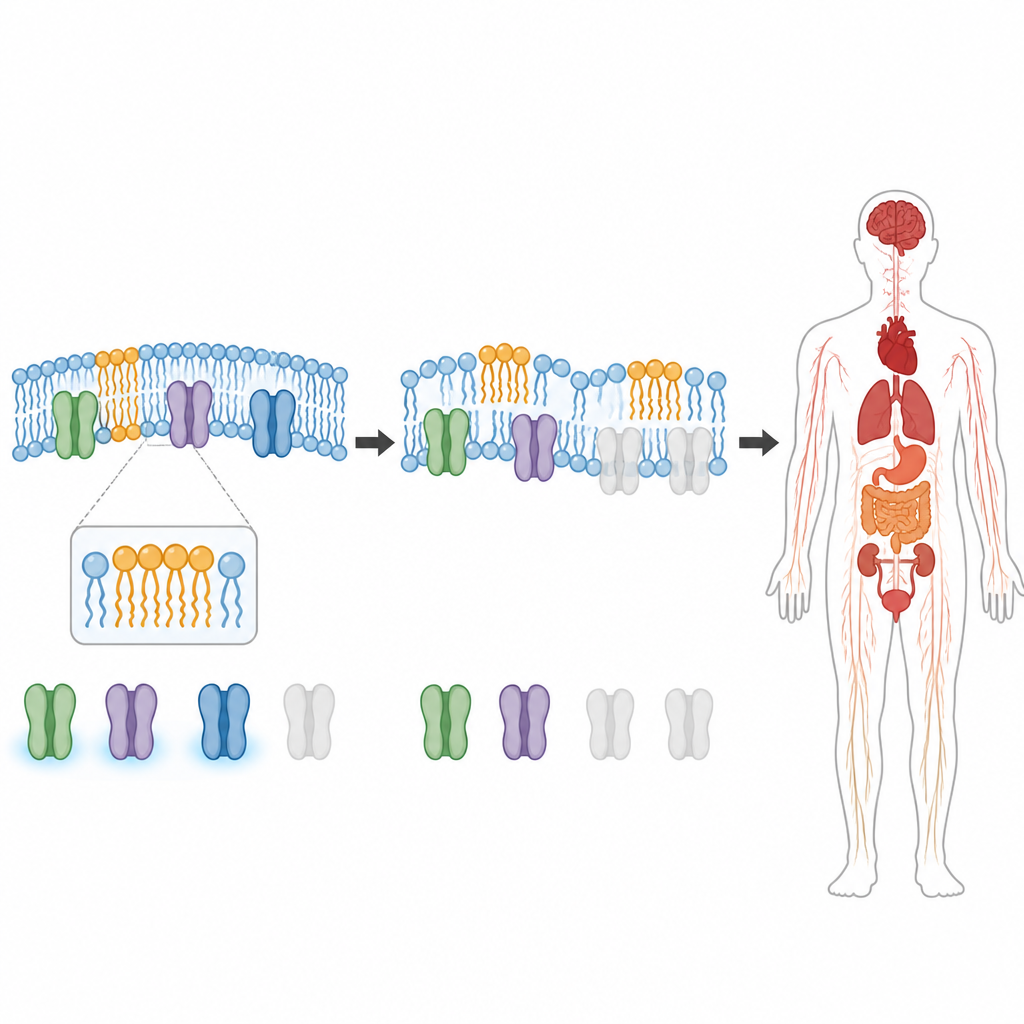
Sphingolipids are building blocks of nerve cell membranes and help shape how brain cells talk to each other. Lab studies suggest that the C16 form of glucosylceramide can be toxic to nerve cells and may encourage the clumping of alpha-synuclein, a protein that piles up in Parkinson’s. Yet in this study, average C16 glucosylceramide levels were the same in patients and healthy controls, which argues against using it as a simple yes-or-no test for Parkinson’s. Instead, the molecule seemed to behave as a modifier of disease course, especially in people whose symptoms begin later in life, where its levels were clearly higher than in early-onset patients.
Dopamine signal strength and body control
To gauge the health of dopamine-producing nerve endings, participants underwent a special brain scan that measures dopamine transporters in the striatum, a set of deep brain hubs. As expected, these signals were reduced in Parkinson’s compared with healthy volunteers. The study then followed patients for up to five years, tracking automatic body symptoms using a questionnaire and monitoring changes in thinking with several standard tests. Across both early- and late-onset groups, lower dopamine transporter signals in certain striatal regions meant a higher risk of developing significant autonomic problems, such as blood pressure swings or gut issues. In late-onset patients, better-preserved dopamine transporters also went hand in hand with slower declines in thinking skills.
Age shapes a three-way partnership
The most striking finding was how age at onset tuned the partnership between C16 glucosylceramide, dopamine transporters, and future autonomic health. In late-onset Parkinson’s, higher baseline C16 glucosylceramide together with stronger dopamine transporter signals predicted a gentler worsening of autonomic symptoms over time, even after accounting for levels of alpha-synuclein in spinal fluid. In early-onset disease, however, the risk of autonomic problems depended mainly on where dopamine loss was greatest, and complex statistical links involving the lipid were weaker and less stable. Survival and prediction analyses confirmed that models combining C16 glucosylceramide and dopamine transporter measures were better at distinguishing early- from late-onset cases and at forecasting new autonomic problems than either marker alone.
What this means for patients
For people living with Parkinson’s, these results suggest that when symptoms begin may influence how nerve cell fats and dopamine pathways jointly steer the course of hidden, non-motor problems. C16 glucosylceramide does not appear to diagnose Parkinson’s, but in combination with dopamine transporter scans and age at onset, it may help identify who is more likely to develop troubling autonomic symptoms. The work points toward a more tailored approach in which doctors could one day use simple biomarker panels to flag higher-risk patients and monitor them more closely, while researchers explore whether targeting lipid handling in nerve cells might slow specific complications of Parkinson’s disease.
Citation: Ye, Z., Zhang, S., Liu, Z. et al. Age at onset of Parkinson’s disease modulates the sphingolipid-dopaminergic interplay in autonomic progression. npj Parkinsons Dis. 12, 116 (2026). https://doi.org/10.1038/s41531-026-01308-9
Keywords: Parkinson’s disease, age at onset, autonomic dysfunction, dopamine transporter, sphingolipids