Clear Sky Science · en
Chemo-mechanical changes of low-pH concrete under deep geological repository-like conditions: coupled biotic and abiotic effects
Why underground concrete matters
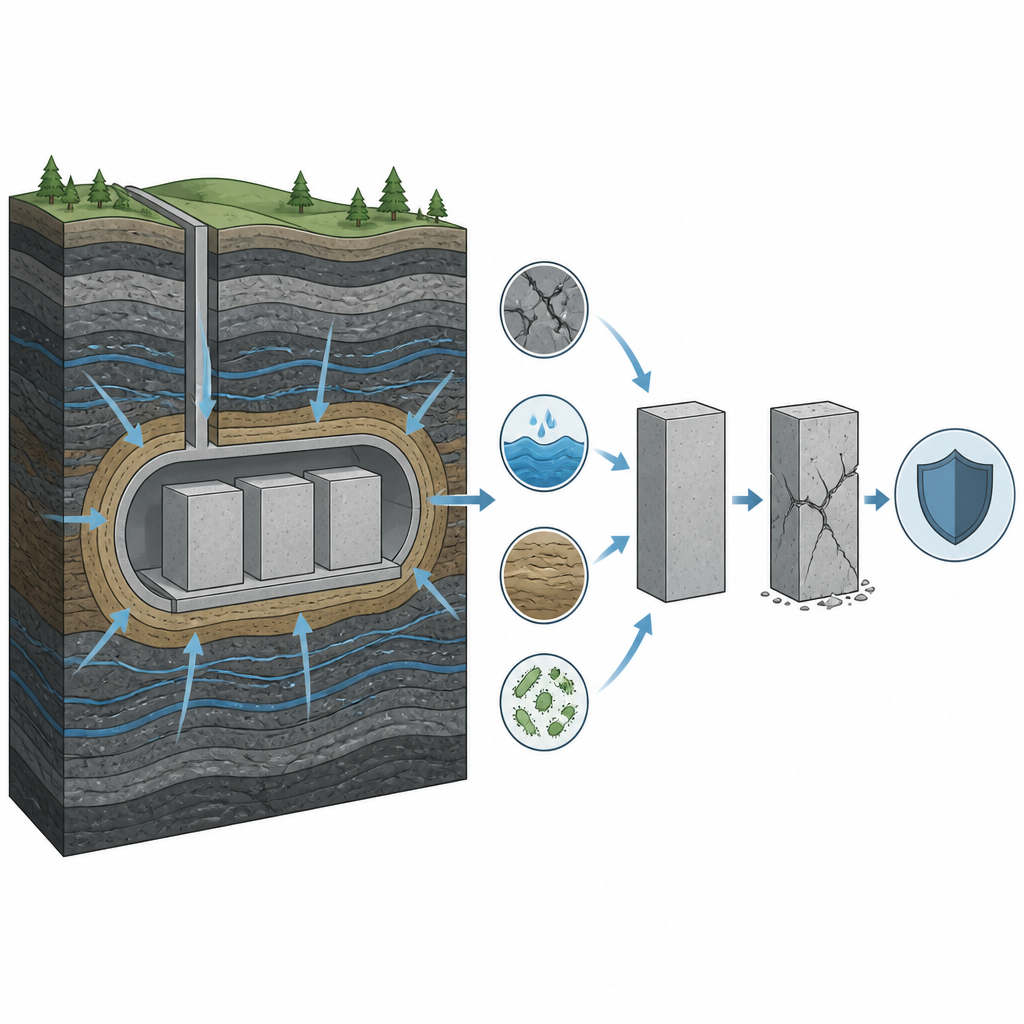
When we think about storing radioactive waste deep underground, we picture thick concrete walls that must stay strong for many decades or even centuries. This study explores how a special type of low-pH concrete behaves in a real underground research tunnel, where moist air, flowing groundwater, and clay buffers all interact with the material. The twist is that tiny microbes, not just chemistry and physics, help decide whether this concrete quietly holds its shape or slowly weakens at the surface.
Concrete in three underground worlds
The researchers worked in an underground laboratory about half a kilometer below ground, using ten-year-old low-pH concrete discs. They placed these discs in three realistic settings: exposed to humid tunnel air, bathed in natural groundwater, or covered by a thick suspension of bentonite clay similar to that planned for nuclear waste barriers. Over two years, they tracked which microbes moved in, how the concrete’s minerals changed, and how its strength and stiffness evolved. This allowed them to compare how each environment shaped both the living communities on the concrete and the slow, quiet changes inside the material.
Microbes find homes and change the surface
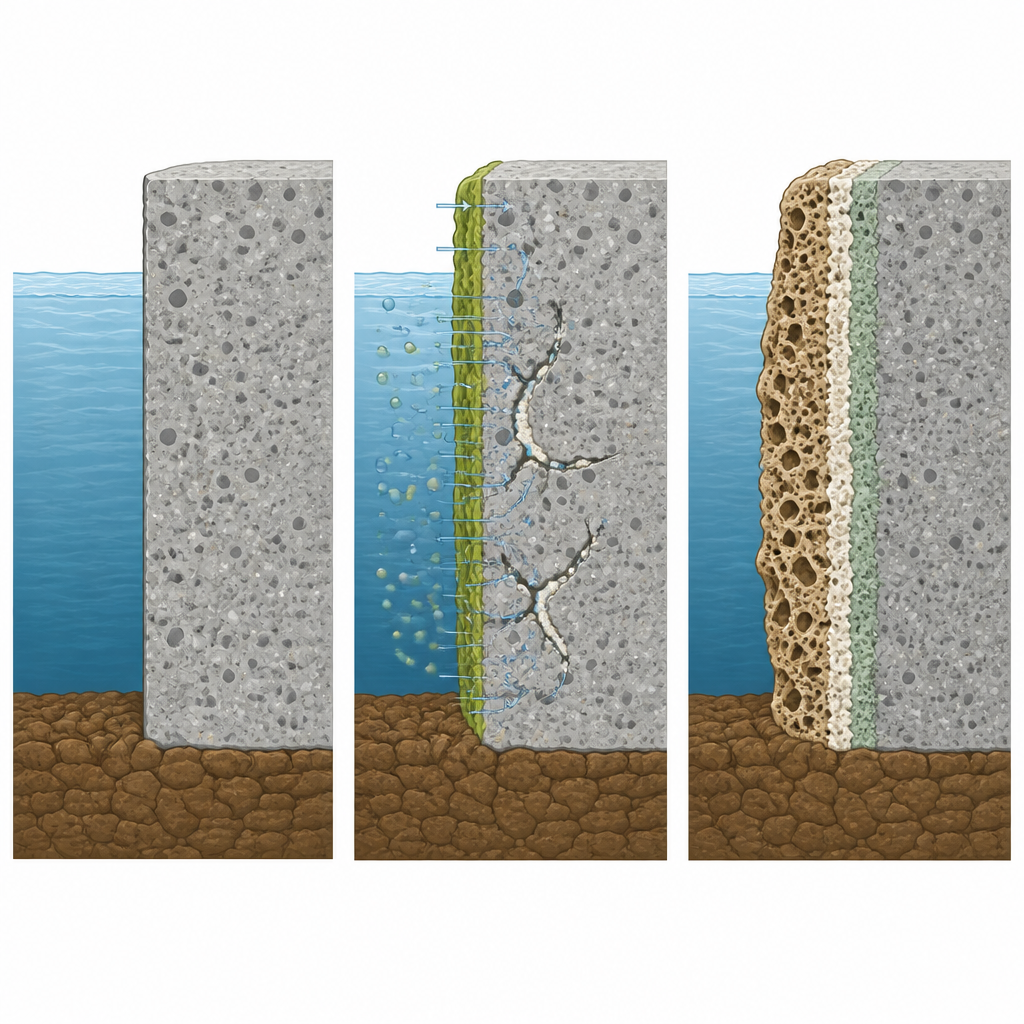
Each setting hosted its own cast of microscopic residents. In humid air, spores and airborne bacteria settled on the concrete, especially a group called Streptomyces and common filamentous fungi. On groundwater-exposed surfaces, bacteria that thrive in low-nutrient water and can use sulfur or hydrogen as energy became important. At the clay interface, different bacteria linked to bentonite and alkaline conditions gradually took over. Across all three cases, microbes first formed surface films, then progressively moved into tiny pores and cracks inside the concrete, turning sheltered microcavities into stable habitats where they could better withstand drying, limited food, or changing chemistry.
Invisible mineral reshaping
While the bare eye would see only dull grey slabs, sensitive mineral tests revealed subtle but important shifts. Microbial activity and the surrounding fluids helped create and dissolve different forms of calcium carbonate and sulfate near the surface. A temporary mineral called vaterite appeared early, especially in humid air and under water, and later tended to convert to more stable calcite or to disappear as conditions changed. In clay contact, gypsum and magnesium-bearing reactions emerged later, hinting at slow chemical attack on the binding phases of the concrete. At the same time, the overall alkaline nature of the concrete remained mostly intact, but very thin outer rims became less alkaline, showing where reactions and microbial acids had done their work.
Strength: solid inside, softer outside
Mechanical tests told a nuanced story. Bulk compressive strength, which reflects how the whole piece of concrete resists crushing, stayed similar across all environments during the two-year period. Closer to the surface, however, more delicate tests picked up changes. In air, the concrete’s stiffness and hardness at the surface stayed stable or even improved slightly, likely because mineral deposits partly sealed pores. In groundwater, the surface first stiffened as new minerals filled voids, then softened again as those phases dissolved or reorganized, leaving the inner core unaffected. At the clay interface, the surface weakened the most over time. Here, the combination of clay rich in magnesium and local chemical shifts transformed some of the concrete’s binding phases into weaker products, while microbes likely helped by conditioning pores and microenvironments, allowing that chemistry to proceed.
What this means for future waste repositories
For a lay observer, the key message is that low-pH concrete can remain structurally sound in the short to medium term, but its outer skin is very sensitive to the exact underground conditions. Humid air, flowing groundwater, and clay buffers each encourage different microbial communities and chemical reactions at the surface. Over time, these living films and their by-products can tip the balance between minor surface hardening and gradual softening. The study shows that to judge whether such concrete is safe enough for nuclear waste tunnels, engineers must consider not only the rock, water, and clay, but also the invisible microbial partners that share these spaces and quietly reshape the first few millimeters of the concrete.
Citation: Le Duc, T., Vasicek, R., Cerna, K. et al. Chemo-mechanical changes of low-pH concrete under deep geological repository-like conditions: coupled biotic and abiotic effects. npj Mater Degrad 10, 60 (2026). https://doi.org/10.1038/s41529-026-00773-0
Keywords: low pH concrete, deep geological repository, microbial biofilm, concrete durability, bentonite clay