Clear Sky Science · en
Incorporating alkali-catalyzed nano-silica sol to enhance the durability of sodium carbonate-activated slag mortar in aggressive environments
Why Stronger, Greener Concrete Matters
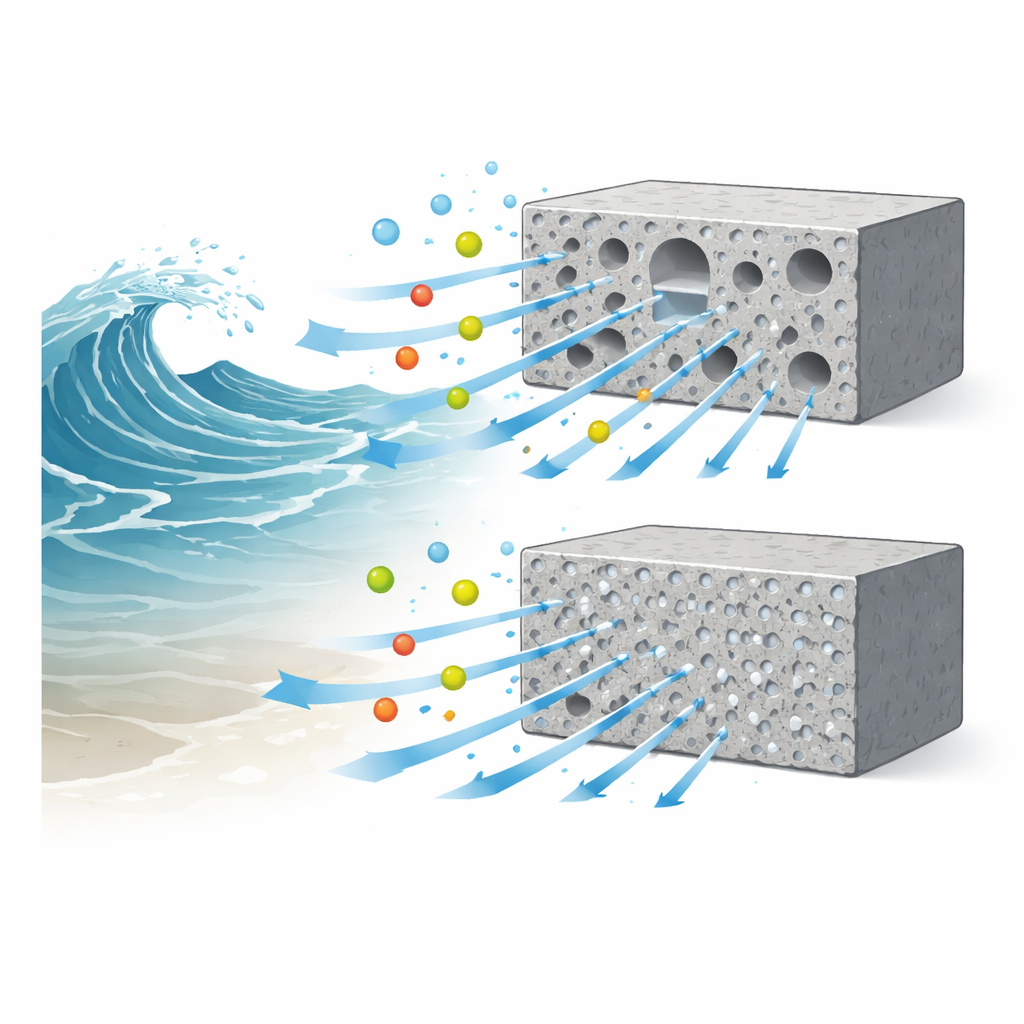
Modern cities, bridges, and ports rely on concrete, but traditional cement comes with a heavy climate cost and can deteriorate quickly in harsh environments such as coastlines and cold regions. This study explores a promising alternative binder for concrete that produces less carbon dioxide yet still stands up to salt water, freezing, and corrosive chemicals. By adding a special nano-sized silica ingredient to a new type of slag-based mortar, the researchers show how we might build longer-lasting marine and infrastructure works while easing the burden on the planet.
A New Kind of Low-Carbon Building Block
Ordinary concrete relies on Portland cement, whose production accounts for a sizable share of global carbon emissions. One greener route uses industrial by-products such as granulated blast furnace slag, “activated” with alkaline chemicals to form a hard, stone-like binder. In this work, the team focused on slag mortar activated with sodium carbonate, a comparatively climate-friendly and low-cost chemical that also reduces shrinkage and cracking. The trade-off is that this sodium carbonate-activated slag mortar tends to have a more porous internal structure, making it vulnerable to attack from salts, water, and cycles of freezing and thawing—conditions common in marine and road environments.
How Tiny Silica Droplets Help
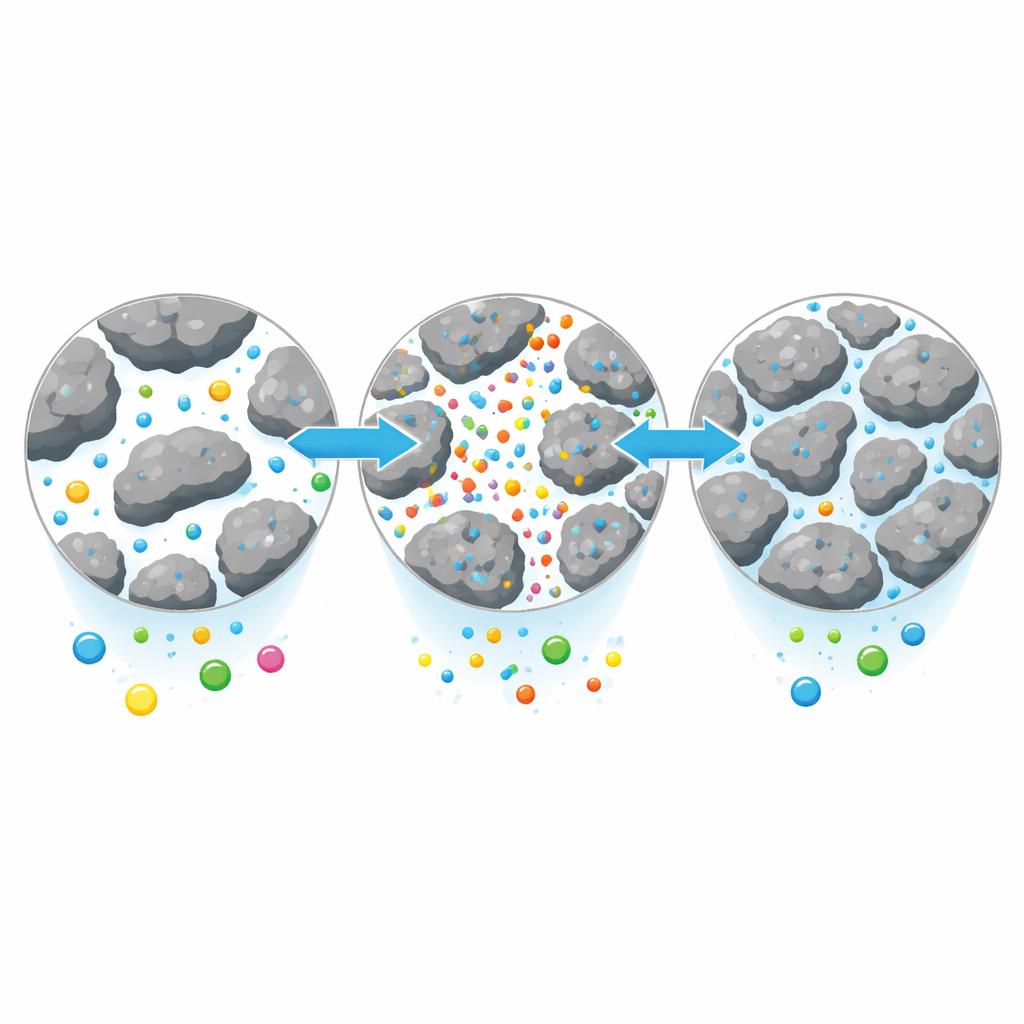
To tackle this weakness, the researchers added varying amounts of alkali-catalyzed nano-silica sol, a fluid containing ultra-fine silica particles that stay well dispersed. Unlike dry nano-silica powder, this sol spreads evenly through the fresh mortar. During hardening, the nano-silica reacts with calcium released from the slag to form extra binding gel, while leftover particles fill in gaps. The team prepared mortars with different nano-silica contents and then measured surface alkalinity, water uptake, freezing resistance, and how easily damaging sulfate and chloride ions could enter. Microscopic imaging, X-ray diffraction, and pore-size measurements were used to see what was happening inside the material.
Standing Up to Water, Salt, and Ice
Across all tests, mortars containing nano-silica sol clearly outperformed the control material. The added nano-silica lowered the surface alkalinity, reduced overall porosity, and cut capillary water absorption, meaning less water could seep in. Under repeated freeze–thaw cycles, mixtures with higher nano-silica contents lost less mass and retained more strength, and their surfaces showed far fewer flakes and cracks. When exposed for many months to sodium and magnesium sulfate solutions—chemicals that commonly attack concrete in soils and seawater—the mortars with about 8% nano-silica suffered much smaller strength losses, with damage from the more aggressive magnesium sulfate notably reduced. In tests that simulated cycles of wetting and drying in salt water and direct chloride penetration, nano-silica-rich mortars again resisted ion ingress far better, showing penetration depths and migration rates that dropped by more than half compared with the untreated version.
What Changes Inside the Material
The imaging and structural analyses revealed why these performance gains occur. Nano-silica sol led to a denser internal network, with many large and medium-sized pores converted into much finer gel pores and fewer of them forming continuous pathways. This refined microstructure made it physically harder for water and aggressive ions to move through the mortar. At the same time, the added silica encouraged the formation of more extensive and stable binding gels that knit the slag grains together into a three-dimensional skeleton. The quantity of expansive, crack-causing crystals such as ettringite, gypsum, brucite, and chloride-bearing salts was lower in nano-silica mixes, because fewer ions could get in and more were harmlessly held on the surfaces of the gels and nano-particles.
What This Means for Future Construction
For a non-specialist, the bottom line is that tiny, well-dispersed silica droplets can transform a relatively fragile, porous low-carbon mortar into a tougher, more tightly packed material that better withstands harsh environments. By refining the pore network and stabilizing the internal gel, alkali-catalyzed nano-silica sol sharply improves resistance to water, salt, and freezing damage, with around 8% addition giving the best overall results in this study. This approach offers a practical, low-cost path toward more durable, environmentally friendly mortars and concretes for marine structures, roads, and other infrastructure exposed to aggressive conditions.
Citation: Zheng, X., Hu, Z., Liu, H. et al. Incorporating alkali-catalyzed nano-silica sol to enhance the durability of sodium carbonate-activated slag mortar in aggressive environments. npj Mater Degrad 10, 52 (2026). https://doi.org/10.1038/s41529-026-00763-2
Keywords: alkali-activated slag, nano-silica sol, concrete durability, sulfate and chloride attack, low-carbon construction