Clear Sky Science · en
Anti-cavitation corrosion of laser-cladded CoCrFeNiAlx on TC4 surface
Protecting Ships from Invisible Water Hammer
Modern ships and offshore equipment constantly face a hidden threat: tiny bubbles in fast-moving water that slam into metal like microscopic hammers. This process, called cavitation, can chew through propellers, pumps, and hull parts, especially in salty seawater where chemical corrosion joins the attack. This study explores a new kind of protective coating made from "high‑entropy" alloys and shows how carefully tuning one ingredient—aluminum—can dramatically improve a ship component’s lifetime.
Why Bubbles Can Break Metal
When water flows quickly around a ship’s hull or propeller, local pressure can drop so low that vapor bubbles suddenly form, then collapse a fraction of a millimeter from the metal surface. Each collapse produces a shock wave and a high-speed water jet that batter the metal at up to hundreds of meters per second. In seawater, dissolved salts turn this purely mechanical battering into a one‑two punch: the surface is stressed, tiny cracks and pits form, and salt-driven corrosion attacks these weak spots, making the damage spread faster and deeper. Even strong titanium alloys such as TC4, commonly used in marine equipment, can develop rough, honeycomb-like surfaces and lose material rapidly under this combined assault.
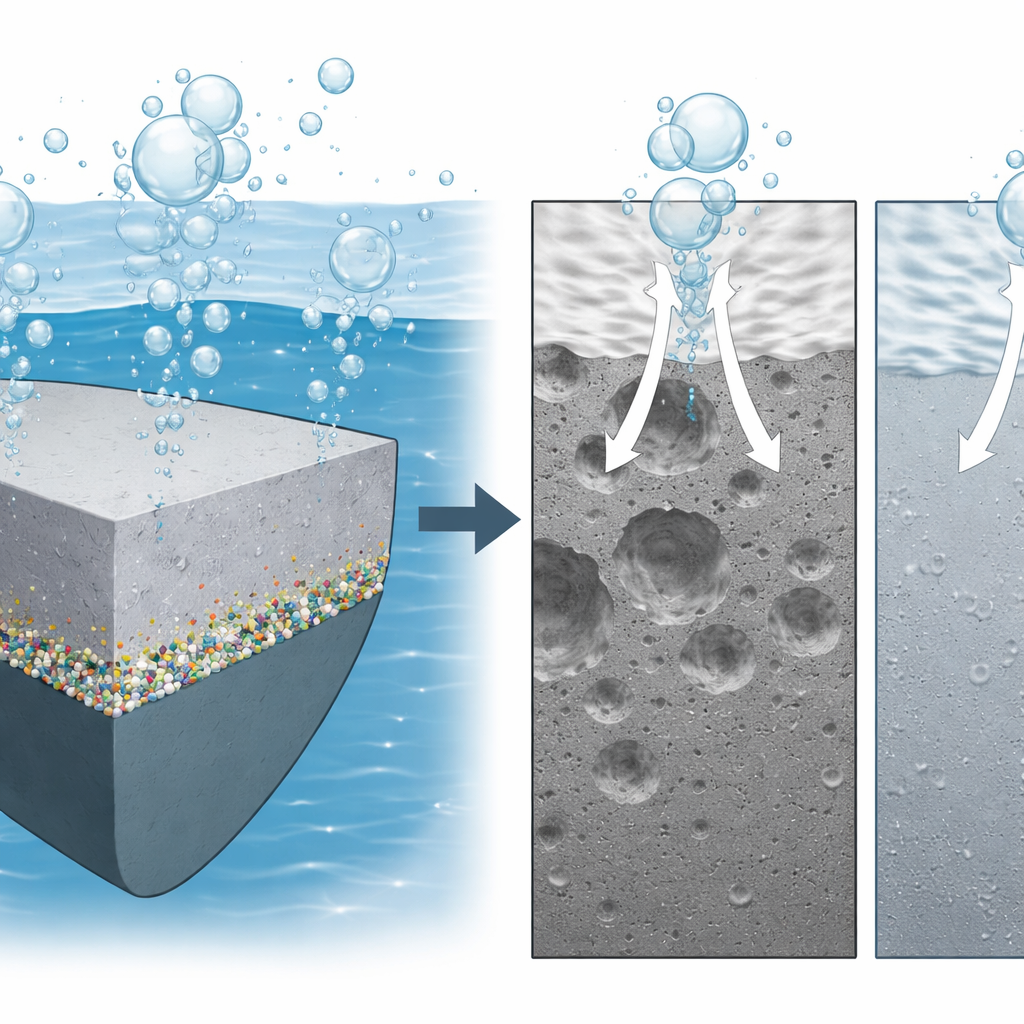
New Multi-Metal Coatings for Tougher Surfaces
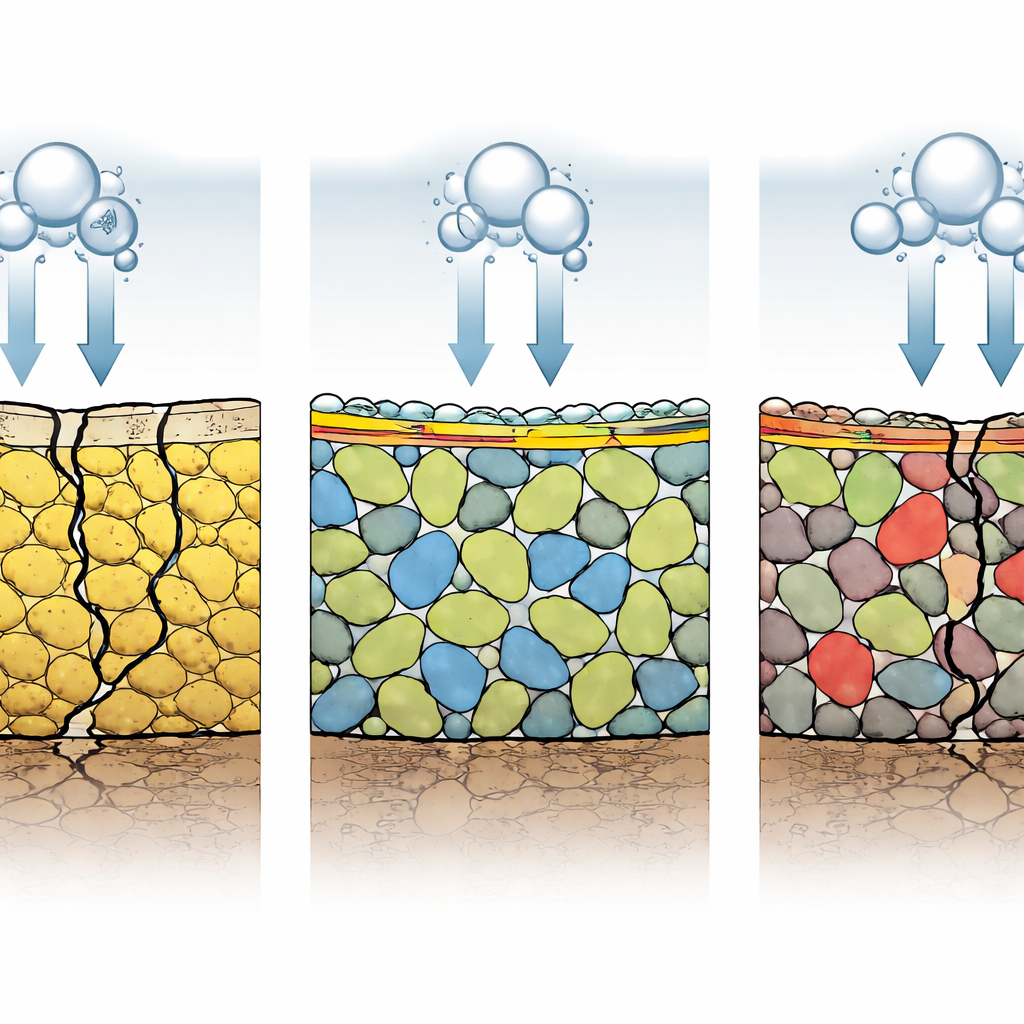
To fight this problem, the researchers developed coatings based on CoCrFeNiAlx high‑entropy alloys, which mix five metals in roughly similar amounts, rather than relying on a single main element like steel does. They deposited these coatings onto TC4 titanium using laser cladding, a process that melts a thin surface layer and fuses in metal powder to form a dense, bonded layer about 700 micrometers thick. By gradually increasing the aluminum content, they could make the internal structure shift from a single, more flexible phase to a mixture of phases and eventually to a harder, more rigid phase. This internal "architecture"—how grains and phases are arranged—turns out to be crucial for resisting both impact and corrosion.
Finding the Sweet Spot in Aluminum Content
The team then tested how fast the coated and uncoated samples lost weight when exposed to intense cavitation, first in pure water and then in artificial seawater. They also probed how easily corrosion started and spread using electrochemical techniques. A clear pattern emerged: as aluminum content increased, resistance to cavitation and corrosion first improved and then worsened. A composition labelled CoCrFeNiAl0.2 offered the best overall performance. Compared with bare TC4 in distilled water, this coating lost only about 5% as much material after 24 hours of cavitation. In seawater, where damage was about 100 times worse overall, the optimized coating still dramatically outperformed titanium, showing the shallowest pits and the smoothest surface.
How the Coating Fights Back
Microscopic imaging and hardness measurements revealed why this particular formulation works so well. Its mixed internal structure balances strength and plasticity: it is strong enough to resist indentation from bubble impacts but still able to deform slightly and absorb energy instead of cracking. Under repeated bubble collapse, the top layer of grains becomes finer and denser, which actually hardens the surface further. At the same time, aluminum and chromium in the coating react with oxygen to form a thin, tightly packed oxide film of Al2O3 and Cr2O3. This film acts like a self-forming armor, slowing down corrosion and helping to block the growth of pits and cracks. When aluminum is pushed too high, however, the coating becomes dominated by a stiffer phase that loses plasticity, so it can no longer cushion the impacts and begins to suffer deeper, more brittle damage.
What This Means for Ships and Offshore Gear
By carefully tuning just one element in a multi-metal coating, the authors show it is possible to significantly extend the life of titanium components working in harsh seawater. The CoCrFeNiAl0.2 coating combines a favorable internal structure with a protective oxide skin, limiting both mechanical wear from cavitation and chemical attack from salts. For shipbuilders, turbine designers, and offshore engineers, this work points toward coatings that not only withstand the ocean’s constant pounding but also slow the hidden corrosion that follows. In practical terms, that means safer equipment, fewer repairs, and more efficient use of materials and energy over a vessel’s lifetime.
Citation: Gao, PH., Liu, J., Chen, BY. et al. Anti-cavitation corrosion of laser-cladded CoCrFeNiAlx on TC4 surface. npj Mater Degrad 10, 46 (2026). https://doi.org/10.1038/s41529-026-00758-z
Keywords: cavitation erosion, marine corrosion, high-entropy alloys, protective coatings, titanium alloys