Clear Sky Science · en
A wireless, position-insensitive electrical stimulation platform with adequate and configurable parameters for diverse therapeutic applications
Gentle Sparks That Help the Body Heal
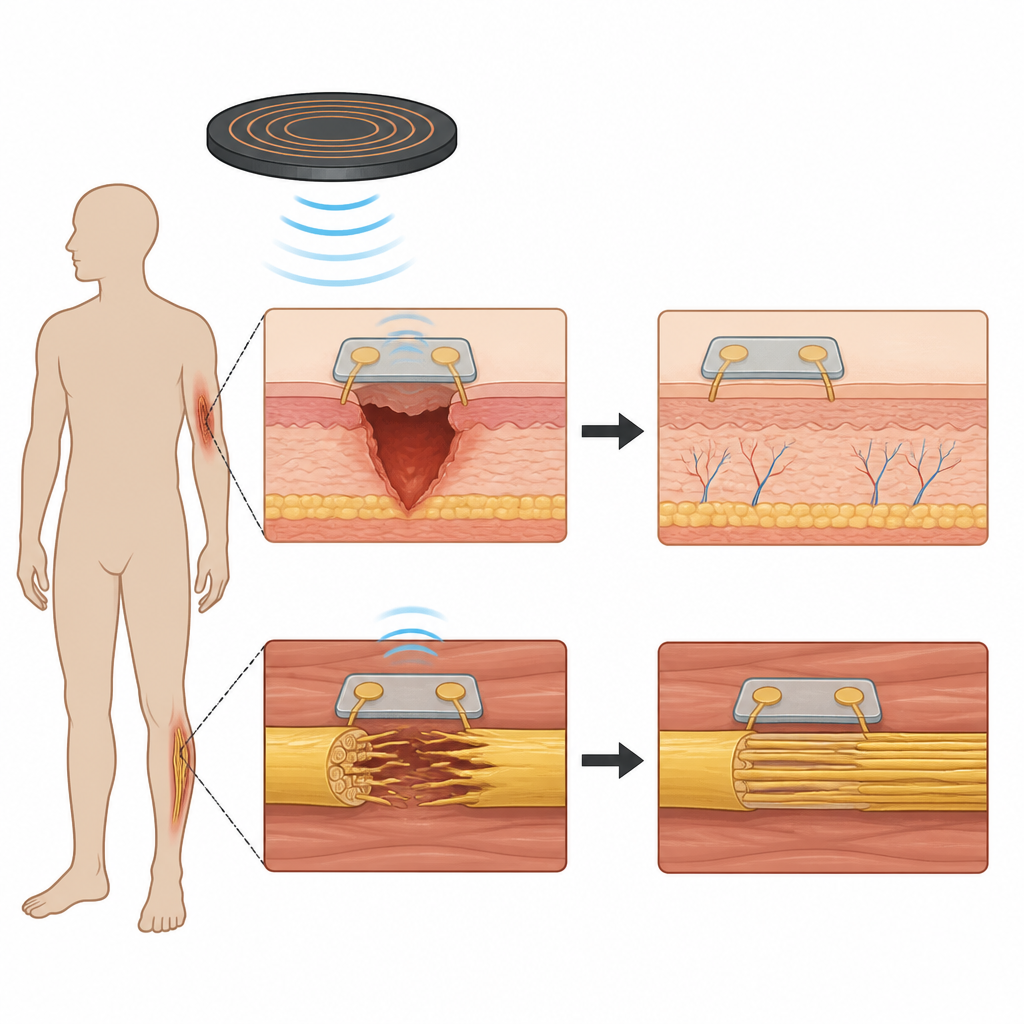
Imagine healing a stubborn skin wound or a damaged nerve using tiny, painless bursts of electricity instead of drugs or bulky machines. This study introduces a thin, wireless patch and implant system that can safely send controlled electrical pulses into the body to speed up repair, without batteries, wires, or strict positioning on the skin. It shows how carefully tuned electrical signals can help tissues heal faster while keeping patients free to move.
Why Doctors Care About Tiny Electrical Pulses
Doctors have long known that small electrical pulses can influence how cells grow, move, and talk to each other. Such stimulation is already used to ease pain, help people move after spinal cord injury, pace the heart, and encourage damaged tissues to regrow. But current medical devices often rely on wires running through the skin or on heavy batteries, which can raise infection risk, feel uncomfortable, and require frequent maintenance. Many devices are also built for just one narrow purpose, making it hard to adjust them to different patients or disorders.
Building a Wireless “Power Mat” for Tissues
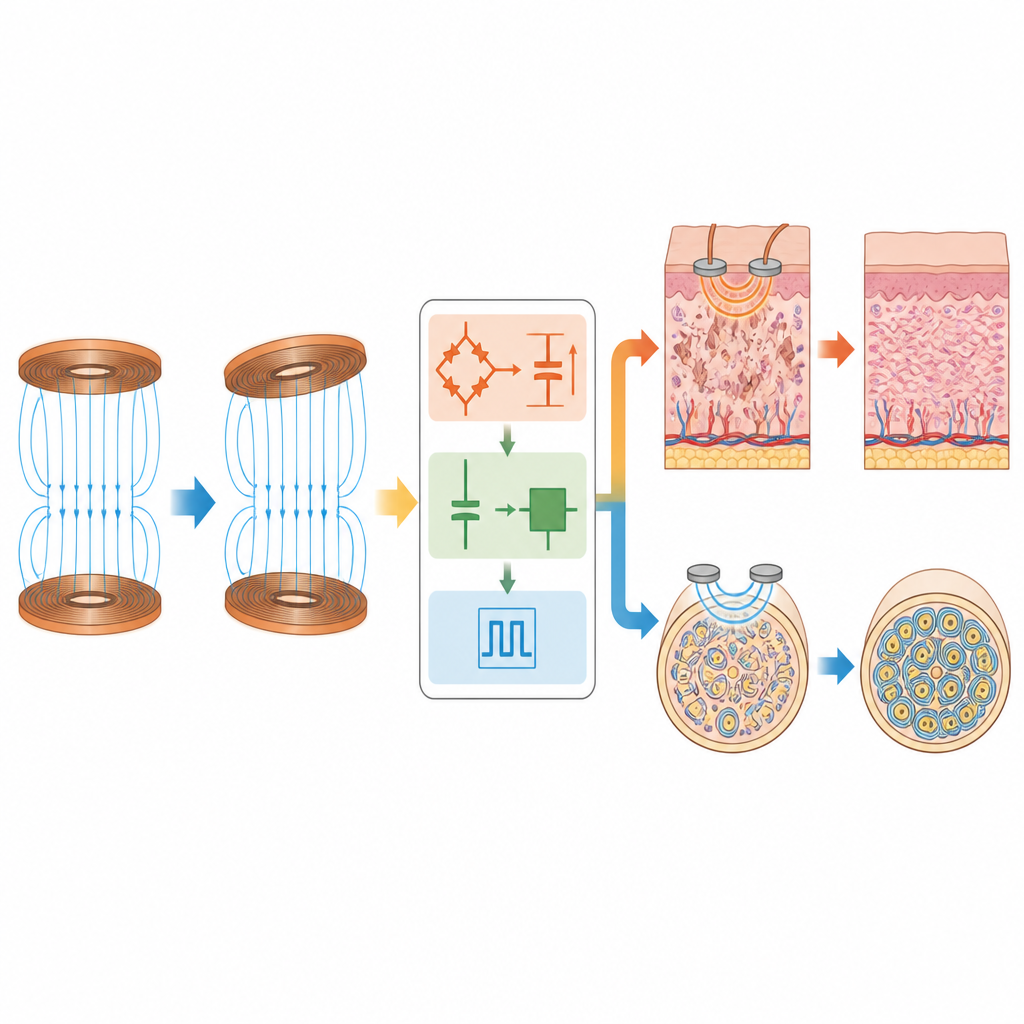
The team designed a wireless system made of two main parts: an external transmitter coil and a small, flexible receiver that sits on or under the skin. Power is sent through space between these coils using a magnetic field, similar in spirit to wireless phone chargers. Inside the receiver, a set of simple circuits boosts the incoming signal to as high as about 15 volts peak to peak, smooths it to keep the output stable, and shapes it into pulses. The result is a tiny, battery-free stimulator that can deliver adjustable pulses in a wide range of strengths, speeds, and on–off patterns that match different medical needs.
Working Even When Things Are Out of Place
In real life the external coil will not always sit perfectly over the implanted device, especially when a person walks, sleeps, or changes position. Many earlier systems lose power sharply when the coils shift by just a few millimeters or tilt by a small angle. Here, the researchers added a smart voltage regulator and a multi-step booster circuit that keep the outgoing pulses nearly constant, even when the receiver is moved sideways or up and down by over a centimeter and when it rotates by dozens of degrees. Rather than letting misalignment change the strength of the pulses, the system mainly changes how far away it can still work, which helps keep treatment more reliable.
Putting Safety and Cell Behavior to the Test
Before trying the device in animals, the scientists checked whether the materials and pulses harmed cells. Several types of cultured cells grew well on the surface of the stimulator, with almost no dead cells seen over many days. In rats, placing the flexible device under the skin did not trigger strong inflammation, raise local temperature, or reduce normal movement. When electrical pulses were applied in dishes, skin cells important for wound repair multiplied more and crawled faster to close artificial scratches, while nerve cells and nerve clusters grew longer, more complex extensions that are key for signal transmission.
Helping Wounds Close and Nerves Recover
The team then used rats to see whether the wireless pulses could actually speed recovery in living tissues. In a skin wound model that closely mimics human healing, animals that received brief stimulation sessions every other day closed their wounds about a quarter faster than animals that healed on their own. Their new skin layer was thicker, less inflamed, and richer in tiny blood vessels. In a separate model of sciatic nerve injury, implanted stimulators placed around the injured nerve and powered from outside the body improved nerve regrowth, preserved muscle size, and led to better walking scores after four weeks. Treated rats walked more like healthy animals, with stronger and more coordinated hindlimb steps.
What This Could Mean for Future Care
This work shows that a thin, wireless, and position-tolerant electrical patch or implant can safely deliver useful pulses to many different tissues and speed healing in both skin and nerves in animals. While the current system is still a prototype and not yet ready for the clinic, its adjustable settings and freedom from batteries or precise alignment point toward future treatments where doctors can personalize gentle electrical therapies for a wide range of injuries and chronic conditions.
Citation: Ye, Z., Wang, Y., Zhao, K. et al. A wireless, position-insensitive electrical stimulation platform with adequate and configurable parameters for diverse therapeutic applications. npj Flex Electron 10, 64 (2026). https://doi.org/10.1038/s41528-026-00577-x
Keywords: wireless electrical stimulation, wound healing, nerve regeneration, flexible electronics, bioelectronic therapy