Clear Sky Science · en
Unidirectional dynamic stiffness modulation enables easily insertable and conformally attachable spinal bioelectronic device
Making Spinal Implants Gentler and Easier to Place
Spinal cord stimulators can relieve chronic pain and help restore movement or control blood pressure, but today’s devices are often bulky and stiff. They can be hard to slide into the narrow space around the spinal cord and may irritate soft tissue over time. This study introduces a new kind of spinal implant that temporarily behaves like a firm surgical tool during insertion, then transforms into a soft, body-hugging electronic after it is in place—aiming to make treatments safer, longer lasting, and more widely usable.
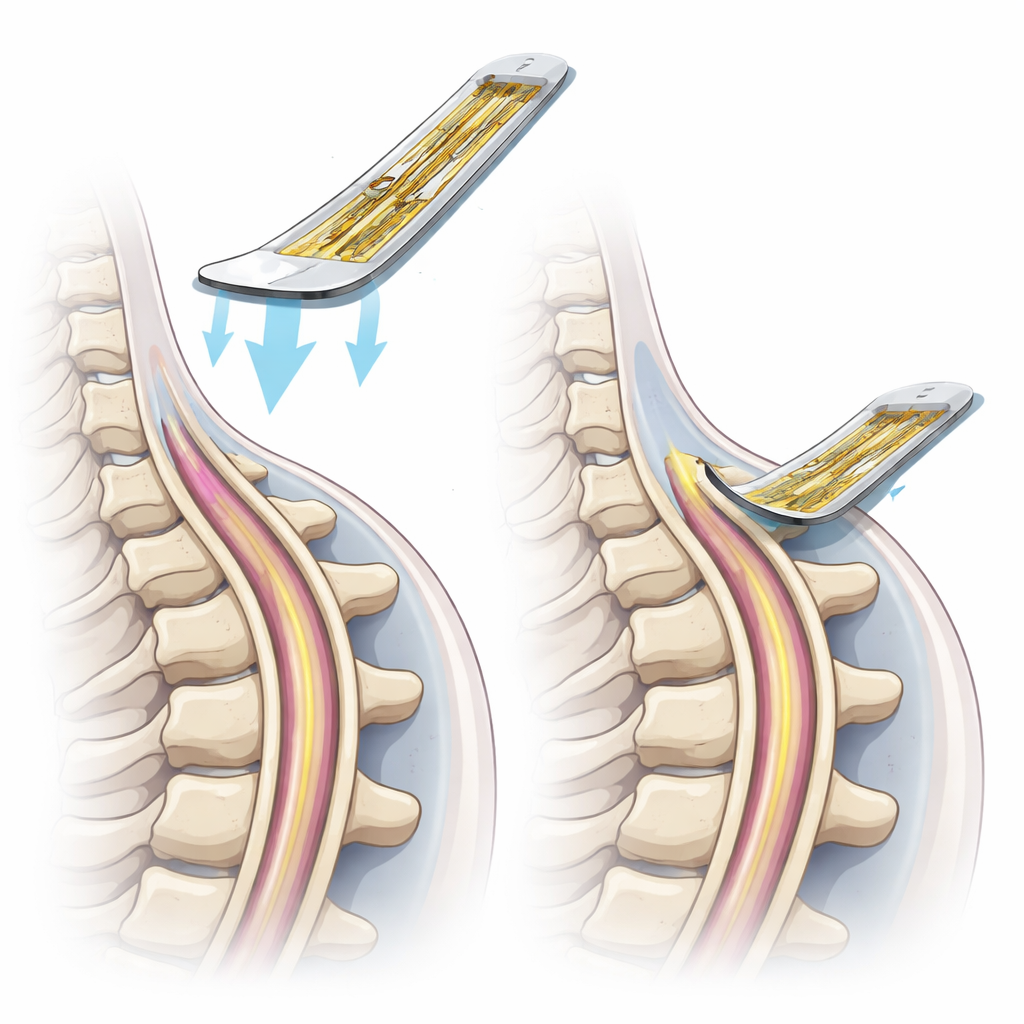
The Problem with Current Spinal Electronics
Modern “electroceuticals” send small electrical pulses to the nervous system to treat pain, paralysis, and problems with blood pressure or organ function. Commercial spinal cord stimulators use thick, rigid leads so surgeons can push them through the tight epidural space without buckling. But these stiff devices do not match the softness of the spinal cord, leading to tissue damage, movement of the implant, and hardware failures. New research prototypes go in the opposite direction, using ultra-thin, flexible films that better match the cord. However, these are often too floppy to handle safely: they may crumple during surgery, require extra incisions and pulling with wires, and are prone to cracking of their metallic wiring over time.
A Shape-Shifting Spinal Interface
The authors designed a “variable-compliant structure–based neural interface” (VCS-NI) that combines the best features of both worlds. The device is built on a soft silicone base that matches the spinal cord’s softness and uses liquid metal as the electrical conductor instead of fragile metal films. On top of this, they add a temporary, water-soluble plastic layer that is much stiffer. Outside the body, this sacrificial layer makes the strip firm enough to push smoothly into the small space alongside the spinal cord, much like existing commercial leads. Once implanted in the moist environment of the spine, the stiff layer dissolves within minutes, leaving behind only a thin, highly flexible strip that naturally conforms to the curvature and motion of the cord.
How the Device Protects the Cord and Stays Stable
Using computer simulations and tests, the team showed that the VCS-NI presses less on spinal tissue during insertion and movement than typical thin-film implants made from harder plastics. After the stiff layer dissolves, the device bends easily with the spinal cord, reducing stress points that can cause damage or shift the implant out of place. The liquid-metal conductor—sealed inside the silicone and contacted only through platinum pads—kept nearly constant electrical resistance even when stretched or bent thousands of times. In accelerated aging tests meant to mimic months in the body, traditional thin metal films degraded quickly, while the liquid-metal design retained low impedance and a high capacity to safely inject charge. Cell culture experiments and five-week animal studies found high cell survival, little inflammation around the implant, and no signs of toxic effects in major organs, even under conditions designed to exaggerate risk.
From Rats to Real-World Function
To show that the VCS-NI is not just mechanically clever but medically useful, the researchers implanted it on the spinal cord of rats. By stimulating specific regions, they could lower blood pressure in a controlled way, demonstrating the potential for fine-tuning autonomic functions such as cardiovascular control. In a separate configuration, the same type of interface recorded sensory-related signals from the surface of the spinal cord as the rats’ paws were touched or pinched. The signals appeared mainly in channels aligned with the relevant sensory pathways, showing that the device can both stimulate and read out spinal activity with spatial precision—key requirements for future closed-loop therapies that adjust stimulation in real time.
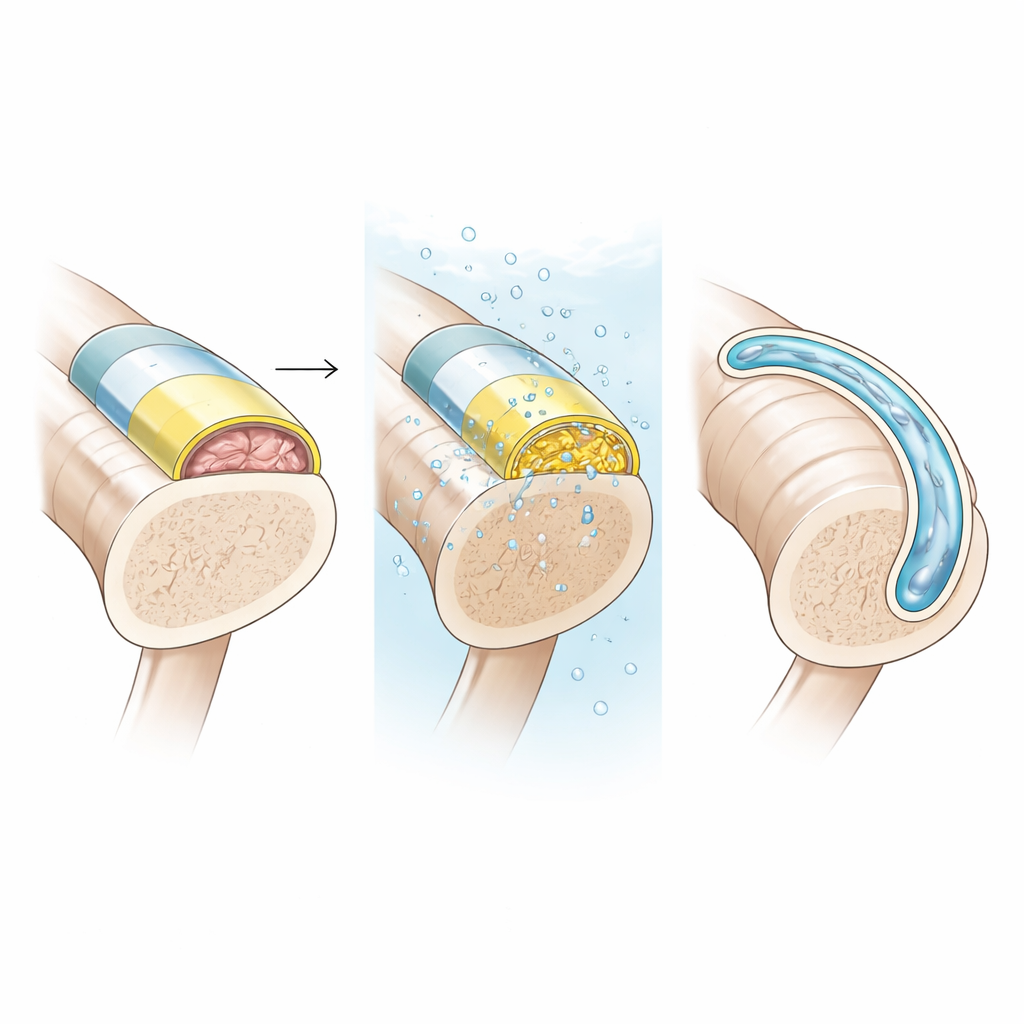
Why This Matters for Future Therapies
This work shows that a spinal implant can be stiff when surgeons need to guide it and soft when the spinal cord needs protection. By pairing a dissolving support layer with a durable, liquid-metal-based conductor in a low-cost manufacturing process, the VCS-NI addresses practical surgical handling, long-term reliability, and biological safety in one design. While the study was performed in rats, the same strategy could help create gentler, more effective spinal stimulators and other body-mounted electronics that better respect the body’s motion and softness, potentially expanding neuromodulation therapies to more patients with fewer complications.
Citation: Hong, S., Pak, S., Cho, M. et al. Unidirectional dynamic stiffness modulation enables easily insertable and conformally attachable spinal bioelectronic device. npj Flex Electron 10, 57 (2026). https://doi.org/10.1038/s41528-026-00557-1
Keywords: spinal cord stimulation, flexible bioelectronics, liquid metal conductor, neuromodulation, implantable neural interface