Clear Sky Science · en
EdemaFlex: textile-based soft-robotic platform toward personalized hand edema therapy
Why helping swollen hands matters
Swollen hands are more than a nuisance: they can make it hard to button a shirt, cook a meal, or even hold a book. People develop hand swelling, or edema, after strokes, cancer treatment, injuries, or chronic illnesses, and care often depends on clinic visits and bulky equipment. This article presents a new kind of soft robotic glove, called EdemaFlex, that aims to bring effective, clinic-style hand treatment into the home in a comfortable, personalized, and easy-to-use form.
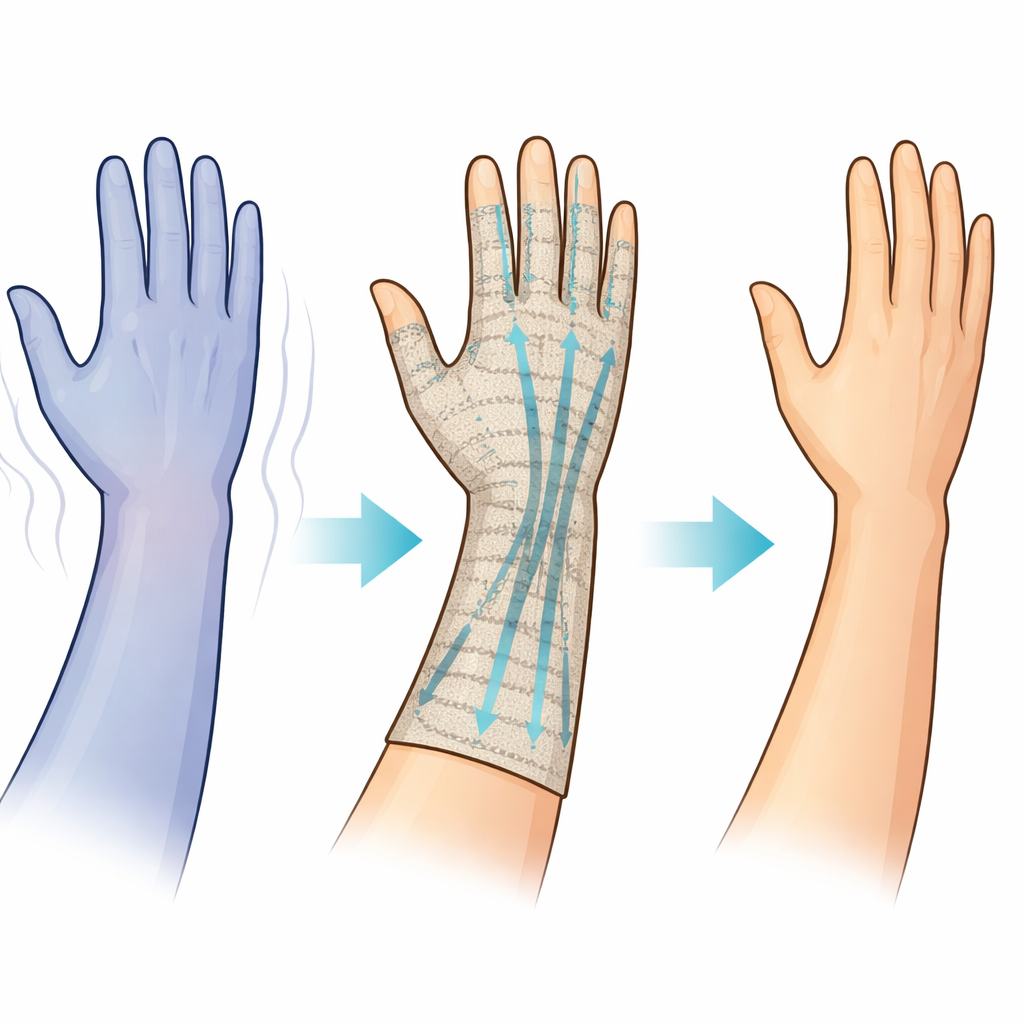
The problem with swelling and current care
When fluid builds up in the tissues of the hand, fingers stiffen, joints lose their range of motion, and everyday tasks become painful or impossible. Traditional treatments—such as manual massage to move fluid, elastic compression gloves, vibrating or heated devices, and pharmaceutical drugs—can help, but they have drawbacks. Many require trained therapists, repeated appointments, or large pneumatic sleeves powered by external pumps. For many patients, this means high cost, travel, and irregular treatment. Existing consumer devices for the hand tend to give only broad, uniform pressure, with little ability to target problem areas or adjust the timing and strength of compression for each person.
A smart glove built from fabric and memory metal
The researchers behind EdemaFlex combined advanced knitting, tiny metal springs, and compact electronics to create a glove that hugs the hand like clothing but acts like a programmable therapy tool. The glove’s base is a soft, stretchy knit that naturally provides gentle squeeze. Threaded through hidden channels in this fabric are 37 tiny springs made from a material called shape-memory alloy. When an electric current briefly warms each spring, it shortens, tightening the surrounding knit and squeezing the hand. When the current stops, the springs cool and relax. Because each spring can be controlled separately, the glove can produce waves of pressure that start at the fingertips and travel toward the wrist, mimicking the way a skilled therapist would move fluid along natural drainage paths.
Designing each glove around the person
To move from laboratory concept to something real people can use, the team built a digital design tool and followed a co-design process with clinicians. Therapists measure each person’s hand and enter these values into the software, which automatically generates a glove pattern scaled to that individual. On screen, clinicians can adjust where each spring channel runs, avoiding bony or sensitive spots and focusing pressure on regions where swelling is worst. This pattern is then fed directly into an industrial knitting machine that produces the custom textile. A small control box worn on the forearm houses the batteries and electronics that drive the springs and communicate wirelessly with a phone-based interface that starts, pauses, and logs 30-minute treatment sessions.
Testing safety, pressure, and comfort
Before trying the glove on patients, the team carefully measured how much the springs could tighten and what pressures they produced on the skin. They tuned the electrical signals so that the glove reliably reached the therapeutic pressure range commonly used in clinical compression, while keeping surface temperatures below levels that could cause discomfort or burns. Sensors placed under each spring showed pressures mostly in the 20–30 millimeters of mercury range—similar to medical compression garments—and confirmed that the glove could safely exceed this when needed. Infrared cameras showed that during half-hour sessions, temperatures on the fingers and palm stayed well within safe, body-like warmth, and cooled back to normal within about a minute after the glove switched off.
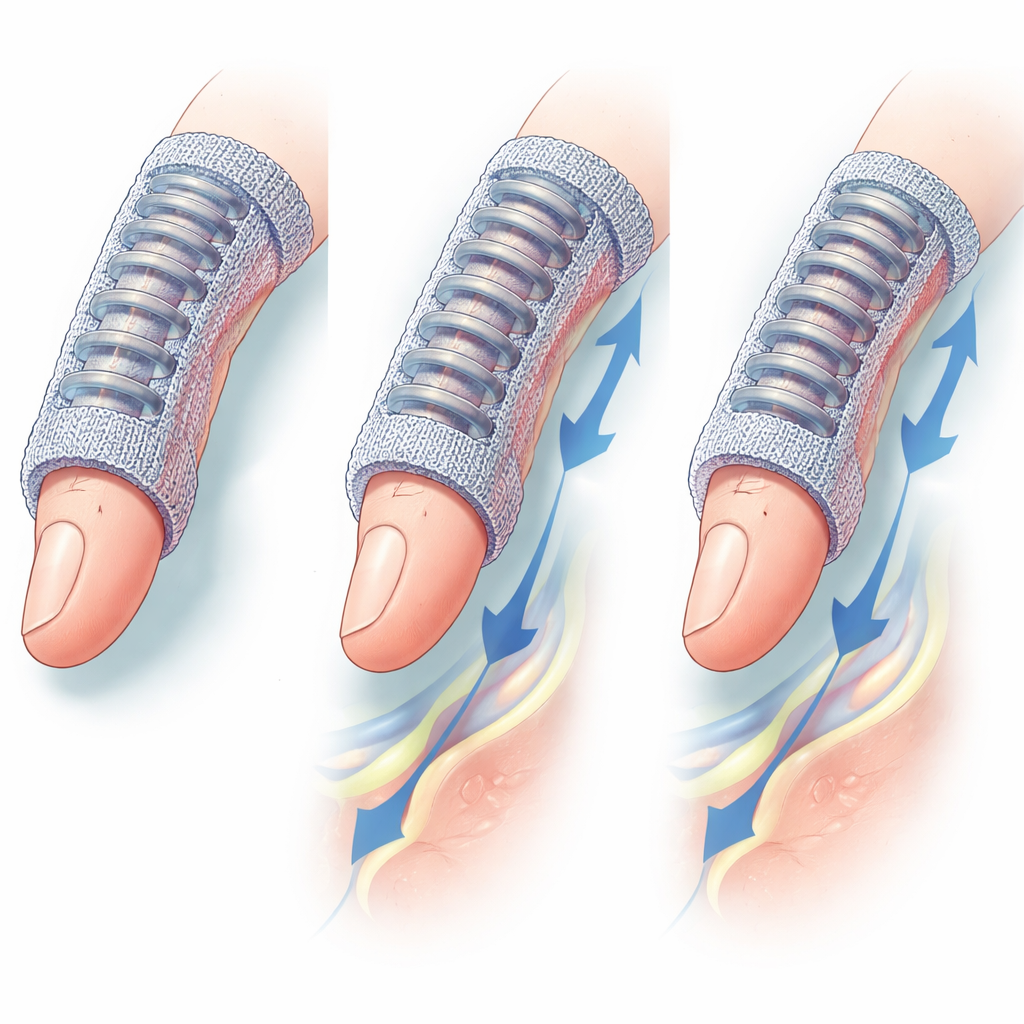
How people with swollen hands responded
Seven adults with hand edema, from causes such as stroke, arthritis, and heart disease, tested the EdemaFlex system over three days. In the lab, they completed a supervised 30-minute session while researchers measured hand volume, joint flexibility, and dexterity before and after. Some participants—especially those with the most severe swelling and limited movement—showed striking short-term improvements: hand volume dropped by as much as a quarter, finger and hand circumferences shrank by several percent at key joints, bending range increased by up to half, and the number of blocks they could move in a standard dexterity test rose sharply for some, in one case by 150 percent. A home day followed, during which participants ran multiple unsupervised sessions using the phone interface. Logs showed they could operate the glove on their own, fit it into daily routines like reading or watching television, and in some cases link sessions with reduced pain. Surveys and interviews highlighted high comfort and perceived benefit, with criticism focused mostly on the bulk and complexity of cables in this early prototype.
What this could mean for everyday life
For lay readers, the core message is that a glove that looks and feels like clothing can now act as a smart therapy device, delivering clinic-grade compression tailored to each person’s hand and daily schedule. EdemaFlex does not claim to cure hand edema, and this first study was small and focused on feasibility rather than long-term outcomes. Still, the combination of measurable reductions in swelling, gains in movement, positive user feedback, and safe home use suggests a promising path forward. With further refinements—slimmer hardware, built-in conductive threads instead of wires, and more adjustable pressure patterns—such textile-based soft robots could help people manage chronic swelling more continuously and independently, improving comfort, function, and quality of life.
Citation: Youn, S., Choudhury, A., Ku, PS. et al. EdemaFlex: textile-based soft-robotic platform toward personalized hand edema therapy. npj Flex Electron 10, 48 (2026). https://doi.org/10.1038/s41528-025-00504-6
Keywords: hand edema, soft robotic glove, smart textiles, home rehabilitation, shape memory alloy