Clear Sky Science · en
Cardiovascular response of children to 1 hour of microgravity simulation—a pioneering study
Why kids in space matter
As space tourism moves from science fiction to reality, it will not only be highly trained astronauts who leave Earth but also ordinary people, possibly including children. Yet we know very little about how young bodies react to weightlessness. This study takes an early step toward answering that question by safely mimicking some effects of space on Earth and watching how children’s hearts and blood vessels respond.
Testing space on a tilted table
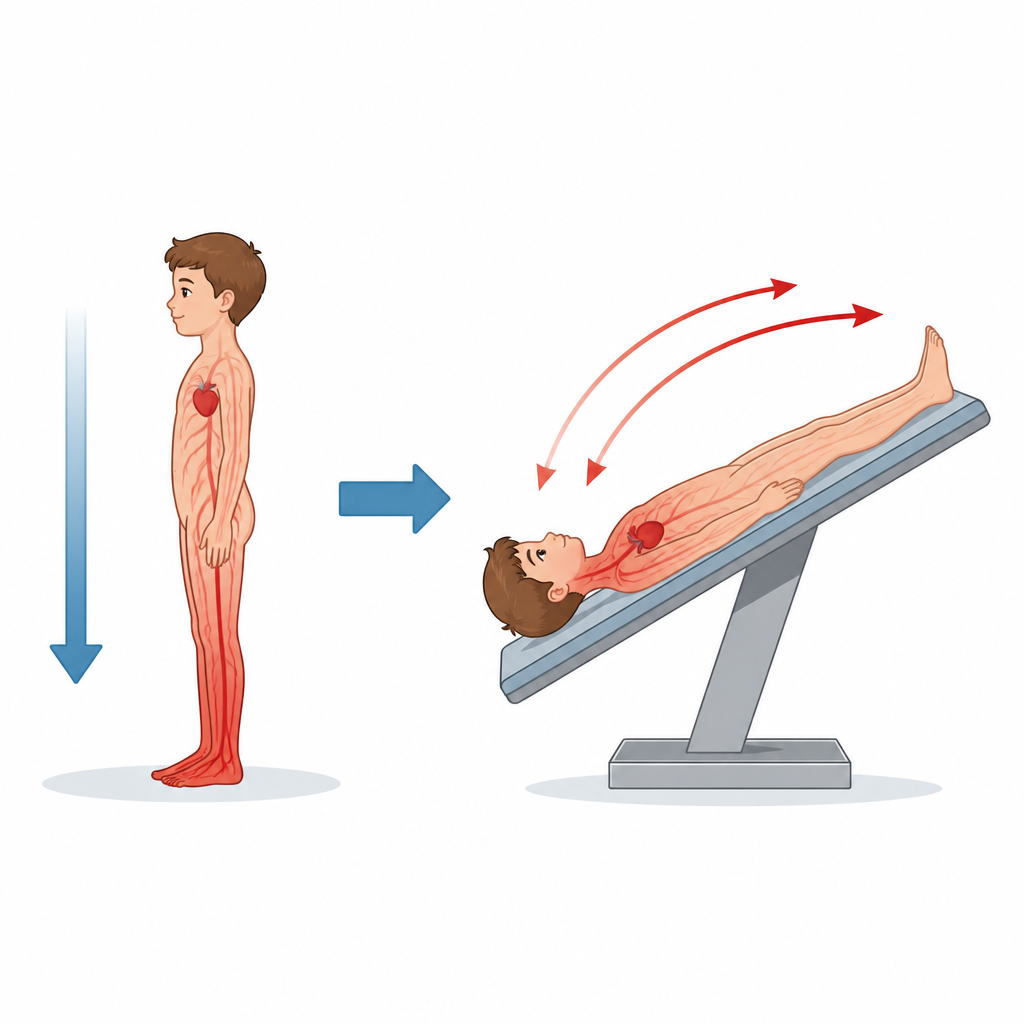
Instead of sending children into orbit, the researchers used a simple but powerful trick: a special table that tilts the body so the head is lower than the feet by 15 degrees. This head down position causes blood and other fluids to shift toward the upper body, similar to what happens when gravity almost disappears in space. Twenty six healthy children between 8 and 14 years old lay on the table for one hour while sensors on their chest and an automatic blood pressure cuff continuously measured how their hearts were working.
What the team measured in young hearts
The scientists tracked nine key signs of heart and blood vessel function, including how fast the heart was beating, how much blood it pumped with each beat, the total amount pumped each minute, and blood pressure in the arteries. Measurements were taken while the children were sitting, lying flat, tilted head down at several time points, and then back to lying flat and sitting again. This allowed each child to act as their own comparison, so that even small changes during the tilt could be detected.
How children’s bodies adapted
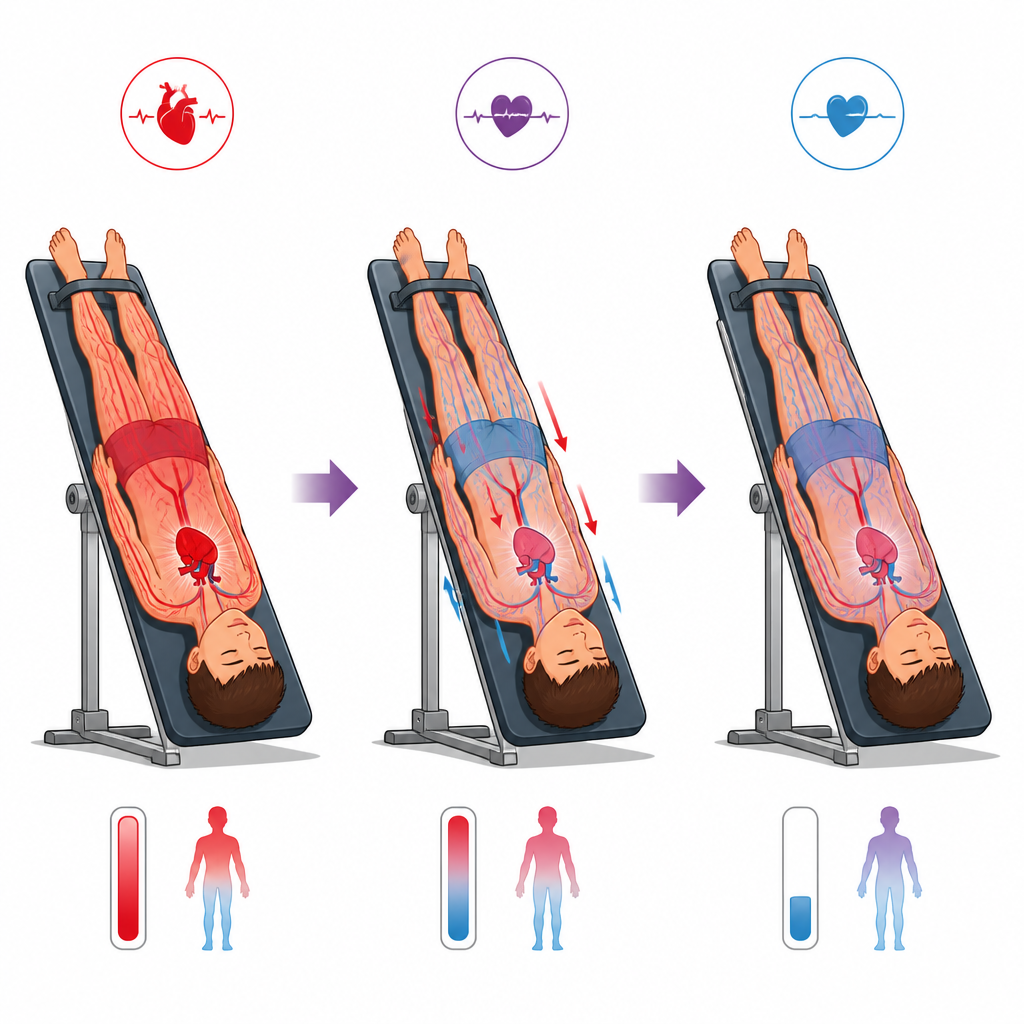
During the head down period, the children’s heart rates generally slowed, while the amount of blood pushed out with each beat and the time the heart spent squeezing increased. Together, these shifts show that their hearts were adjusting to the extra blood returning from the body toward the chest and head. In girls, the amount of blood pumped per minute and a size adjusted version of this measure rose briefly at the start of the tilt, then gradually returned toward starting levels. Boys showed a steadier pattern, with fewer clear changes over time. Throughout the hour, blood pressure stayed within normal ranges, and there were no meaningful differences between girls and boys in this respect.
Comfort and safety during the experiment
Just as important as the numbers was how the children felt. The study team checked carefully for any signs of discomfort, dizziness, or emotional upset. Parents were present, the procedure was clearly explained, and the young volunteers were told they could stop at any time. None of the participants reported distress, and all completed the one hour tilt without problems. This suggests that, under controlled conditions, this kind of short term simulated weightlessness is well tolerated by school age children.
What this means for future space trips
To a layperson, the bottom line is reassuring: in this controlled simulation of some space like conditions, children’s hearts behaved much like those of adults and handled the challenge well. The study does not show what would happen during long stays in orbit, when deeper changes in the heart and blood vessels could appear, but it offers an important first look at how young bodies cope with sudden fluid shifts. These findings support the idea that, with careful screening and strict safety rules, children might one day be able to join short space journeys, while highlighting the need for further research before that becomes routine.
Citation: Papacocea, I.R., Herbert, J., dos Santos, M.A. et al. Cardiovascular response of children to 1 hour of microgravity simulation—a pioneering study. npj Microgravity 12, 45 (2026). https://doi.org/10.1038/s41526-026-00591-3
Keywords: microgravity, children, cardiovascular, space tourism, head down tilt