Clear Sky Science · en
Yeast-driven biomanufacturing in space: synergizing cellular agriculture for sustainable extraterrestrial habitats
Feeding Space Travelers Beyond Packaged Meals
When humans travel to the Moon, Mars, or even farther, they cannot rely forever on boxes of food launched from Earth. Over time, stored meals lose vitamins, take up precious cargo space, and become dull to eat. This article explores how a humble helper from bread and beer making, yeast, could become a tiny workhorse that turns waste and simple ingredients into fresh food, nutrients, medicines, and even materials, helping future space settlers live more like farmers than campers.
Why Yeast Is a Tough Little Partner
Yeast are single-celled fungi that grow quickly and can handle a wide range of conditions, including low nutrients, high sugar, and moderate radiation. They can breathe oxygen when it is available or switch to fermentation when it is scarce, which is handy inside a spacecraft with limited resources. Scientists can easily rewrite yeast DNA with modern tools such as CRISPR to steer their metabolism toward making desired products. Compared with plants, animal cells, or bacteria, yeast need less water and energy, deliver high amounts of protein, and are already widely used in food and industry, giving engineers a strong starting point for space use.
From Tiny Factories to Full Meals
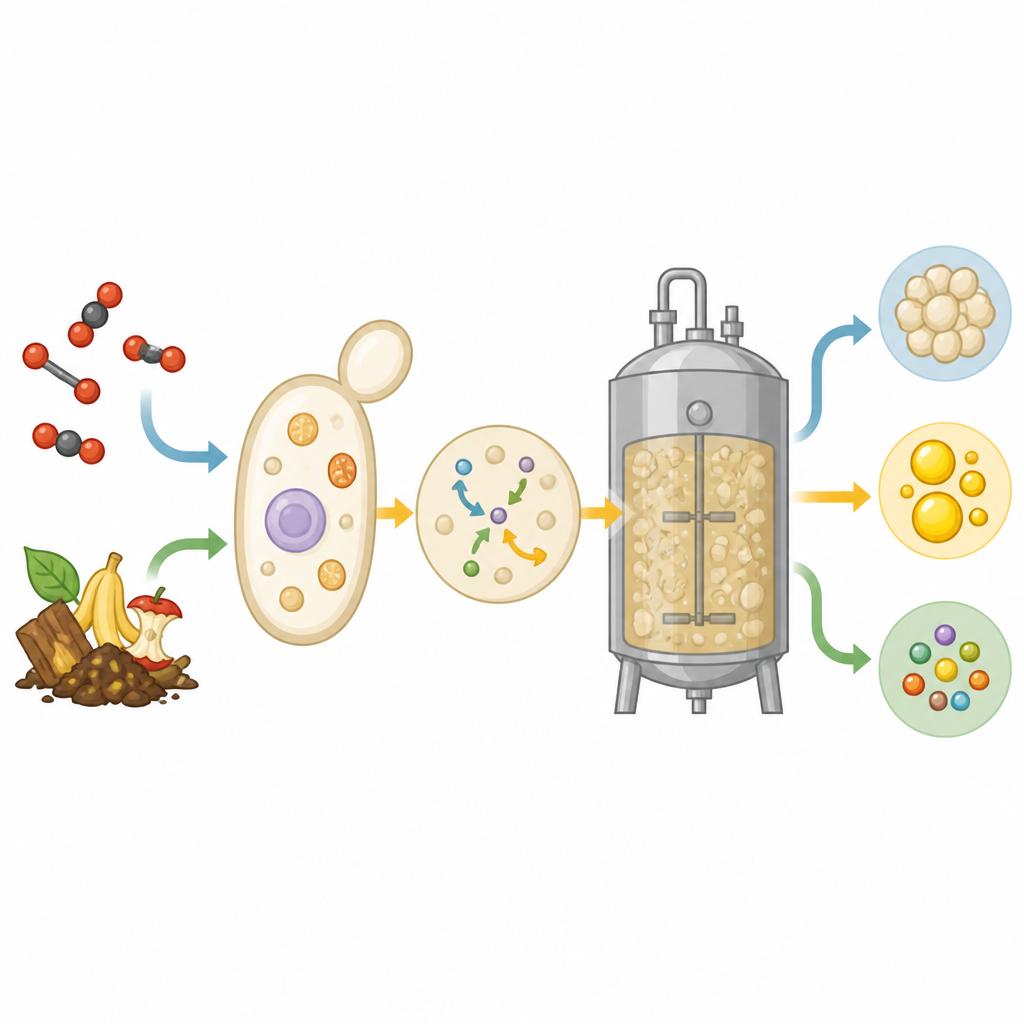
Yeast cells can be tuned to make many of the building blocks of a healthy diet. They naturally contain 35 to 60 percent protein with a good balance of amino acids and almost no common food allergens. Space projects like NASA’s BioNutrients program are testing engineered edible yeast that can release vitamins such as carotenoids on demand after years of storage in orbit. With further tweaks, other yeast strains can produce fats, fruity or savory flavor compounds, and meat-like heme molecules that give plant-based burgers their color and taste. In compact fermenters, a relatively small volume of yeast culture could feed dozens of people, helping meet calorie and micronutrient needs without large greenhouses.
Turning Waste Into Food and Useful Goods
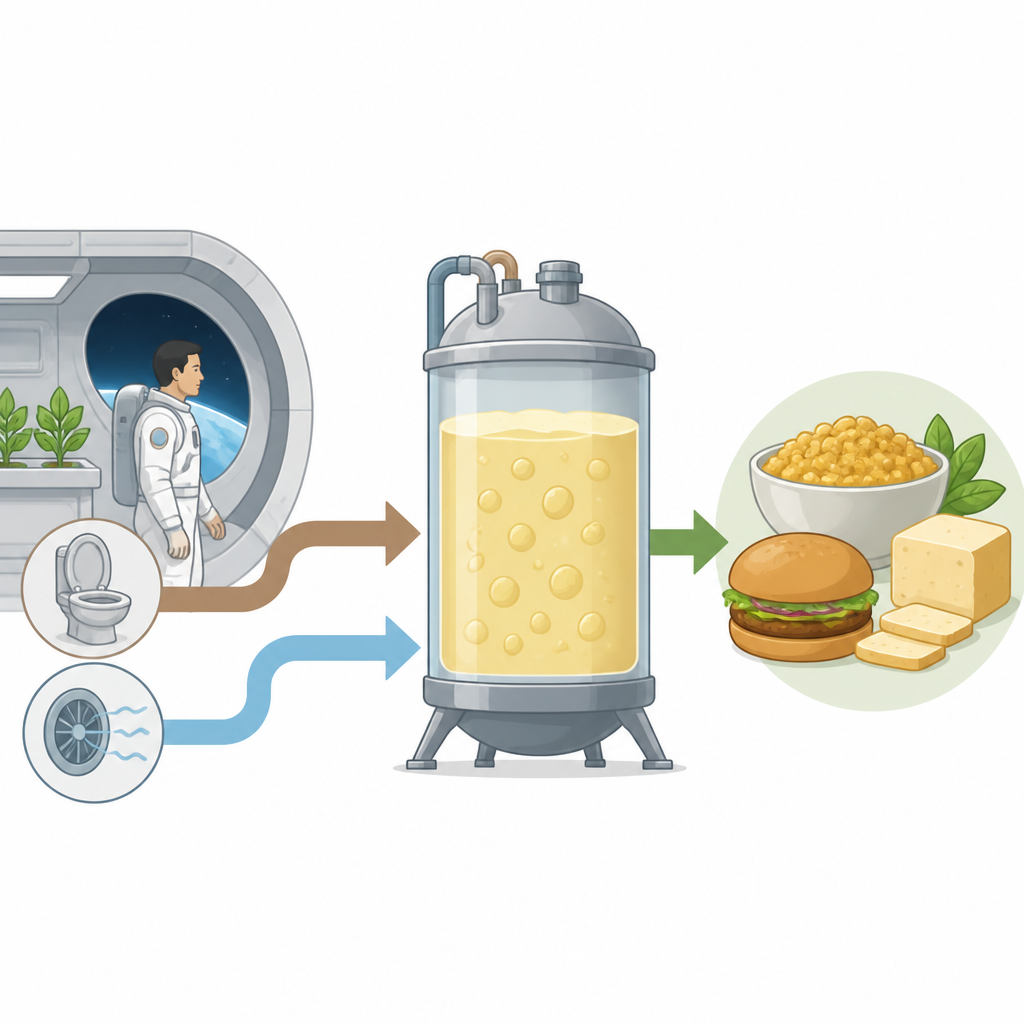
In a closed space habitat, every scrap counts. The review describes how yeast can sit at the heart of a loop that recycles air, water, and trash. Astronauts’ exhaled carbon dioxide can be turned, via chemical steps, into simple molecules like acetate or methanol that specially engineered yeast can use as food. Urine can supply nitrogen, and inedible plant leftovers or kitchen waste can be broken down into sugars. Yeast then transform these inputs into protein-rich biomass, vitamins, and useful byproducts rather than letting waste pile up. Some strains can even be altered to produce plastics-like materials strong enough to 3D-print basic tools, linking food production and equipment repair in one biological toolkit.
Health Protection and Hidden Hazards
Beyond nutrition, yeast can help keep astronauts healthy by acting as miniature drug factories and research models. Because many yeast genes work similarly to human genes, scientists have flown thousands of yeast strains on space missions to see how microgravity and radiation damage cells. These tests highlight key pathways involved in DNA repair and stress response, guiding the design of yeast that are better at withstanding space and at making medicines when needed. At the same time, the authors warn that in a sealed station, uncontrolled yeast growth or mutation could foul equipment, alter air quality, or, in rare cases, affect crew health. They outline safety steps such as careful strain choice, strict cleaning, and real-time monitoring to manage these risks.
Facing Space Stresses and Looking Ahead
Life in orbit is not easy for microbes. Studies show that microgravity can change yeast shape, growth patterns, and gene activity, sometimes speeding up aging but also boosting certain useful traits like heavy metal binding. Radiation adds further pressure. To cope, engineers are designing smarter bioreactors that control fluid flow in low gravity and using genetic tweaks to improve energy use and repair systems inside the cells. Looking ahead, the article imagines future habitats where yeast, plants, and animal cells form a tightly linked trio, with artificial intelligence and tiny reactors balancing their outputs. In this vision, yeast become a central pillar of a living, self-adjusting support system that reduces resupply from Earth and helps make long-term life in space both sustainable and humane.
Citation: Yin, Y., Gao, H., Xiao, D. et al. Yeast-driven biomanufacturing in space: synergizing cellular agriculture for sustainable extraterrestrial habitats. npj Microgravity 12, 40 (2026). https://doi.org/10.1038/s41526-026-00576-2
Keywords: yeast biomanufacturing, space food, cellular agriculture, closed-loop life support, microgravity biology