Clear Sky Science · en
No association between genetic ancestry and exome sequencing-based diagnosis of inborn errors of metabolism
Why this research matters for every family
Newborn screening quietly protects thousands of babies each year by catching rare metabolic diseases before they cause serious harm. As DNA sequencing becomes more common in medicine, a pressing question has emerged: does it work equally well for babies from all backgrounds, or does ancestry affect who gets a clear genetic answer? This study looked closely at that question for a large group of infants with inherited metabolic disorders, asking whether exome sequencing delivers fair diagnostic results across diverse ancestries.
Finding genetic answers in newborn screening
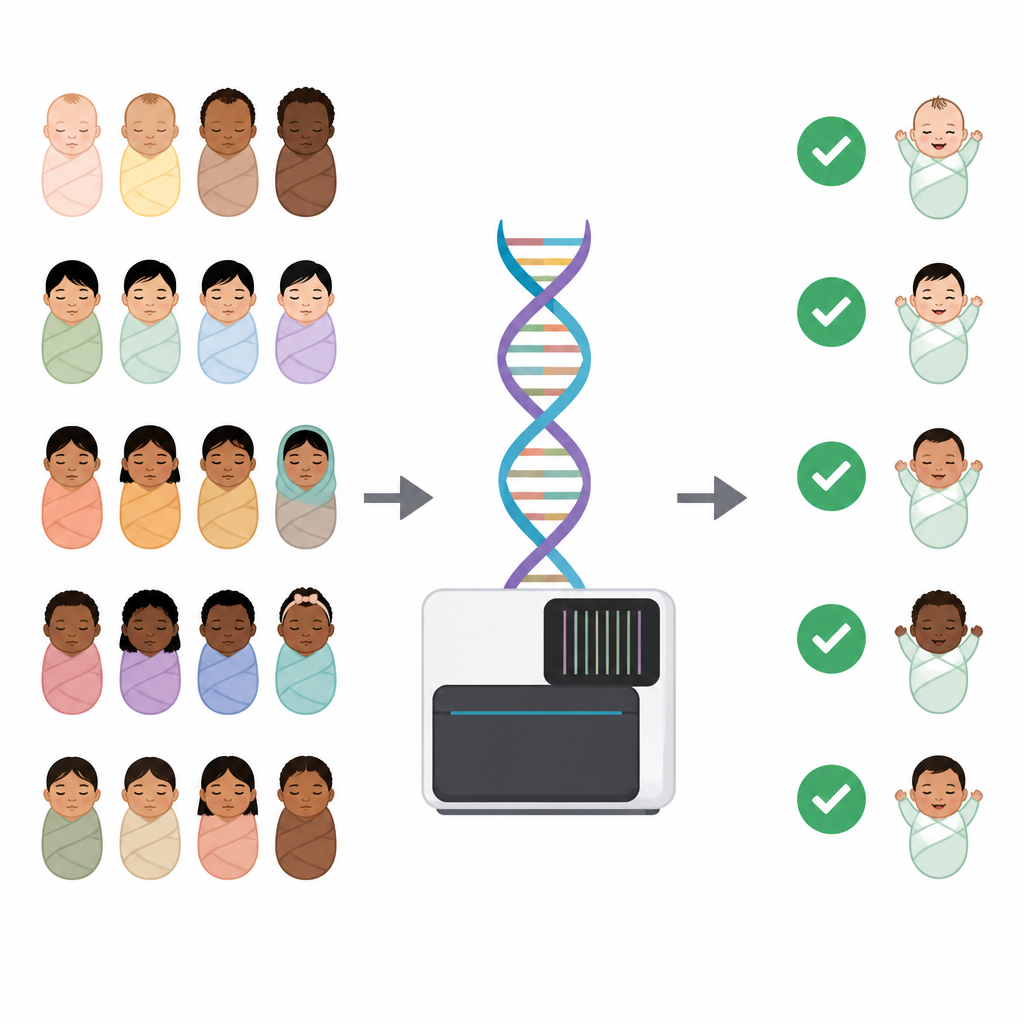
Inborn errors of metabolism are genetic conditions in which the body cannot properly process certain nutrients, leading to a buildup of toxic substances or shortages of vital molecules. In the United States, routine newborn screening already picks up many of these conditions using chemical tests on a few drops of blood. The team behind this study used exome sequencing, which reads the protein-coding parts of the genome, to search for the exact genetic changes responsible in 845 California newborns who had already been diagnosed with one of these metabolic disorders through standard screening. More than half of these babies were reported by their mothers as having non-White or non-European backgrounds, providing a rare opportunity to examine performance across many ancestries.
Measuring ancestry in the DNA itself
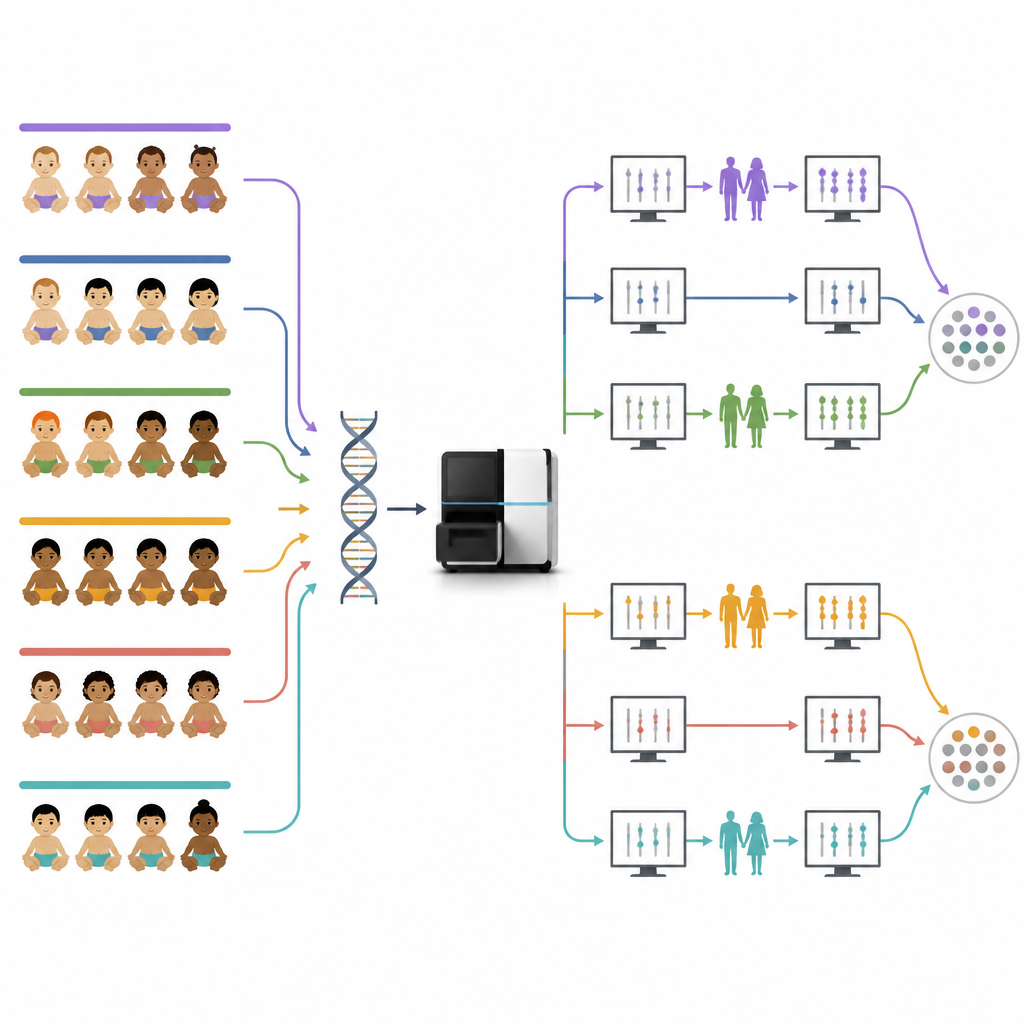
Instead of relying only on reported race or ethnicity, the researchers estimated each baby’s genetic ancestry directly from their DNA. They compared the infants’ exome data to a global reference panel, estimating how much African, European, Native American, East Asian, South Asian, Middle Eastern, or Pacific ancestry each child carried. This showed that many babies had mixed genetic backgrounds, and that groups labeled in similar ways on paper could include quite different blends of ancestry at the DNA level. The team then compared how often exome sequencing successfully identified disease-causing variants in infants with different ancestry proportions.
Equal diagnostic yield across ancestries
The key finding was reassuring: the chance that exome sequencing delivered a genetic diagnosis did not significantly differ by genetic ancestry. Whether a baby’s DNA showed mainly European, African, Native American, East Asian, South Asian, or Middle Eastern roots, the overall proportion of cases with a clear exome-based explanation for their metabolic disorder was similar. Statistical tests suggested small possible trends for lower yield with South Asian ancestry and higher yield with Native American ancestry, but these patterns disappeared after adjusting for the number of comparisons made. In other words, there was no solid evidence that ancestry affected the success of exome diagnosis in this setting.
Family relatedness and its genetic footprint
The study also explored how closely related a baby’s parents were, a factor known as consanguinity. Using patterns of shared DNA, the researchers estimated a consanguinity coefficient for each infant and asked whether this influenced how disease-causing variants appeared. They found that higher consanguinity was strongly linked to babies having two identical copies of the same harmful variant, rather than two different variants in the same gene. This pattern was especially clear in South Asian, East Asian, and many Latino infants, reflecting both cultural marriage patterns and the rarity of some variants. However, while consanguinity changed how the mutations appeared, it did not change the overall chance of getting a diagnosis from exome sequencing.
What this means for future newborn care
For families and clinicians, the main takeaway is that exome sequencing can provide genetic answers for inherited metabolic diseases without clear disadvantage for babies from non-European ancestries in this context. Because the researchers focused on a defined set of well-studied genes and counted all rare, protein-changing variants as potentially harmful, their approach reduced dependence on existing databases that often underrepresent non-European populations. Although more work is needed to confirm these findings in larger and different groups of recessive diseases, this study supports the idea that thoughtfully applied DNA sequencing can be a fair tool, helping to bring precise diagnosis to newborns from many backgrounds.
Citation: Najera, J., Mavura, Y., Adhikari, A. et al. No association between genetic ancestry and exome sequencing-based diagnosis of inborn errors of metabolism. npj Genom. Med. 11, 27 (2026). https://doi.org/10.1038/s41525-026-00562-3
Keywords: exome sequencing, newborn screening, inborn errors of metabolism, genetic ancestry, consanguinity