Clear Sky Science · en
A novel phenotype-guided genome analysis pipeline for variant discovery
Why this research matters for families facing vision loss
Inherited eye diseases that slowly steal sight can be deeply frustrating because the cause often remains unknown, even after modern genetic tests. This study introduces a new way to read a person’s entire genetic instruction book so doctors can more reliably pinpoint the hidden changes behind rare retinal conditions. By doing so, it can shorten the search for answers, guide care, and help identify who might benefit from emerging gene-based treatments.
Seeing beyond standard genetic tests
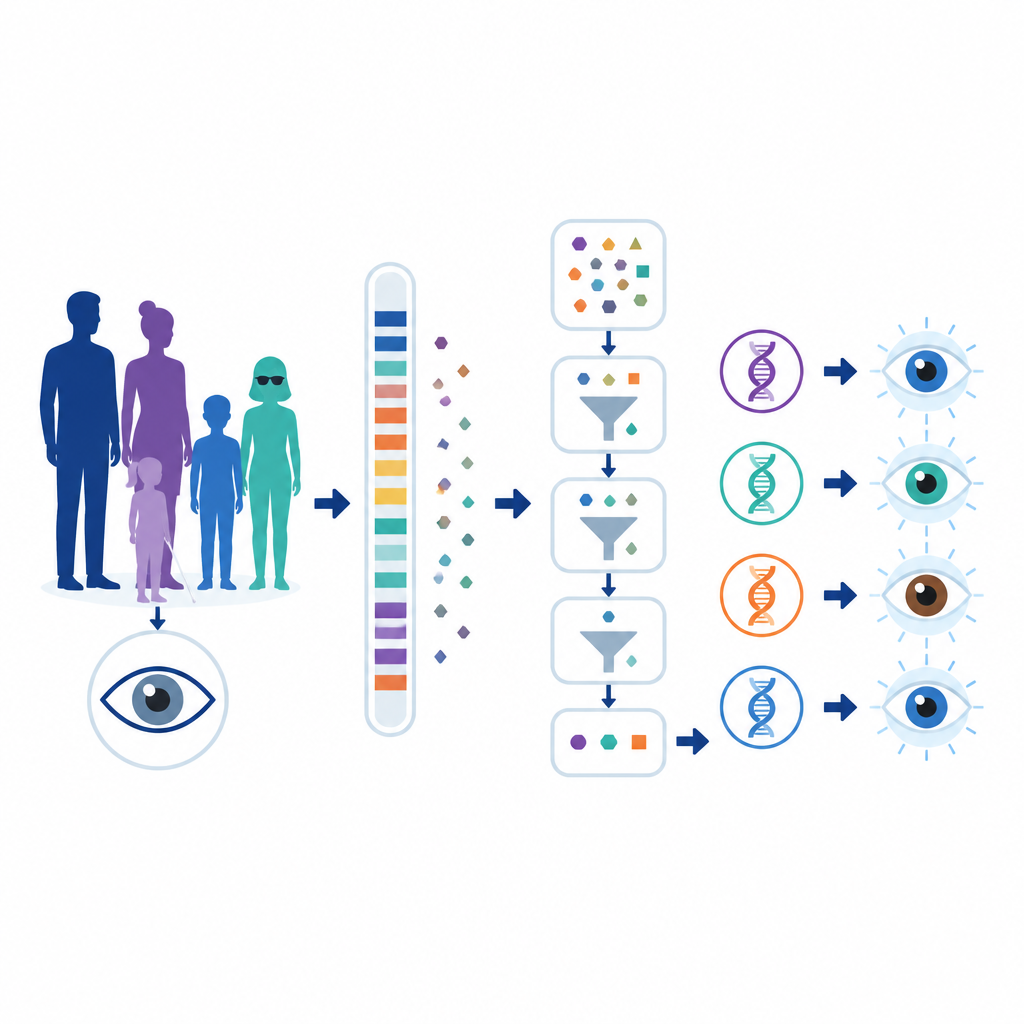
Many people with inherited retinal dystrophies undergo targeted gene panels and other routine tests, yet up to half still leave without a clear genetic diagnosis. One reason is that earlier methods focus on a limited set of genes or only on certain types of DNA changes. Subtle glitches buried deep within or around genes, or larger structural rearrangements of DNA, can easily be missed. The authors set out to overcome these blind spots by combining full genome sequencing with a smart, semi-automated analysis pipeline designed specifically around how retinal diseases look and behave in patients.
A tailored pipeline called ReDGAP
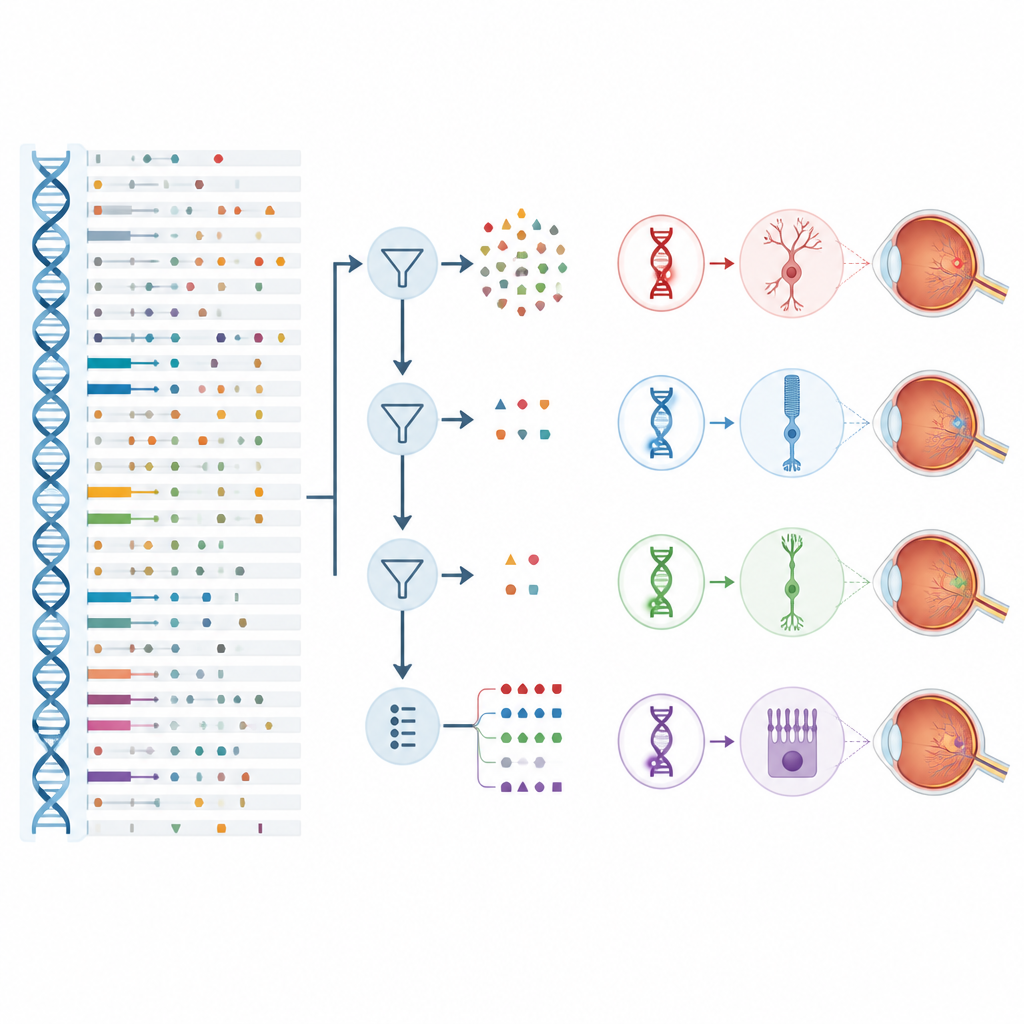
The team developed ReDGAP, a computer-based workflow that takes raw genome data and clinical information about a patient’s eye condition, then sifts through millions of genetic variants to highlight the most plausible culprits. ReDGAP works in two stages. First, it looks closely at a tailored list of genes already linked to the patient’s particular retinal diagnosis or to related biological pathways. Then, if needed, it zooms out and searches across the entire genome. In both stages, it considers many forms of DNA change, from single-letter switches to duplications, deletions, and more complex rearrangements, instead of treating each type in isolation.
Scoring suspicious DNA changes
To rank which genetic changes deserve attention, ReDGAP assigns each variant a cumulative score. It weighs how rare the change is in the population, whether it falls in a critical part of a gene, how strongly different computer tools predict it will disturb the resulting protein or gene control, and whether the gene has been tied to eye problems in past studies. Variants in the same gene are then grouped according to the family’s inheritance pattern, such as conditions that appear only when both gene copies are affected. This approach helps pull likely disease-causing changes toward the top of a concise report that a specialist can review.
Putting the pipeline to the test
The researchers first checked ReDGAP on eleven families whose retinal diagnoses had already been solved using other methods, without revealing those answers to the analysis team. The pipeline successfully rediscovered all known disease-causing variants, showing that it could reliably detect a wide mix of genetic changes. Next, they applied ReDGAP to five families whose previous clinical testing had come up empty. In four of these unsolved cases, the pipeline found convincing genetic explanations, including hidden changes in the noncoding portions of genes and a small duplication that standard chromosomal tests would have missed. Laboratory experiments on patient cells confirmed that several of these newly uncovered variants disrupted the way retinal genes are read and spliced.
What this means for patients and future care
By blending careful eye examinations with broad yet focused genome analysis, ReDGAP substantially increased the chances of finding a genetic answer in difficult retinal cases. For families, this can bring clarity about the cause of vision loss, inform prognosis, and reveal eligibility for gene-targeted trials and future therapies. Because the pipeline is built in an open, modular way, it can be adapted to other rare diseases, not just those affecting the retina. In practical terms, this work shows that smarter analysis of whole genomes, guided by what doctors see in the clinic, can turn more uncertain test results into precise molecular diagnoses.
Citation: Ahmed, L., Tavares, E., Li, J.M. et al. A novel phenotype-guided genome analysis pipeline for variant discovery. npj Genom. Med. 11, 28 (2026). https://doi.org/10.1038/s41525-026-00557-0
Keywords: inherited retinal dystrophy, genome sequencing, variant analysis pipeline, precision ophthalmology, retinal genetics