Clear Sky Science · en
Genomic modifiers of malignant and neurodevelopmental phenotypes in individuals with PTEN hamartoma tumor syndrome
Why this research matters to families
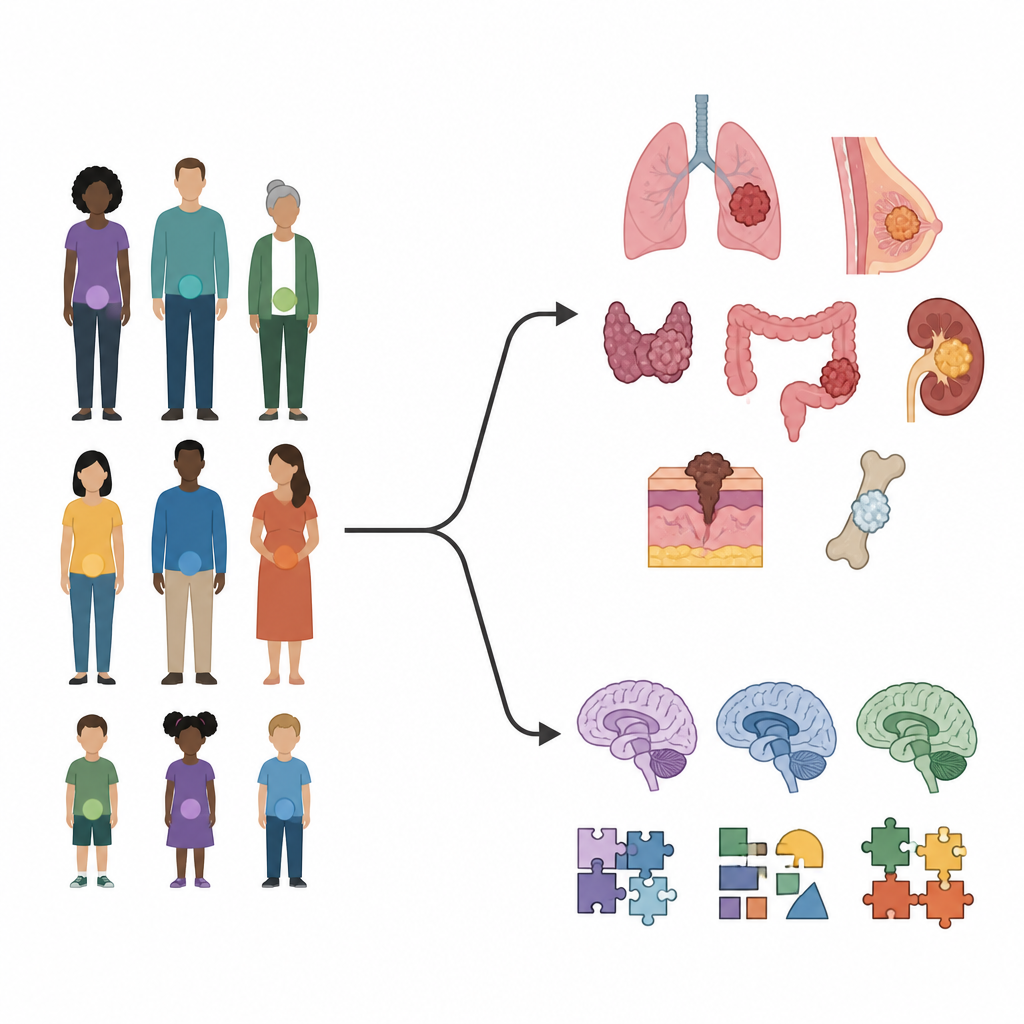
Some people born with the same gene change face very different health futures: one person may develop cancer, another may have autism or other learning differences, and a third may stay relatively healthy. This study looks at a group of individuals who all share harmful changes in a single gene called PTEN and asks a simple but powerful question: what else in their DNA helps steer them toward cancer, toward neurodevelopmental disorders, or toward neither? Understanding those hidden genetic "modifiers" could eventually lead to more tailored screening and care for affected families.
A single gene with many possible outcomes
PTEN hamartoma tumor syndrome (PHTS) is a rare inherited condition caused by an altered copy of the PTEN gene. People with PHTS carry much higher lifetime risks of several cancers and are also more likely to have neurodevelopmental disorders such as autism spectrum disorder, intellectual disability, or developmental delay. Yet even when people carry exactly the same PTEN change, some mainly develop tumors, others mainly have brain and learning differences, and some develop both or neither. The research team assembled DNA and clinical information from 599 people with PHTS and close relatives, making this the largest study of its kind, to search their genomes for clues that might tip the balance between these very different paths.
Looking beyond PTEN for extra cancer and brain risk
The scientists first checked whether people with PHTS also carried high impact variants in other genes already known to raise cancer or neurodevelopmental risk. Among 543 individuals with PTEN changes included in the main analysis, about 7 percent also had pathogenic or likely pathogenic variants in cancer related genes, most often in MITF, DICER1, and BRCA2. Another 8 percent carried damaging variants in genes tied to conditions like autism and other developmental syndromes, with DHCR7, POLG, ARSA, and NAGLU among the most frequent. Some people carried changes that lined up closely with their clinical picture, such as DNA changes in DLL1 or SHANK2 in individuals with striking developmental and brain findings. These results show that, for a subset of patients, a second strong gene can help explain why cancer or brain differences emerge on top of PTEN.
Scanning the genome for subtle modifiers
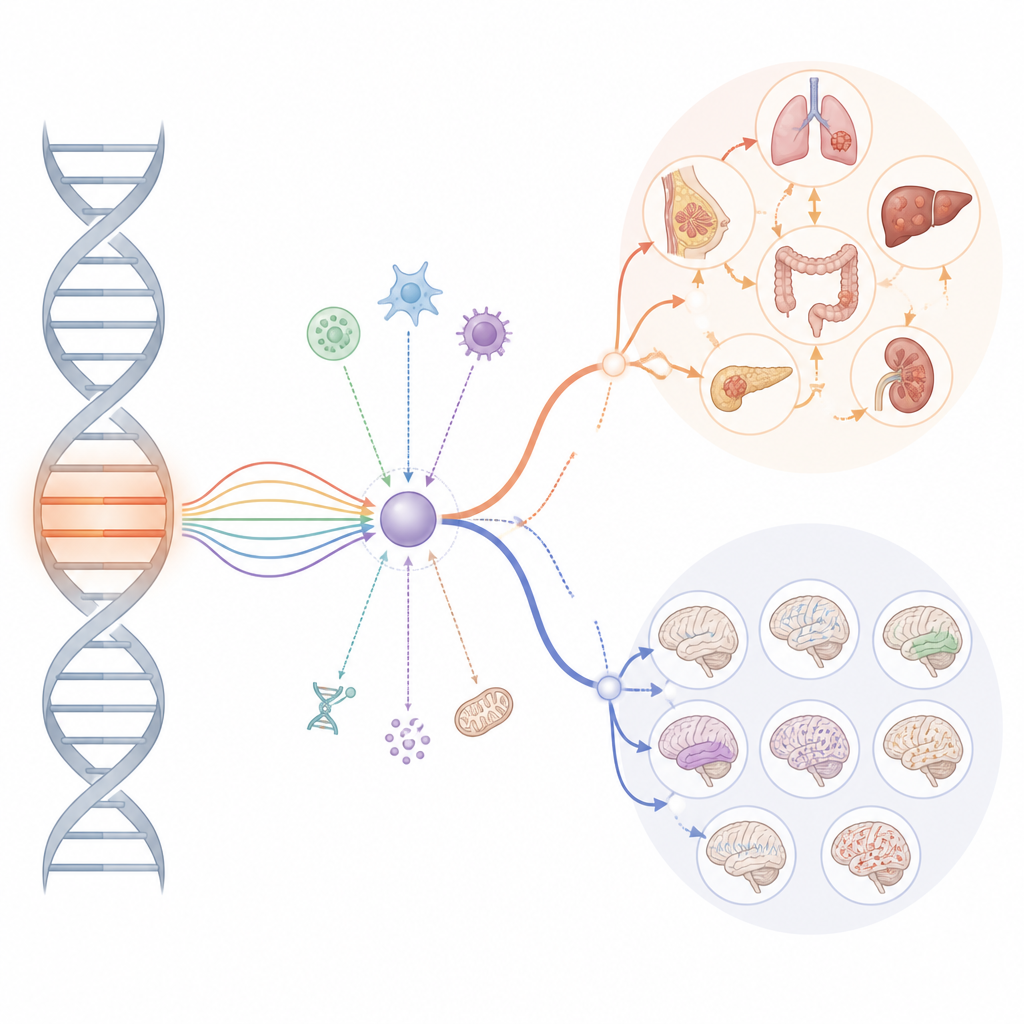
Because most participants did not have such well known extra risk genes, the team next ran an unbiased, genome wide search for more subtle DNA differences that might shift the odds between cancer and neurodevelopmental outcomes. They used whole genome sequencing to test over 12 million common variants and large numbers of rare variants, comparing people with PHTS who had neurodevelopmental disorders against those who had cancer. Statistical methods that account for ancestry and relatedness highlighted clusters of variants that differed between these groups. Several promising candidate genes emerged, including ZNF713, TPTE2P1, and PDPK1, each of which has biological links to PTEN pathways or to brain development and tumor growth. These candidates likely do not cause disease on their own, but may push the PTEN background toward one type of problem rather than another.
What this means for precision risk prediction
To see how often such extra risk variants arise in the general population, the authors also examined participants with PTEN variants from the large US All of Us Research Program. There, far fewer people carried additional damaging variants in cancer or neurodevelopmental genes than in the specialty clinic group, underscoring how referral patterns and age can shape what doctors see. Overall, the study supports a view of PHTS in which PTEN acts as a key starting point, but the final outcome is molded by a collection of other genetic changes and, likely, environmental and metabolic influences across a person’s life.
How these findings help patients and clinicians
For people living with PHTS and their families, the central message is that their health destiny is not written by PTEN alone. Instead, combinations of DNA changes in many genes appear to work together to influence whether cancer, neurodevelopmental disorders, both, or neither will develop, and at what ages. While the specific modifier genes uncovered here still need confirmation in larger groups, this work maps the first steps toward more precise risk stratification. In the future, such knowledge could inform which individuals might benefit from intensified cancer screening, earlier developmental evaluations, or different monitoring strategies, moving care closer to the promise of truly personalized medicine.
Citation: Yehia, L., Li, L., Idumah, G. et al. Genomic modifiers of malignant and neurodevelopmental phenotypes in individuals with PTEN hamartoma tumor syndrome. npj Genom. Med. 11, 25 (2026). https://doi.org/10.1038/s41525-026-00556-1
Keywords: PTEN, cancer risk, autism, genetic modifiers, neurodevelopment