Clear Sky Science · en
Quantum-annealed machine learning discovers ductile, high strength and corrosion-resistant high-entropy alloy
Why This Matters for Future Materials
From lighter cars and ships to more durable medical devices, modern technology depends on metals that can be strong, flexible, and corrosion-resistant all at once. Yet discovering such “dream alloys” is painfully slow, because researchers must search through an enormous space of possible mixtures using limited and often noisy data. This paper shows how a form of quantum computing called quantum annealing can team up with machine learning to navigate that search more efficiently, and it demonstrates the approach by designing and testing a new high‑entropy alloy that is both tough and highly resistant to corrosion.
Searching for Needles in a Metal Haystack
Traditional alloys are built around one or two main elements, but high‑entropy alloys mix four or more elements in similar amounts, unlocking a huge variety of possible structures and properties. That freedom comes at a cost: the number of compositions grows explosively, and detailed physics simulations for each candidate are far too slow. Data‑driven models can help, but available experimental data are sparse and inconsistent, which makes it easy for complex models to “overlearn” the quirks of the data instead of the underlying physics. Choosing the right input descriptors, tuning model complexity, and trimming away unhelpful parts of a model become difficult optimization problems where classical algorithms often get stuck in merely good, rather than truly excellent, solutions.
Letting Quantum Physics Guide the Algorithms
Quantum annealing tackles such problems by recasting them as energy landscapes: each possible choice of model features, parameters, or connections corresponds to an arrangement of quantum spins, and the best solution sits at the lowest energy. Because quantum systems can explore many configurations at once and tunnel through thin energy barriers, they may escape local traps that ensnare classical algorithms. In this work, the authors build a “quantum‑assisted machine‑learning” (QaML) framework that translates several key steps—selecting descriptors, training support‑vector models, and pruning neural networks—into a common quadratic binary form suitable for quantum annealers. They combine this with a clever batching scheme so that large descriptor sets can be handled even on today’s limited‑size quantum devices. 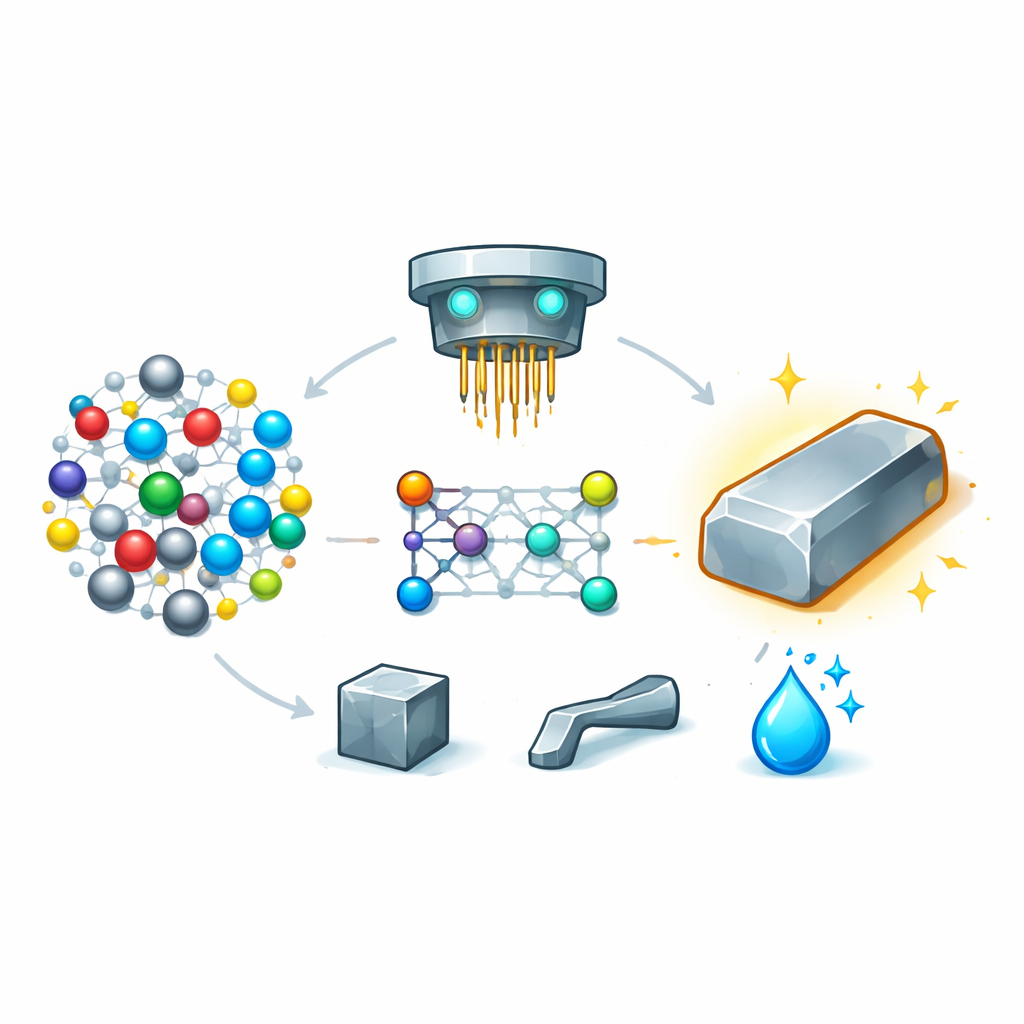
From Data to a Promising New Alloy
Armed with these tools, the team focused on high‑entropy alloys built from aluminum, chromium, iron, manganese, and titanium. Within this family they sought single‑phase body‑centered‑cubic alloys that were light, strong, and resistant to corrosion in harsh, acidic, salty environments. Physics‑based rules—such as requiring elements known to form protective surface films and avoiding combinations prone to unstable oxides—narrowed the space. Quantum‑assisted feature selection identified a small set of meaningful descriptors for two tasks: a classification model that predicts whether an alloy will deform in a brittle or ductile way, and a regression model that estimates yield strength. Quantum‑optimized neural networks and support‑vector machines were then trained on curated experimental data. Notably, networks pruned using quantum annealing generalized better than those pruned by classical methods, even when the classical solver found slightly lower numerical cost values, suggesting that the quantum approach tends to favor broader, more stable regions of the solution landscape.
Putting the Prediction to the Test
Using this integrated screening pipeline, the framework singled out a particular composition, Al8Cr38Fe50Mn2Ti2 (in atomic percent), as especially promising. Calculations suggested it should form a simple single‑phase structure with high ductility, high strength, relatively low density, and good corrosion performance. The researchers synthesized the alloy and confirmed that it crystallizes in the desired structure with uniform elemental distribution. Compression tests showed a 0.2% yield strength of 568 megapascals and more than 40% strain without fracture—indicating substantial toughness. Corrosion tests in acidic chloride solutions revealed that its passive film remains stable to higher potentials and carries nearly an order of magnitude lower critical current density than conventional 304 stainless steel, implying a more protective and longer‑lasting surface. 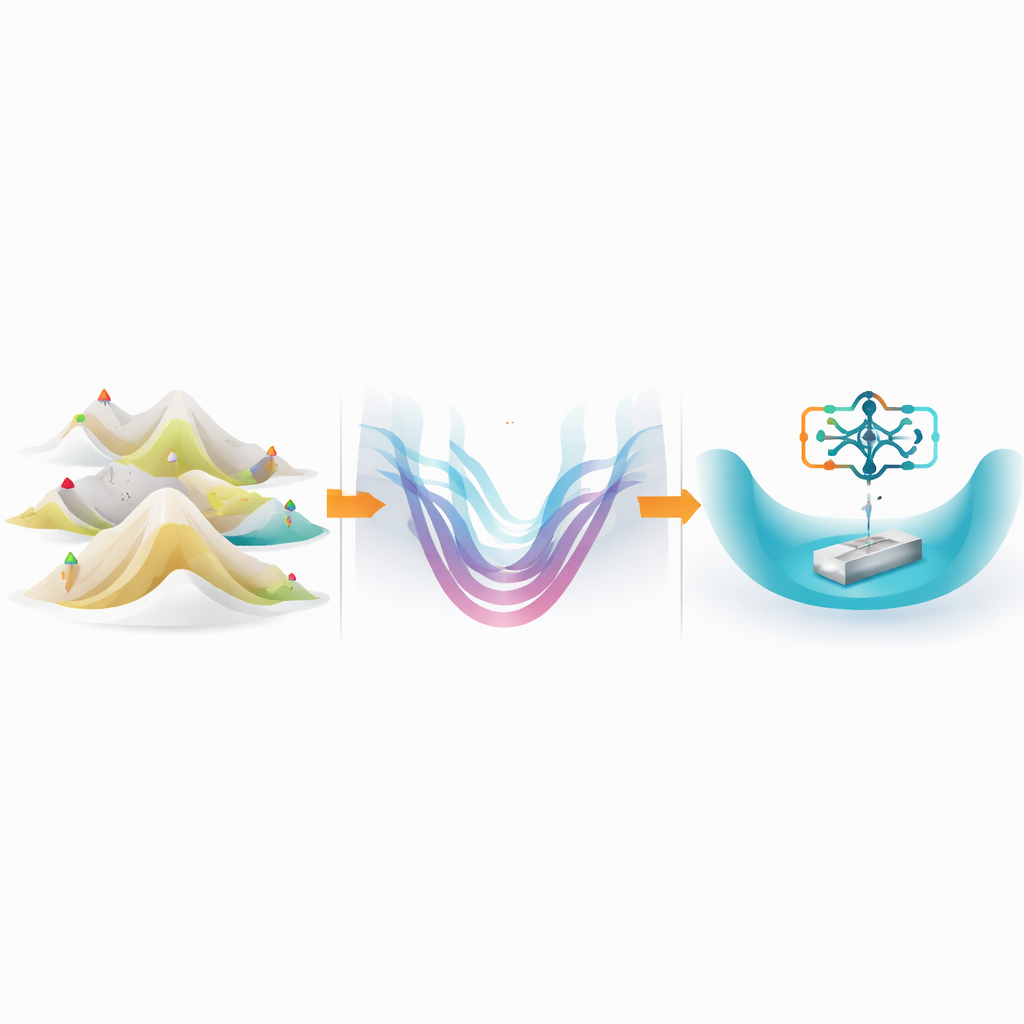
A New Pathway for Smarter Alloy Design
In everyday terms, this study shows that quantum‑enhanced algorithms can help scientists sift through bewilderingly large design spaces to find metal recipes that are both strong and long‑lived, even when only modest amounts of experimental data exist. By confirming the predicted performance of a specific high‑entropy alloy in the laboratory, the work moves quantum annealing from a theoretical curiosity to a practical tool in materials design. As quantum hardware improves, similar workflows could accelerate the discovery of a wide range of advanced materials, from structural alloys for vehicles and ships to specialized coatings that resist corrosion in extreme environments.
Citation: Ibarra-Hoyos, D., Connors, P.F., Jang, H. et al. Quantum-annealed machine learning discovers ductile, high strength and corrosion-resistant high-entropy alloy. npj Comput Mater 12, 159 (2026). https://doi.org/10.1038/s41524-026-02032-x
Keywords: quantum annealing, machine learning, high-entropy alloys, materials discovery, corrosion resistance