Clear Sky Science · en
PARP inhibition with olaparib and talazoparib for HER2-negative advanced breast cancer—Results from the prospective PRAEGNANT registry
Why this study matters for people with breast cancer
Targeted cancer drugs promise to match the right treatment to the right patient, but many approvals are based on carefully controlled clinical trials. This study asks a simple, crucial question: when two such drugs—olaparib and talazoparib—are used in everyday practice for advanced HER2‑negative breast cancer with inherited BRCA mutations, do patients still benefit as expected, and how well do they actually do?

A focused look at a special group of patients
The researchers drew on the large German PRAEGNANT registry, which closely follows people with advanced or metastatic breast cancer over time. From more than 6400 patients in the registry, they identified 152 with HER2‑negative advanced disease who received one of the two PARP inhibitor drugs, olaparib or talazoparib, as part of routine care. Most of these patients were relatively young (average age just over 50), generally in good overall condition, and had tumors that were either hormone‑receptor‑positive or so‑called triple‑negative. Many already had cancer spread to organs such as the liver or lungs, and in a minority, to the brain or only to the bones.
Real‑world outcomes with targeted drugs
Instead of relying on rigid trial rules, the team tracked what happened to patients in the real world using standard survival measures. They looked at “real‑world progression‑free survival,” the length of time patients lived without their disease getting worse, and “real‑world overall survival,” the time they lived after starting a PARP inhibitor. On average, patients went 6.2 months before their disease progressed and lived 17.1 months after beginning treatment. These numbers are slightly lower than in the large registration trials of the same drugs, but those trials tended to give the drugs earlier in the treatment course. Here, most patients received a PARP inhibitor only after one or two previous lines of therapy, when disease is typically harder to control.
Which patients seemed to benefit more
When the researchers split patients into subgroups, important patterns emerged. People whose tumors still responded to hormone signals (hormone‑receptor‑positive disease) generally did better than those with triple‑negative tumors: their cancer stayed controlled longer and their overall survival was longer. Patients treated earlier—especially in the first or second line of therapy—tended to live longer and go longer before progression than those who received a PARP inhibitor only after several other treatments had failed. Those with cancer confined to the bones had especially long times without progression compared with patients whose disease involved organs or the brain, although this was a small group. Most participants received olaparib; a much smaller number received talazoparib, and they appeared to do somewhat better, but the numbers were too small to draw firm conclusions.
Genetic clues and side effects
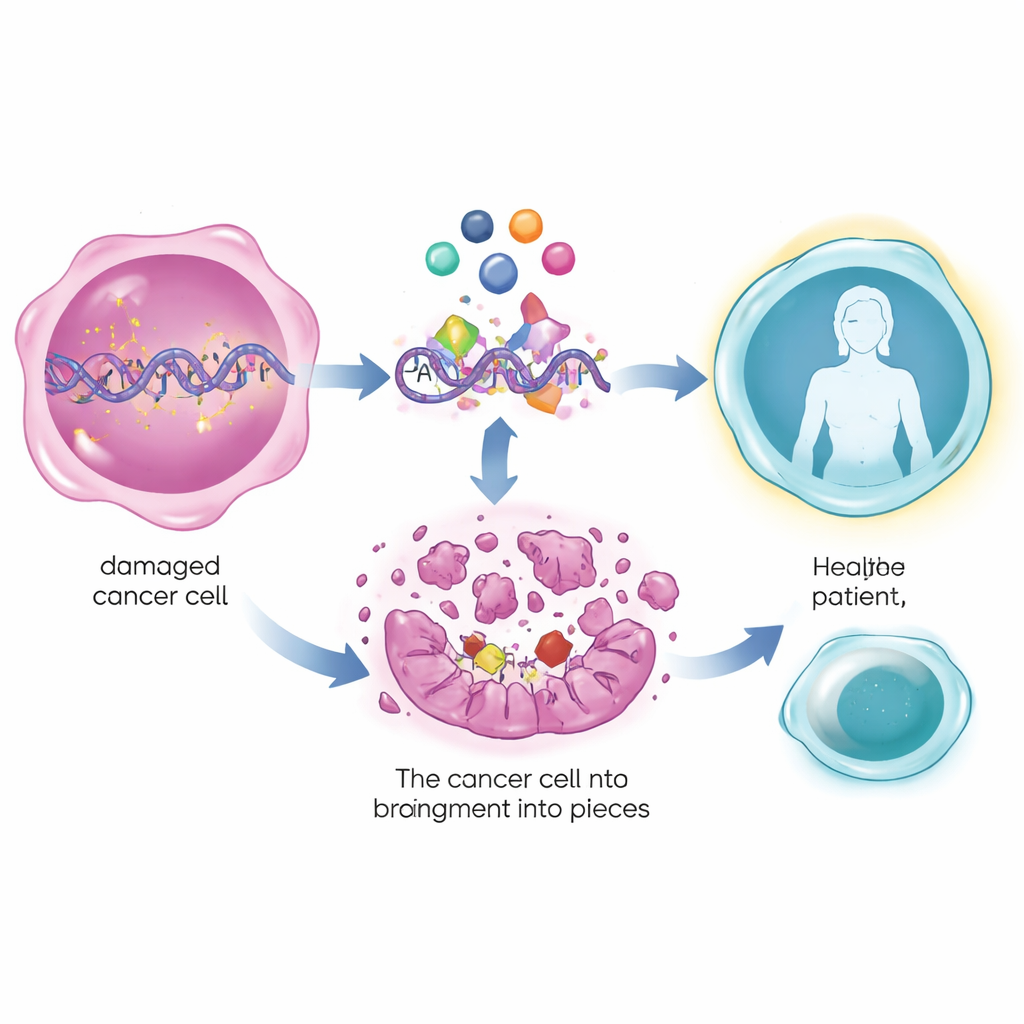
Nearly all patients with known inherited mutations carried changes in the BRCA1 or BRCA2 genes, which are involved in repairing broken DNA in cells. Only one patient had a mutation in another repair gene, PALB2, reinforcing that BRCA mutations remain the main reason these drugs are prescribed in practice. Side effects in the registry resembled those seen in trials—fatigue, nausea, and aches in the limbs were the most frequently reported—but they were recorded less often, likely because busy clinics do not capture every symptom as systematically as a formal trial does. Serious blood‑related complications, which are rare but known risks of PARP inhibitors, could not be fully evaluated in this dataset.
What this means for patients and doctors
For people with advanced HER2‑negative breast cancer who carry an inherited BRCA mutation, this study offers reassuring news: in routine German cancer care, olaparib and talazoparib delivered disease control and survival times broadly in line with what landmark clinical trials suggested, even though the drugs were often used later than in those trials. The findings support widespread testing for BRCA1 and BRCA2 so eligible patients can access these targeted treatments. At the same time, the work highlights open questions, such as when in the treatment journey these drugs should be given for maximum benefit, how to manage them alongside newer therapies, and how resistance eventually develops. Larger, carefully tracked real‑world studies will be needed to answer these questions and to refine the use of PARP inhibitors so that more patients can live longer and better with advanced breast cancer.
Citation: Hörner, M., Hartkopf, A., John, N. et al. PARP inhibition with olaparib and talazoparib for HER2-negative advanced breast cancer—Results from the prospective PRAEGNANT registry. npj Breast Cancer 12, 60 (2026). https://doi.org/10.1038/s41523-026-00947-8
Keywords: advanced breast cancer, BRCA mutations, PARP inhibitors, olaparib, talazoparib