Clear Sky Science · en
A multi-ancestry genome-wide study of tamoxifen metabolism and breast cancer recurrence
Why this study matters to patients
Tamoxifen is a long used pill that helps many women with hormone sensitive breast cancer, yet about one in three do not get the full benefit. This study asks a simple but important question for patients and doctors alike: can our genes explain why the same dose of tamoxifen works better for some women than others, and does that genetic information actually help predict who will see their cancer come back?
How the body turns tamoxifen into its active form
Tamoxifen itself is not the main cancer fighting ingredient. After a woman swallows the pill, her body changes it into several related chemicals. Two of these, called active metabolites, are especially important because they attach strongly to hormone switches in breast cancer cells and help keep the disease from returning. Blood levels of one key metabolite, endoxifen, vary widely from person to person. Past research has shown that a liver enzyme made by a gene called CYP2D6 plays a major role in this process, but it did not explain all the differences seen between patients.
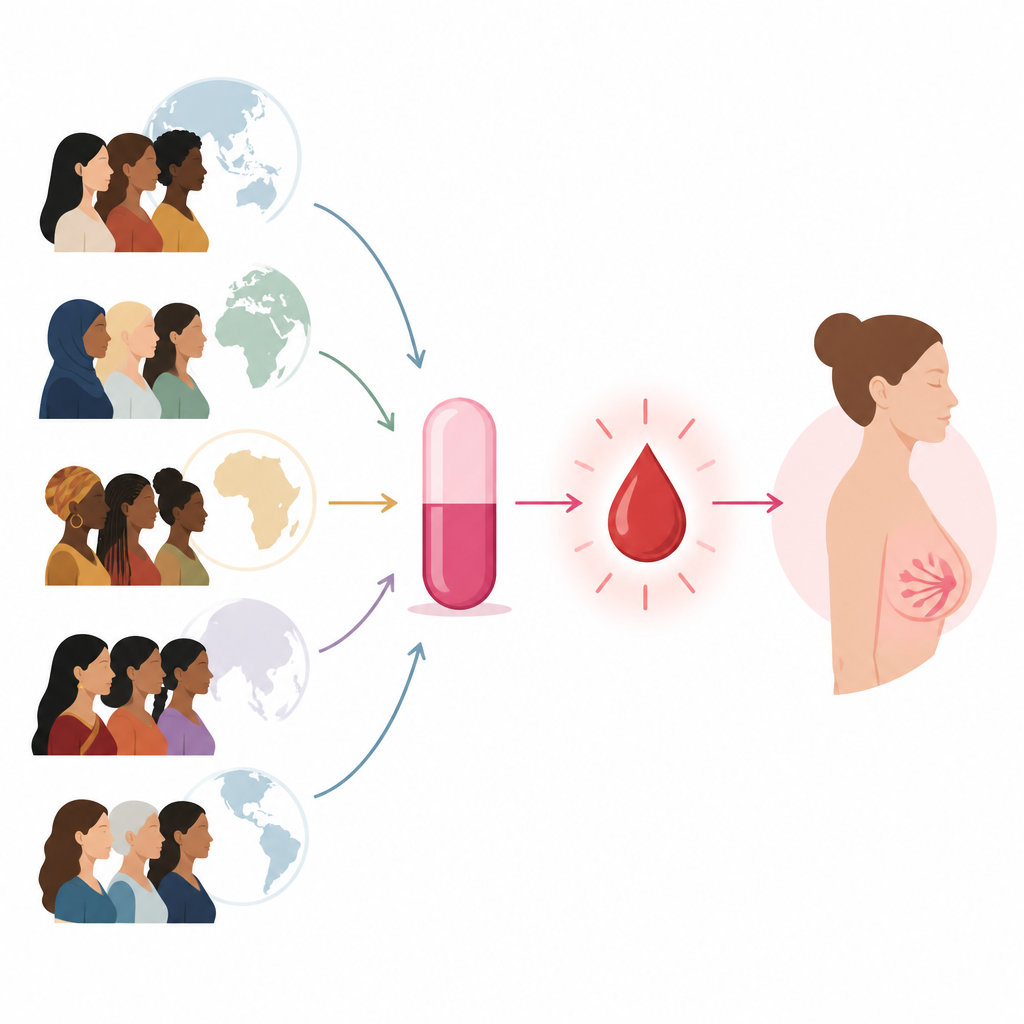
Looking across many ancestries and thousands of women
The researchers brought together data from more than 2200 women with hormone receptor positive breast cancer from Europe, the Middle East and Asia. All women took a standard daily dose of tamoxifen for at least eight weeks before their blood was tested. In some of these women, the team measured levels of tamoxifen and its active forms and scanned their DNA across the whole genome to look for genetic markers linked to endoxifen levels. In a larger group, they also tracked how long women stayed free of cancer returning in the breast, nearby areas or distant organs while on adjuvant tamoxifen.
What the genes revealed about drug levels
The genome wide search confirmed that changes in the CYP2D6 gene remain the strongest known genetic driver of how much endoxifen builds up in the blood. Women with reduced or absent CYP2D6 activity had much lower endoxifen levels than those with normal activity. The study also uncovered a nearby marker in another gene region, called TCF20, that was linked to endoxifen levels in women from all ancestries studied. Each copy of the less favorable version of this marker was tied to lower endoxifen levels, and this effect held even after accounting for CYP2D6 and factors such as age, body size and menopause status.
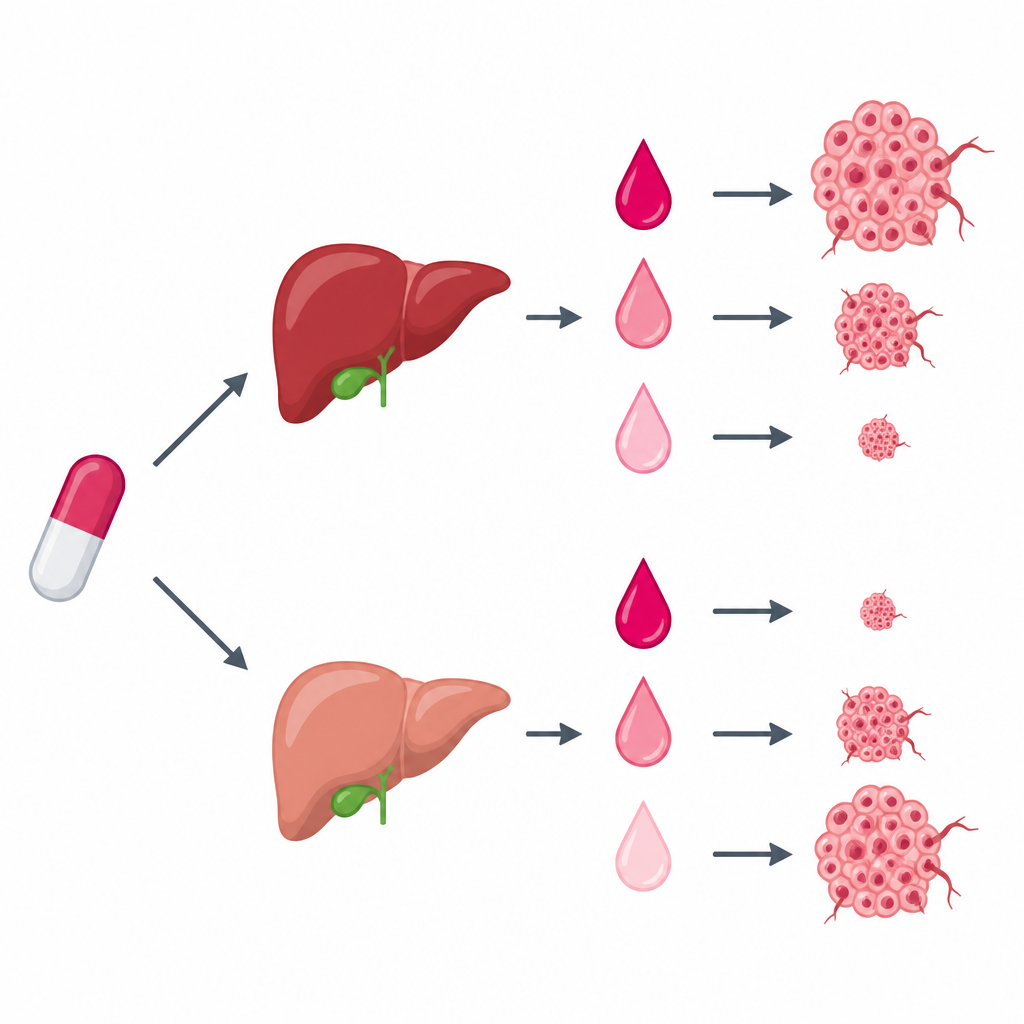
Comparing the strength of different genetic signals
Although both CYP2D6 type and the TCF20 marker helped explain how much endoxifen a woman had in her blood, they were not equally informative. When the researchers built prediction models, CYP2D6 explained far more of the variation in endoxifen levels than the TCF20 marker did. Adding CYP2D6 information greatly improved the accuracy of predictions based only on the TCF20 marker, while adding the TCF20 marker on top of CYP2D6 led to only a small and statistically uncertain improvement. This pattern was seen both in the original group of women and in separate validation groups.
Do these genes predict cancer coming back?
The next question was whether these genetic clues about drug handling translate into real differences in breast cancer outcomes. In more than 1300 women treated with tamoxifen after surgery, the team tested whether CYP2D6 type or the TCF20 marker were linked to the chances of cancer returning, after accounting for tumor size, lymph node status, body mass index and other known risk factors. Neither genetic factor showed a clear, independent link with disease free survival, relapse free survival or distant relapse free survival, although there was a weak trend toward worse outcomes in women with the poorest CYP2D6 function.
What this means for patients and care
To a lay reader, the bottom line is that genes strongly affect how much active tamoxifen builds up in the body, with CYP2D6 being the main player and the TCF20 region adding a smaller effect. However, this study did not find solid evidence that testing these genes alone can reliably predict who will see their breast cancer return after standard tamoxifen treatment. For now, routine genetic testing for these markers is not supported solely to guide tamoxifen use, and larger, carefully collected studies that also track actual drug levels will be needed to show whether tailoring tamoxifen or its metabolites by genetics can improve patient outcomes.
Citation: Khor, C.C., Ong, W.S., Lim, E.H. et al. A multi-ancestry genome-wide study of tamoxifen metabolism and breast cancer recurrence. npj Breast Cancer 12, 71 (2026). https://doi.org/10.1038/s41523-026-00931-2
Keywords: tamoxifen metabolism, endoxifen levels, CYP2D6 genetics, breast cancer recurrence, pharmacogenomics