Clear Sky Science · en
A global metagenomic atlas of aging identifies a microbiota phase transition associated with disease risk
Why the microbes in our gut matter as we age
Our intestines are home to trillions of microbes that help digest food, train the immune system, and shape our overall health. But these tiny partners do not stay the same throughout life. This study assembled a global map of gut microbes from over 8000 adults to ask a simple but important question: does the microbial community in our gut age in a smooth, steady way, or does it go through sudden shifts that might affect disease risk and healthy aging?
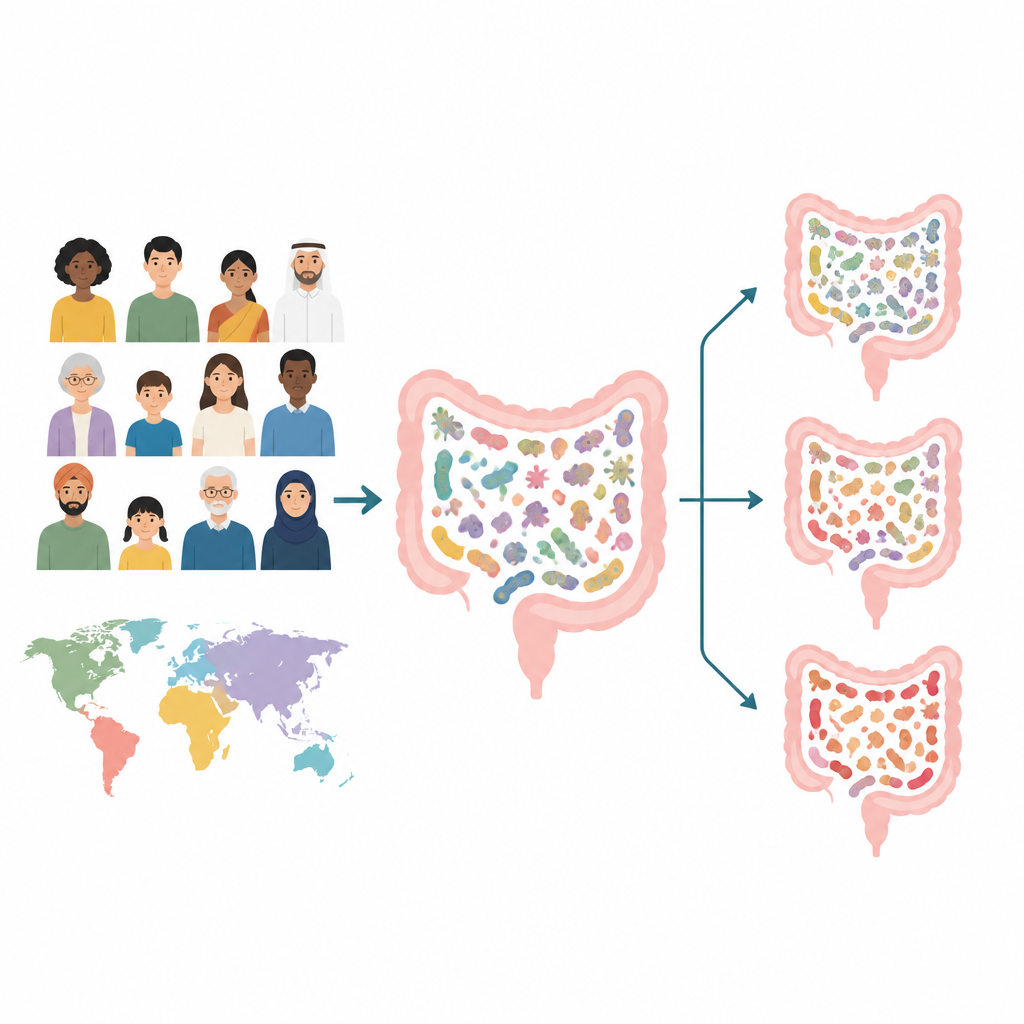
A world tour of aging guts
The researchers combined stool DNA data from 8115 samples collected in 28 countries on five continents, plus an independent Chinese cohort of more than 2200 people. They focused on adults who were not taking antibiotics and used standardized methods to describe which microbial species were present and how abundant they were. Despite strong differences between regions, they found a shared set of bacteria that tended to rise or fall with age in similar ways across continents. Some species, such as Bifidobacterium adolescentis, were more common in younger adults, while others, including Akkermansia muciniphila and Methanobrevibacter smithii, tended to be more abundant in older people.
Building a biological age clock from gut microbes
To turn this catalog into an "age clock," the team trained a machine learning model that estimates a person’s age from their gut microbes alone. By comparing the model’s predicted age with actual age across thousands of samples, they uncovered a striking pattern. Microbial age did not rise smoothly over the adult lifespan. Instead, it showed two key turning points around 40 and 56 years. Before 40, predicted microbial age rose gradually. Between 40 and 56, changes were modest. After about 56, however, the predicted microbial age climbed sharply, and many more species showed shifts in abundance, suggesting a transition in how the gut ecosystem behaves in later life.
A midlife shift in gut stability
The scientists then looked at the gut ecosystem as an ecological community. Using models that compare random drift to more structured change, they found that middle-aged adults (40 to 56 years) had the most stable and predictable microbial communities. In contrast, younger and especially older adults showed signs of a more fragile ecosystem, with narrower “niches” for many species and reduced resilience, particularly after age 70. This implies that around the late fifties the gut may become a less flexible environment, where microbes specialize and compete over shrinking resources, potentially making the system more sensitive to stress and disease.
Links between microbial age and disease
Because the age clock summarizes many subtle changes at once, the authors asked how this microbial age relates to common diseases. They found that an older microbial age was consistently linked to higher odds of colorectal cancer, though this link weakened in people over 56. In contrast, in older adults a higher microbial age was tied to a lower chance of autoimmune diseases and obesity. The ability of microbial age to help distinguish patients from healthy people also depended on both age and disease: it performed well for cirrhosis across all ages, worked best for colorectal cancer in younger adults, and was most informative for autoimmune diseases after 56, but showed limited value for nervous system and metabolic disorders such as diabetes.
Genetic twists inside familiar microbes
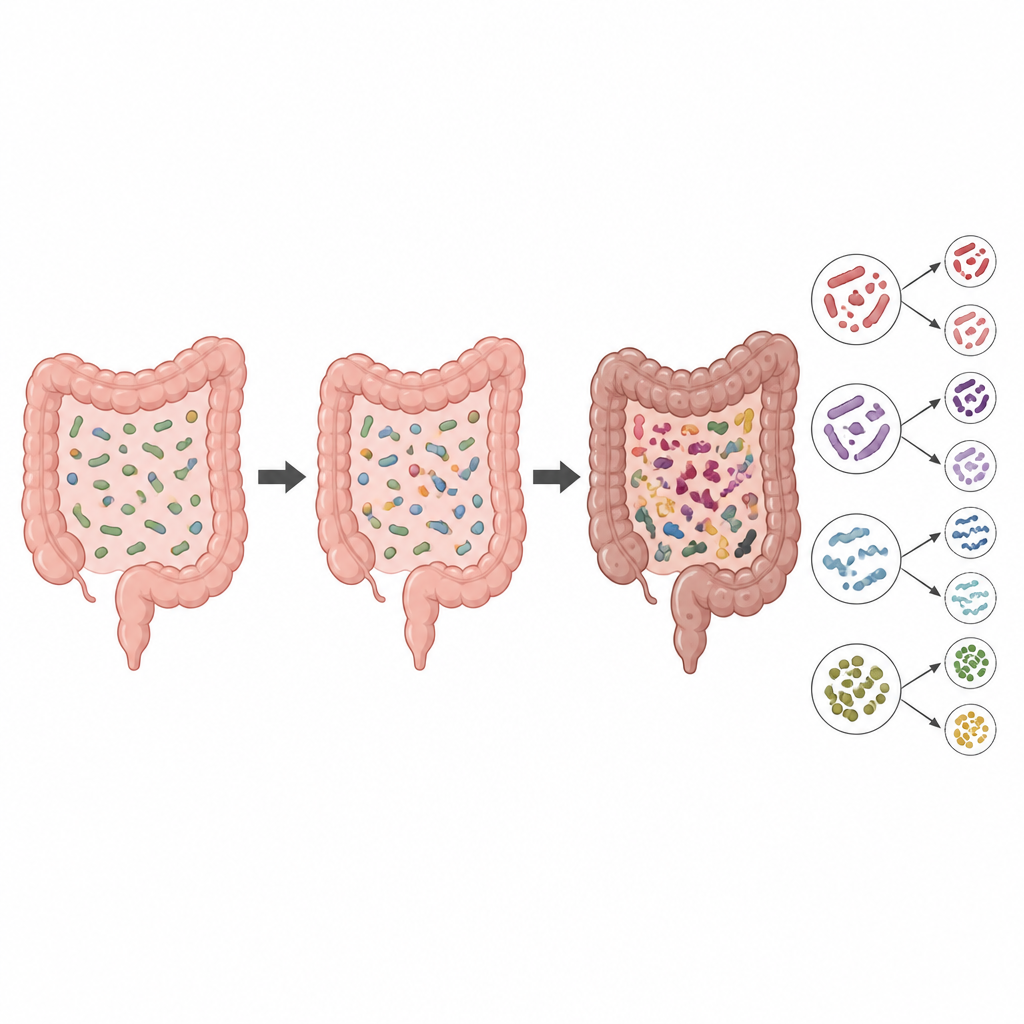
The study went beyond counting species and examined genetic differences within individual types of bacteria. Seventeen species showed clear changes in their genetic content with age. In some, distinct branches, or clades, were more common in younger or older people. Escherichia coli stood out: in older adults, the E. coli strains were enriched for genes linked to cell movement, oxygen-based energy use, and the exchange of genetic material. These traits could help the bacteria adapt to an aging gut lining, but might also promote inflammation by bringing more actively moving microbes closer to the intestinal wall, where they interact with the immune system.
What this means for healthy aging
By weaving together global data, ecological theory, and genetic detail, the authors show that the human gut microbiome passes through a critical transition phase in the late fifties. Around this time, the community becomes less flexible, many species shift in abundance, and certain bacterial strains acquire new genetic tools to cope with an older gut environment. At the same time, the link between microbial age and disease risk changes in an age-specific way. These findings suggest that any attempts to guide the microbiome toward healthier aging will likely need to be tailored to life stage, focusing not only on which microbes are present but also on which versions of them are thriving in the aging gut.
Citation: Fu, J., Zhang, J., He, R. et al. A global metagenomic atlas of aging identifies a microbiota phase transition associated with disease risk. npj Biofilms Microbiomes 12, 97 (2026). https://doi.org/10.1038/s41522-026-00970-4
Keywords: gut microbiome, aging, microbiota age clock, disease risk, metagenomics