Clear Sky Science · en
PGPR-mediated enhancement of soil nutrients, rhizosphere microbial ecology, and plant growth: a review
Helpful soil microbes for tomorrow’s crops
Modern farming is under pressure to grow more food while using fewer chemicals and damaging soils less. This article explores a hidden ally beneath our feet: friendly bacteria that live around plant roots. These microbes can feed crops, protect them from stress, and help clean polluted ground, but they do not always work as expected in real fields. Understanding what they do and why they sometimes fail is key for building more sustainable agriculture.
The busy world around plant roots
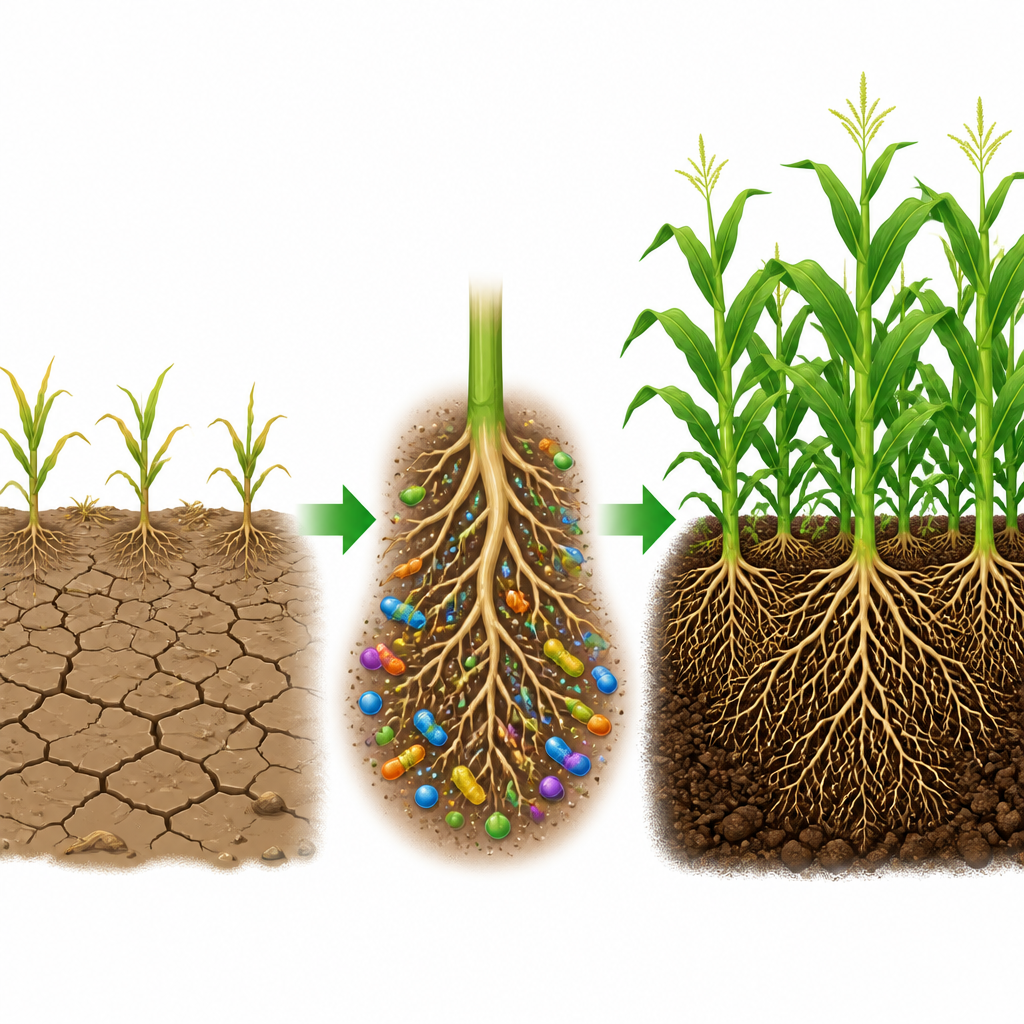
The authors focus on Plant Growth-Promoting Rhizobacteria, a tongue-twisting name for root-dwelling bacteria that help plants grow. These microbes cluster in the thin soil layer hugging roots, where plants leak sugars, acids, and other compounds that act like dinner invitations. In return, the bacteria can make nutrients easier to absorb, produce natural growth boosters, and help fend off disease. Over decades, scientists have discovered many groups of these helpers, including species of Pseudomonas, Bacillus, and Rhizobium, each with its own favorite niche and skill set.
Turning poor soil into plant food
A major theme of the review is how these bacteria act as tiny nutrient factories and miners. Some can grab nitrogen from the air and convert it into forms plants can use, reducing the need for synthetic fertilizer. Others release acids and enzymes that free up locked phosphorus and potassium from soil minerals, or produce special molecules that bind iron and shuttle it into roots while also tying up toxic metals like cadmium and lead. The bacteria work even better when paired with organic materials such as compost, biochar, or spent mushroom substrate, which serve as food, shelter, and slow-release carriers. Together, these pairings can raise yields, improve soil organic matter, and cut chemical inputs across crops like rice, wheat, vegetables, and blueberry.
Rebuilding the soil community
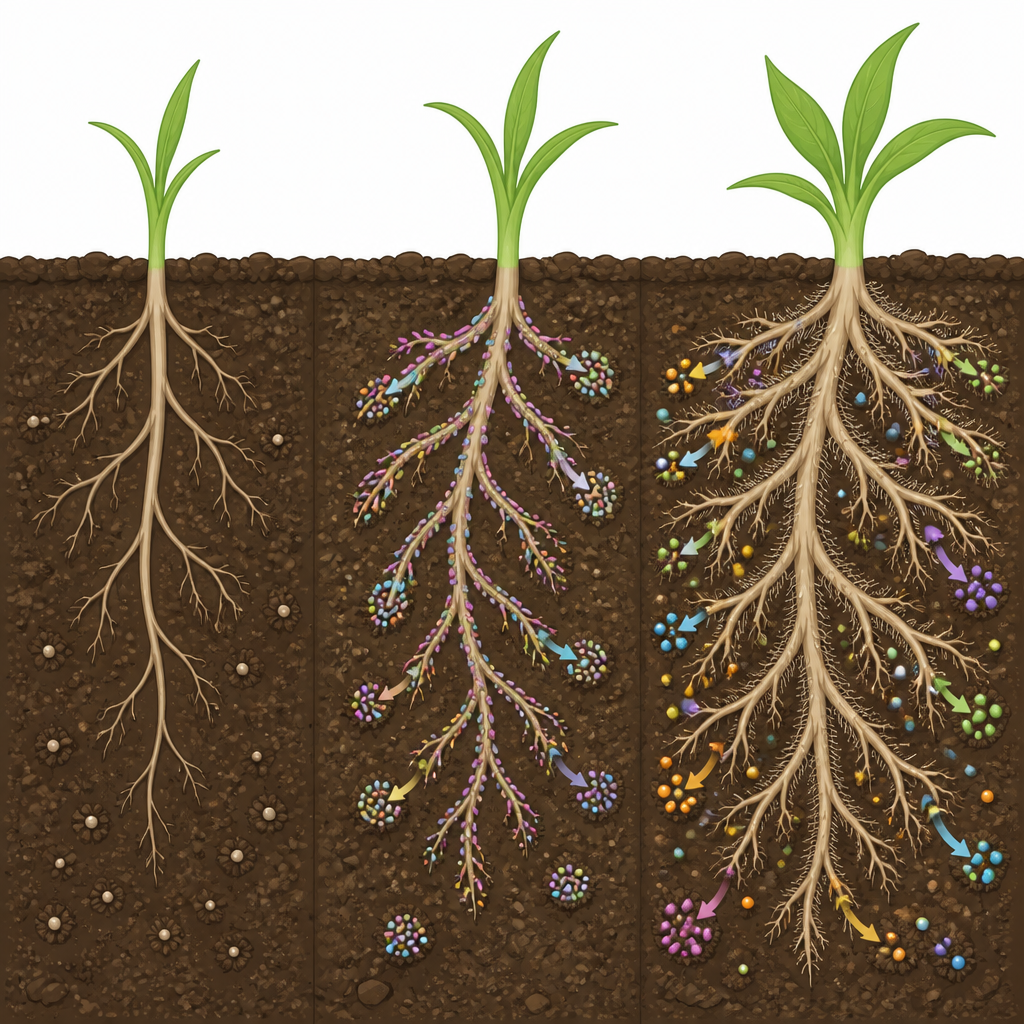
Beyond feeding plants, these microbes quietly remodel the wider community of life in the root zone. Using modern DNA sequencing tools, researchers see that adding helpful bacteria can nudge the balance toward other beneficial species and away from disease-causing fungi and bacteria. The resulting networks become more connected and stable, with “keystone” organisms such as certain protozoa helping keep the system in check. Enzyme levels in the soil often rise, speeding the cycling of nitrogen, phosphorus, and carbon. Yet these shifts are not always permanent, and sometimes the native community resists change or snaps back after an initial disturbance.
Helping plants cope with stress and pollution
The review also shows how root helpers act as natural stress shields. Many strains produce plant-like hormones that encourage fine root growth, greater branching, and stronger shoots. Others make an enzyme that lowers the plant’s levels of ethylene, a gas that, under stress, can stunt growth. Together with improved nutrition, this allows crops to better withstand drought, salt, and heavy metals. When paired with plants used to clean polluted soils, these bacteria can either lock dangerous metals in the root zone or help plants take them up more efficiently, making microbe-assisted clean-up a practical option for contaminated fields and mine sites.
From lab success to reliable farm tool
A central message of the article is that these friendly bacteria behave very differently in the lab and in real fields. Their helpful traits often shut down when soil conditions change, added strains may lose out to native microbes, and cell numbers can drop sharply within a year. To overcome this, the authors outline a roadmap that combines better protective carriers, carefully designed mixtures of complementary strains, and, in the longer term, genetic tuning of bacteria for stronger root sticking power and stress tolerance. They argue that these microbes should be viewed not as a simple product but as one piece of a broader soil management strategy.
Why this matters for everyday life
In plain terms, the article concludes that root-friendly bacteria can act as “engineers” of the soil–plant system, improving fertility, plant health, and resilience while lowering dependence on fertilizers and pesticides. However, they are not a magic fix, because their success depends strongly on local soil, climate, and farming practices. With smarter design of microbe mixtures, carriers, and field strategies, these hidden helpers could become a dependable tool for making agriculture more productive and environmentally gentle.
Citation: Wang, M., Xu, Z. PGPR-mediated enhancement of soil nutrients, rhizosphere microbial ecology, and plant growth: a review. npj Biofilms Microbiomes 12, 95 (2026). https://doi.org/10.1038/s41522-026-00966-0
Keywords: plant growth promoting rhizobacteria, sustainable agriculture, soil microbiome, nutrient cycling, phytoremediation