Clear Sky Science · en
The Anna Karenina principle in the assembly of plant microbiome under pathogen stress
Why tiny partners matter for big crops
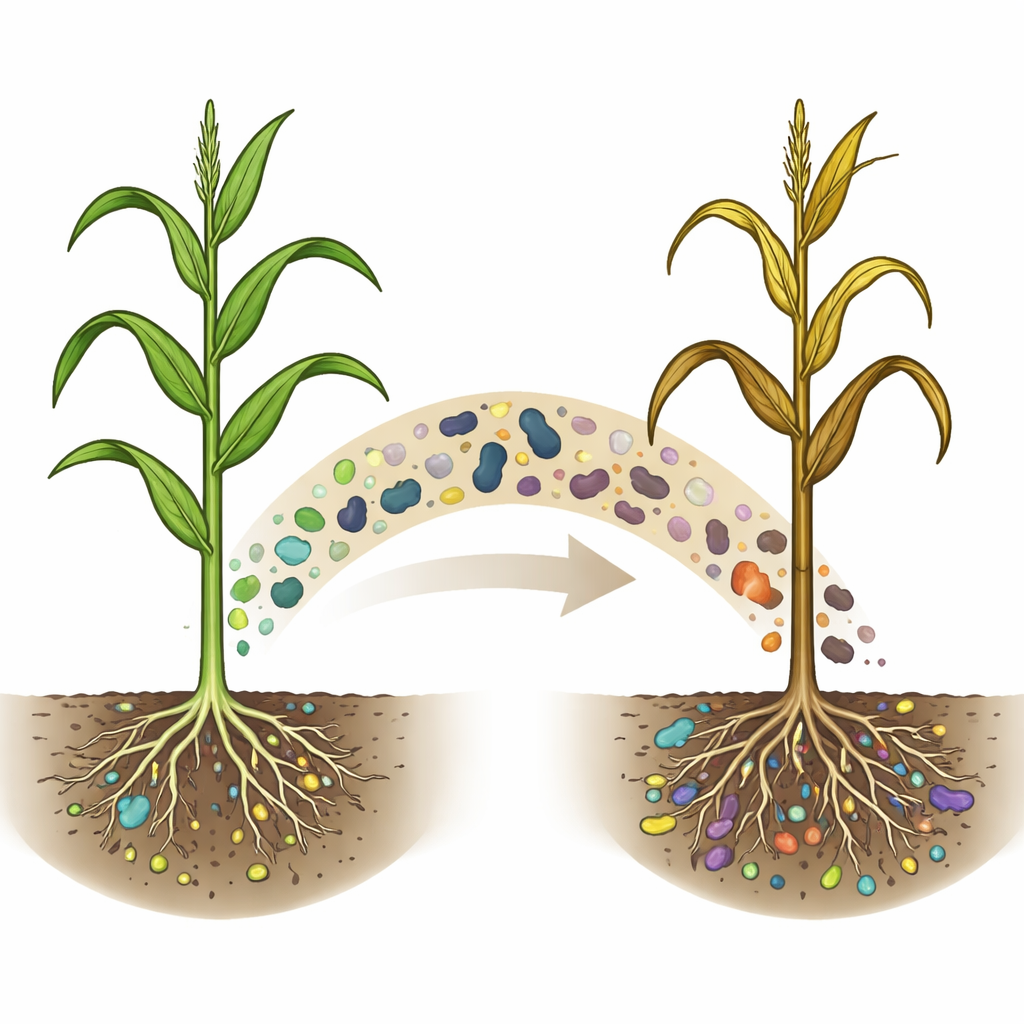
Maize, one of the world’s most important crops, does not face disease alone. Its roots, stems, and even seeds are home to vast communities of microbes that help the plant grow and fend off threats. This study asks a deceptively simple question: when a serious fungal disease attacks maize, do these microbial communities fall apart in a predictable way? By examining thousands of samples from fields across China, the researchers show that a literary idea—the “Anna Karenina Principle,” which says all healthy systems resemble one another while unhealthy ones fail in their own ways—also helps explain how plant microbiomes respond to pathogen stress.
Healthy versus sick plants and their unseen residents
The team focused on Fusarium stalk rot, a widespread disease that rots maize stems and can slash yields by up to half while contaminating grain with toxins. They collected 1,410 samples from bulk soil, rhizosphere soil, roots, stems, and seeds of healthy and diseased plants across 33 locations spanning much of China. Using DNA sequencing to profile bacterial communities, they compared how similar or different these communities were in healthy versus infected plants. They found that disease consistently reshaped the microbiomes inside and around maize, with especially strong effects in the stems where Fusarium attacks most directly.
When stress makes communities less predictable
To test the Anna Karenina Principle, the researchers combined four measures of how much bacterial communities vary from plant to plant. In healthy maize, communities tended to be more alike, suggesting a stable, well-regulated partnership between host and microbes. In diseased plants, however, the communities became more variable and less predictable: diversity fluctuated more, differences among individual plants grew larger, and assembly processes shifted from orderly filtering to more random, chance-driven outcomes. The authors distilled these patterns into a composite “AKP score” that captures how far a microbiome has drifted from a healthy, orderly state. Higher scores marked microbiomes that were more disordered and idiosyncratic, consistent with the Anna Karenina idea.
Slow-and-steady microbes take over under stress
The study also examined the “life-history strategies” of bacteria—whether they behave like fast-growing opportunists or slow, resource-efficient survivors. By using genetic features such as the number of ribosomal RNA gene copies, genome size, and base composition, the authors inferred whether communities were dominated by copiotrophs (fast growers adapted to nutrient-rich conditions) or oligotrophs (slow growers adapted to scarcity). Under Fusarium infection, copiotrophic bacteria declined while oligotrophs increased, especially in stems and seeds. Diseased plants harbored bacterial communities with smaller genomes and higher GC content, traits associated with conserving resources in stressful or nutrient-limited environments. The higher the AKP score, the more the microbiome tilted toward these frugal, stress-tolerant microbes.
Hidden functions shift as the balance changes
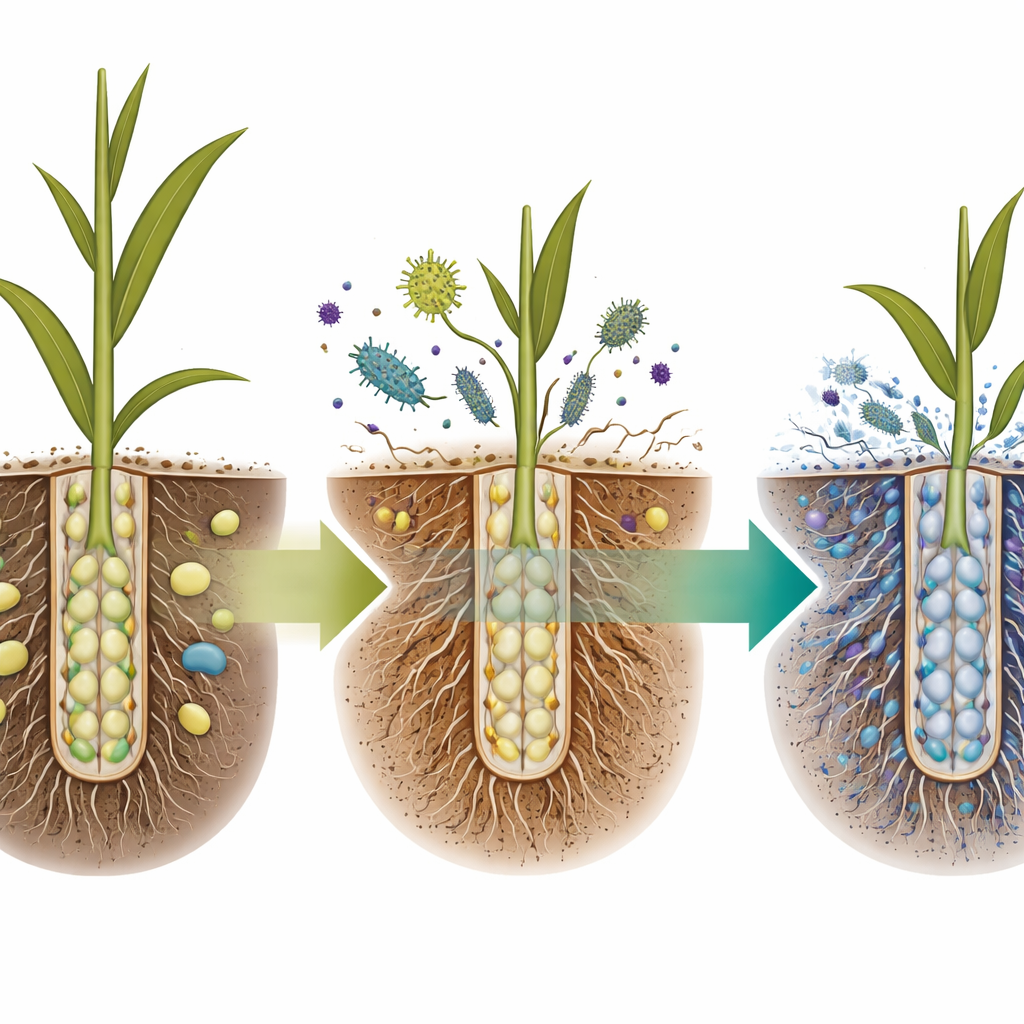
Beyond who is present, the researchers probed what the microbes are capable of doing. In healthy plants, microbial genes were enriched for functions such as carbohydrate and amino acid metabolism, cell motility, and vitamin production—activities that can help nourish the plant and support beneficial partnerships. In diseased stems, by contrast, functions linked to DNA packaging and repair, cell wall remodeling, and lipid metabolism became more prominent. These shifts suggest that under pathogen pressure, microbial communities reorganize around survival and stress management rather than cooperation and growth. The changes were tied to certain bacterial groups: for example, beneficial Proteobacteria were more common in healthy plants and declined as AKP scores rose.
What this means for protecting crops
In everyday terms, this work shows that when a major pathogen strikes maize, the plant’s microbiome does not just become “bad”; it becomes more chaotic and more dominated by slow, tough microbes that can endure harsh conditions. This pattern fits the Anna Karenina Principle: healthy plant–microbe partnerships are relatively similar and ordered, while diseased ones fragment into many different, less predictable states. Understanding these shifts could help scientists design microbial or breeding-based strategies that keep plant microbiomes in their healthier, more stable configurations, improving resilience against disease and safeguarding global food supplies.
Citation: Li, D., Qu, ZS., Wang, C. et al. The Anna Karenina principle in the assembly of plant microbiome under pathogen stress. npj Biofilms Microbiomes 12, 91 (2026). https://doi.org/10.1038/s41522-026-00964-2
Keywords: plant microbiome, maize disease, Fusarium stalk rot, Anna Karenina Principle, microbial community assembly