Clear Sky Science · en
Pseudomonas plecoglossicida disrupts intestinal homeostasis through manipulation of palmitoleic acid microbial metabolism
Why infection can steal a fish’s appetite
Sickness often makes animals stop eating, which can be a serious problem in fish farms that rely on medicated feed. This study explores how a common fish pathogen, even though it does not live in the gut, can quietly upset the intestine’s balance of microbes and chemicals. The work shows that a single fatty molecule made by gut microbes plays a key role in keeping the intestinal wall healthy and the fish willing to eat.
When illness turns off hunger
Loss of appetite during illness, known as sickness associated anorexia, is seen in many animals and is usually blamed on immune signals acting on the brain. In farmed groupers, however, reduced feeding also means that oral drugs do not work well, allowing infections to worsen. The researchers wondered whether changes inside the intestine itself, rather than only in the brain, might help explain why infected fish stop eating, and whether the gut’s resident microbes and their chemical products are involved.
A hidden attack on the gut lining
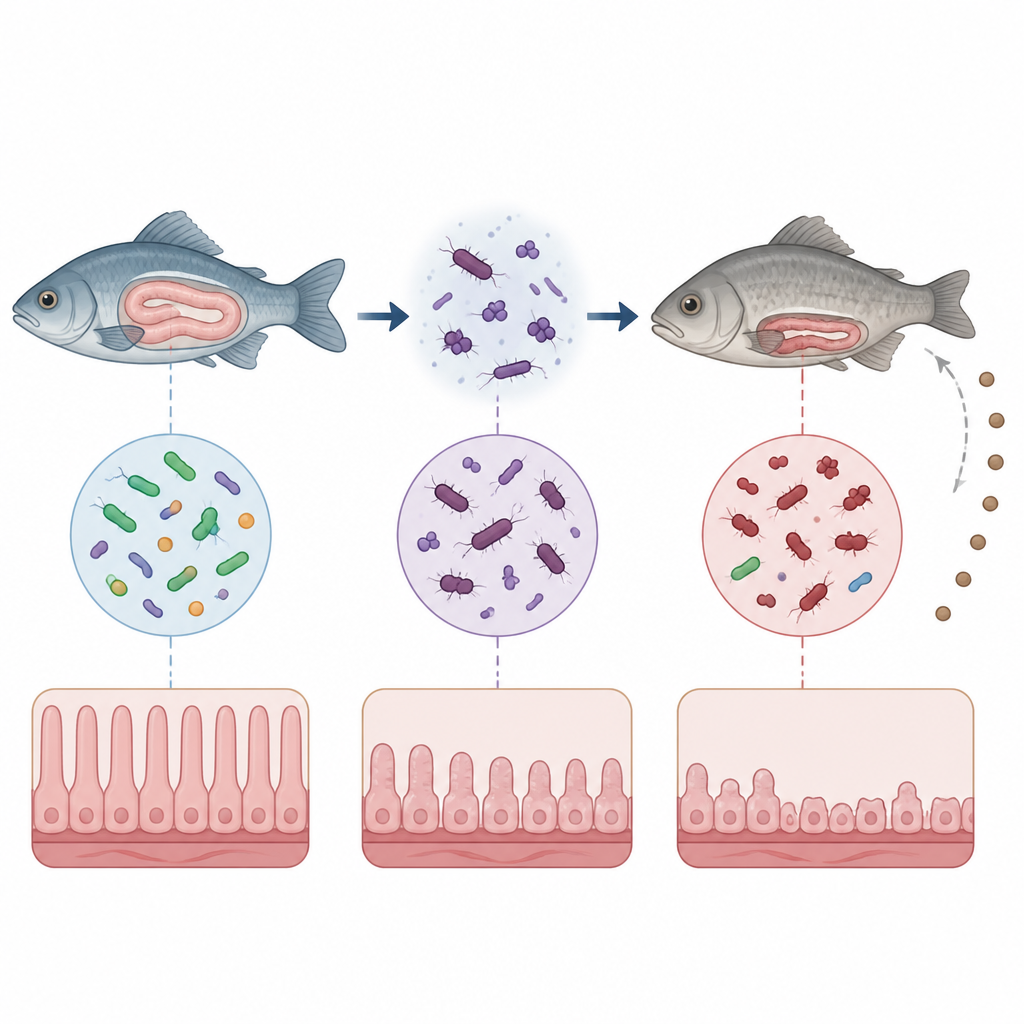
The team infected orange-spotted grouper with Pseudomonas plecoglossicida, a bacterium that mainly targets internal organs instead of the gut. Using single-cell RNA sequencing, they mapped every major cell type in the middle intestine over three days. They saw a sharp drop in nutrient absorbing cells and mucus producing goblet cells, along with damaged villi and crypts, the finger-like structures that digest and absorb food. At the same time, genes linked to cell death and cellular aging were switched on, while microscopic staining confirmed that many intestinal cells were undergoing programmed death.
Microbes, missing fat, and a broken balance
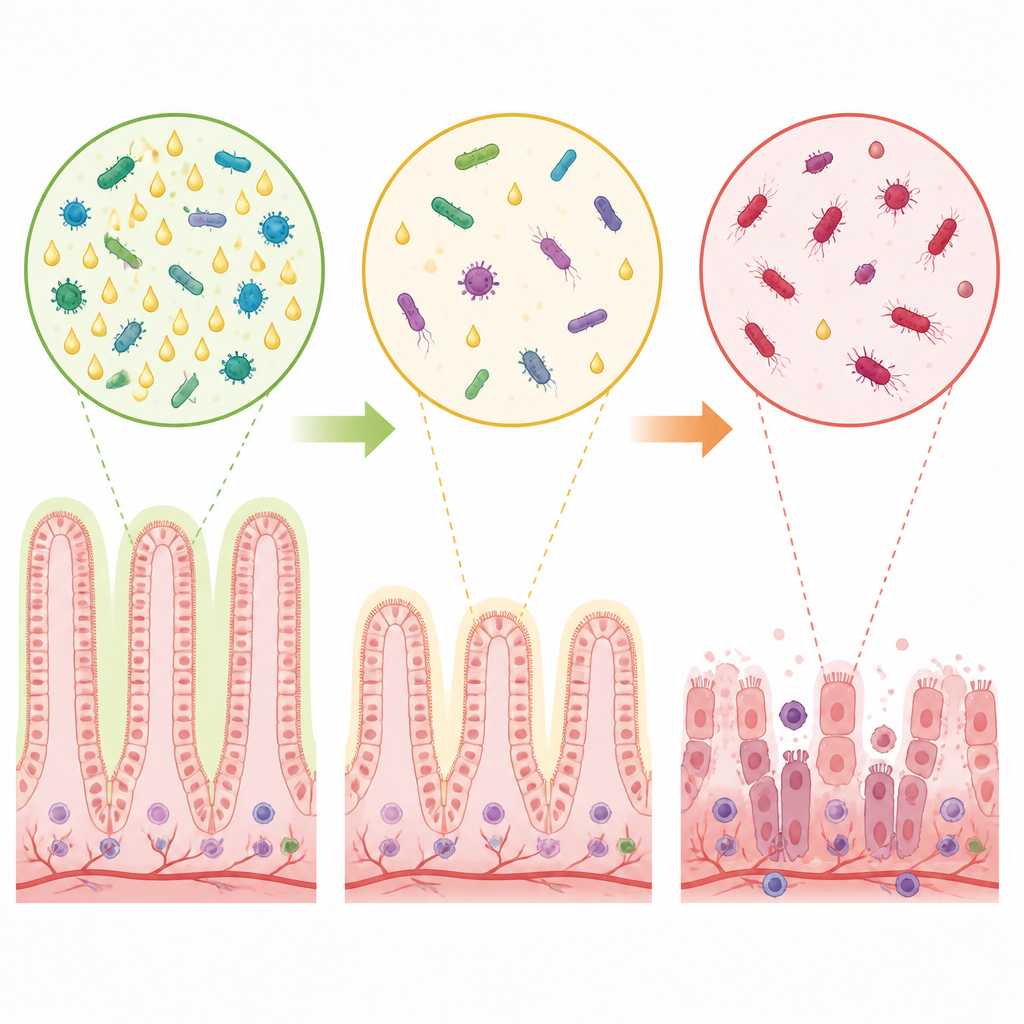
High-throughput DNA sequencing showed that the gut’s microbial community shifted dramatically during infection, even though the pathogen itself stayed at very low levels in the intestine. Several helpful bacterial species dwindled, while others with less favorable effects expanded. To link these shifts to gut chemistry, the scientists performed metabolomics, surveying many small molecules in the intestinal contents. Eighteen candidate compounds emerged, but one stood out: palmitoleic acid, a fatty acid known to dampen inflammation and protect cells from death. Its levels plunged as infection progressed and were strongly tied to the loss of intestinal cells and activation of death related genes.
Restoring a protective signal
To test whether this fatty acid truly mattered, the researchers fed infected fish extra palmitoleic acid. Supplemented fish ate more, showed healthier villi and crypts, and had a more balanced gut microbiota. In a separate experiment using an intestinal cell line, palmitoleic acid boosted cell growth, reduced damage caused by inflammatory signals and a chemotherapy drug, and shifted key genes toward survival rather than death. An antibiotic treated “germ free” fish model further suggested that much of the palmitoleic acid in the healthy gut is produced by microbes, and that the infection mainly lowers its level by disturbing the microbiota rather than directly blocking the fish’s own metabolism.
What this means for fish health
The study reveals that a non-gut pathogen can still trigger appetite loss by disturbing a gut circuit that links microbes, their fatty products, and the intestinal lining. When infection disrupts palmitoleic acid production, more intestinal cells die, the barrier weakens, and feeding drops. For aquaculture, this points to a practical idea: supplying palmitoleic acid in the diet could help maintain gut health and appetite during outbreaks, improving recovery and the success of treatments that depend on medicated feed.
Citation: Huang, L., Wang, J., Li, Q. et al. Pseudomonas plecoglossicida disrupts intestinal homeostasis through manipulation of palmitoleic acid microbial metabolism. npj Biofilms Microbiomes 12, 96 (2026). https://doi.org/10.1038/s41522-026-00963-3
Keywords: gut microbiome, fish infection, palmitoleic acid, intestinal health, appetite loss