Clear Sky Science · en
Voluntary wheel running exercise attenuates VPA-induced ASD-like behaviors in male rats: implication of the vagal pathway of the gut-brain axis
Why exercise and the gut may matter for autism
Many families of autistic children notice that physical activity and stomach troubles often go hand in hand with changes in behavior. This study in rats explores how voluntary exercise, gut microbes, and a major nerve connecting the belly and brain may work together to ease autism-like traits. The work does not offer a treatment for people, but it helps scientists understand how moving the body might quietly reshape the brain through the gut.
Running wheels and autism-like behavior in rats
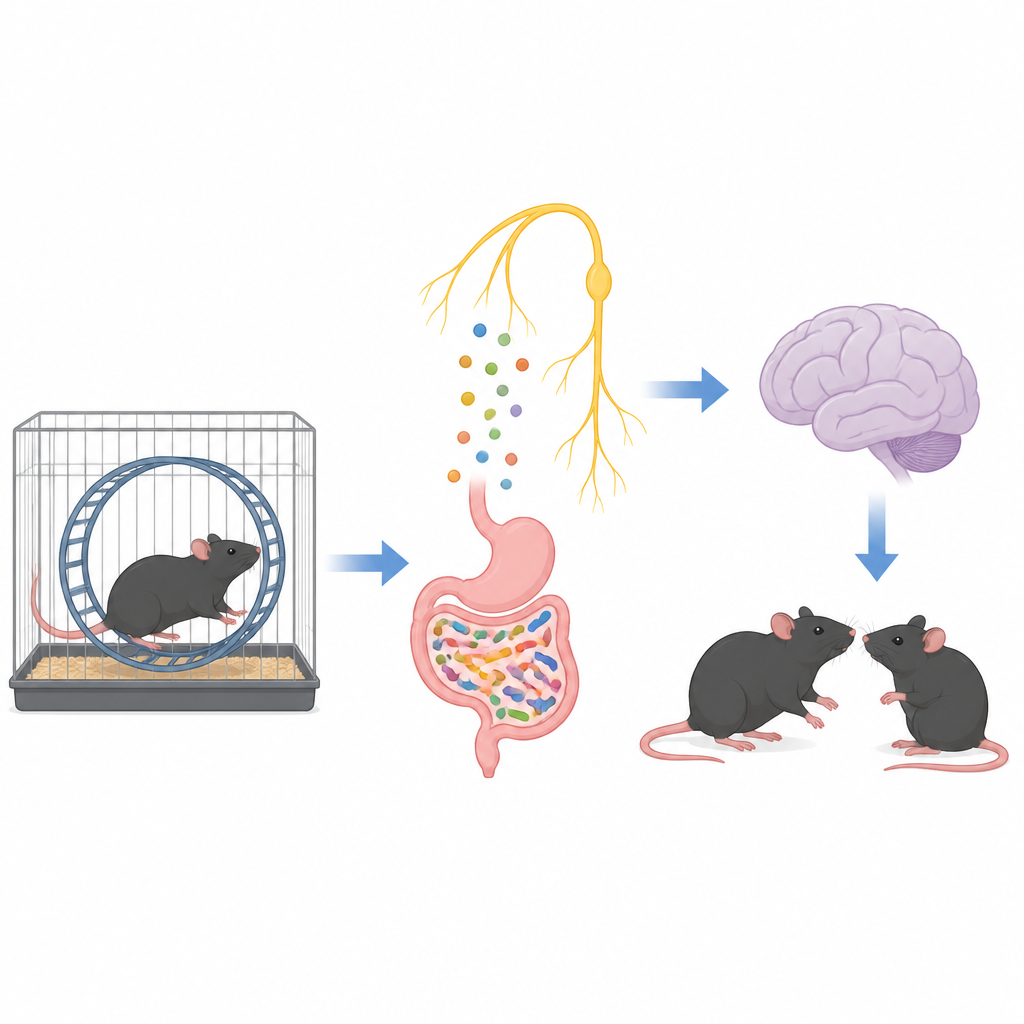
Researchers used a common rat model of autism-like traits created by exposing pregnant rats to the drug valproic acid. Their male offspring showed problems that mirror core features of autism, such as poorer learning and memory, repetitive grooming, anxiety-like exploration, and weaker interest in other rats. The scientists then gave some of these animals free access to a running wheel for six weeks, letting them choose how much to run instead of forcing exercise. After this period, the same behavioral tests were repeated to see whether voluntary running changed how the animals learned, explored, and socialized.
How exercise reshaped the gut and its chemical signals
Exercise did not simply make the rats fitter. It also altered the mix of bacteria living in their intestines. Although the total number and variety of species stayed similar, the balance of certain groups shifted away from the disturbed pattern caused by valproic acid and closer to that of healthy rats. At the same time, levels of short-chain fatty acids, small molecules made when gut microbes digest fiber, rose in both feces and blood. One of these, butyrate, increased in particular. When the team compared these chemical changes with behavior, higher levels of several short-chain fatty acids were linked to better memory, less repetitive digging, and more time spent interacting with other rats.
Changes inside key brain regions
The scientists then looked at the hippocampus and prefrontal cortex, brain regions important for memory, decision making, and social behavior. In rats with autism-like traits, many brain signaling chemicals were either unusually low or high, and immune cells in the brain appeared overactive and skewed toward a pro-inflammatory state. Voluntary running partially restored a more balanced mix of signaling substances, including messengers related to glutamate, GABA, and serotonin. It also calmed brain immune cells, reduced signs of inflammation, and improved markers linked with healthy neurons. These brain changes matched the improvements seen in learning and social tests, suggesting that exercise had shifted the brain toward a healthier, more flexible state.
The crucial role of the body’s major gut–brain nerve
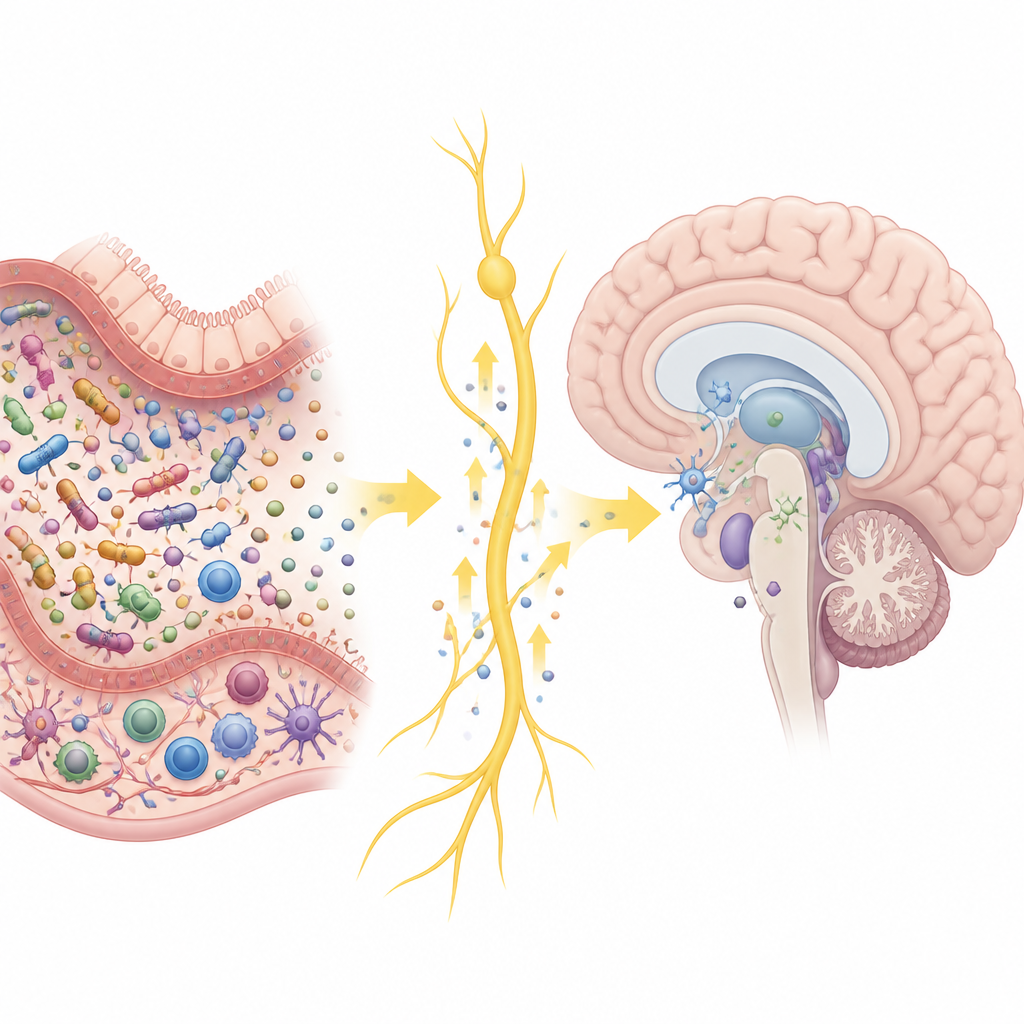
To test how signals from the gut reach the brain, the researchers cut the main branch of the vagus nerve below the diaphragm in some rats before the exercise program, while others had a sham operation. This surgery did not change how much the animals chose to run or their body weight, but it made a big difference to outcomes. Even though exercise still boosted short-chain fatty acids and modified gut microbes, rats without an intact vagus nerve did not show the same gains in learning, exploration, or social behavior. In these animals, brain immune cells stayed more inflamed, and the helpful shifts in signaling chemicals were weaker or absent, especially in the prefrontal cortex.
What this work means for understanding autism
This research suggests that, in rats with autism-like traits, voluntary exercise can ease behavioral problems by reshaping gut microbes, increasing helpful gut-derived chemicals, and calming inflammation in key brain regions. Crucially, these benefits depended on an intact vagus nerve, the main highway that carries information from the gut to the brain. While results in animals cannot be directly applied to people, the study supports the idea that gentle, self-paced physical activity may influence the brain partly through the gut–brain connection. Understanding this pathway could guide future strategies that combine movement, diet, and nerve-based approaches to support those on the autism spectrum.
Citation: Li, Y., Zhong, J., Shen, Y. et al. Voluntary wheel running exercise attenuates VPA-induced ASD-like behaviors in male rats: implication of the vagal pathway of the gut-brain axis. npj Biofilms Microbiomes 12, 94 (2026). https://doi.org/10.1038/s41522-026-00962-4
Keywords: autism spectrum disorder, gut brain axis, vagus nerve, short chain fatty acids, exercise