Clear Sky Science · en
A microbiota–host axis mediates prostaglandin sensitivity: Lactobacillus crispatus as a biomarker and regulator of human labor induction
Why the Bacteria in Birth Matter
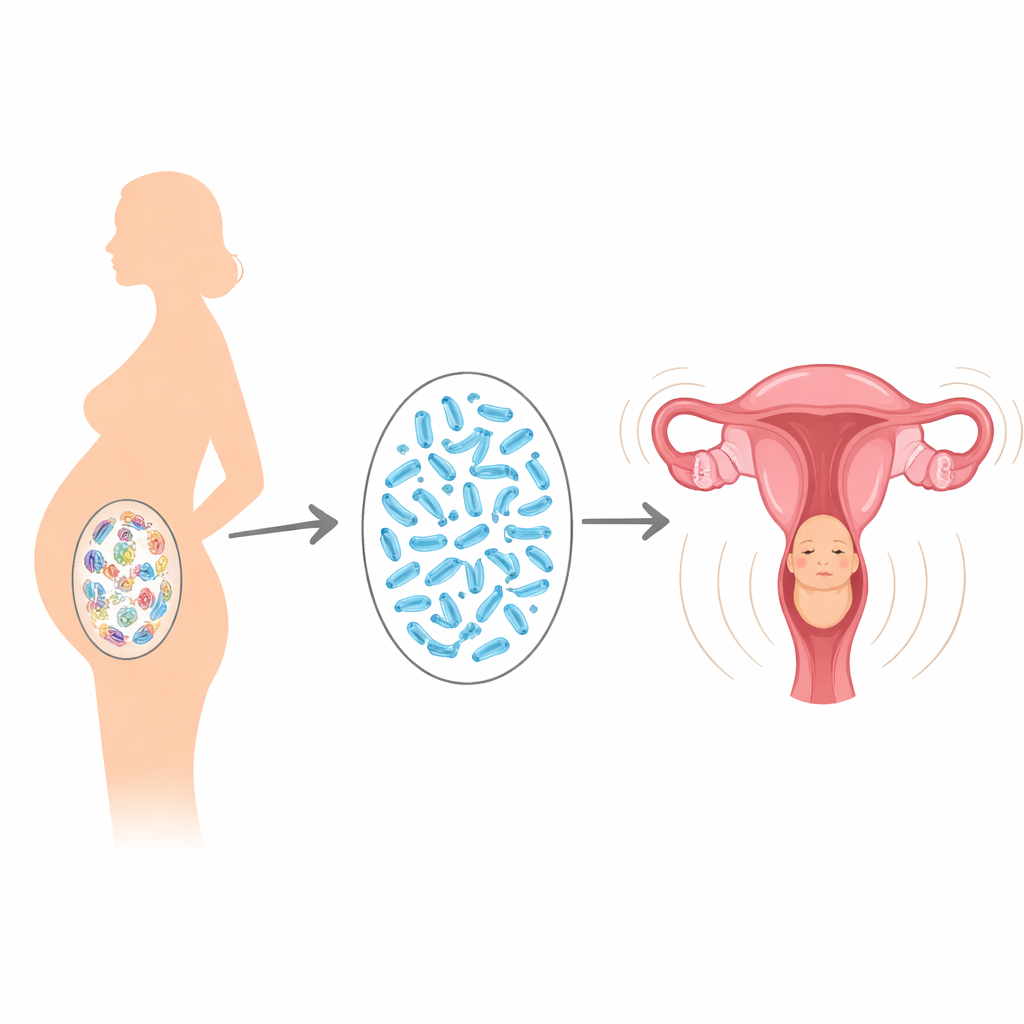
When a pregnancy goes past its due date or medical issues arise, doctors often start labor with medicines instead of waiting for contractions to begin on their own. But this process, called labor induction, does not work equally well for everyone. Failed inductions can lead to emergency cesarean deliveries and more stressful births. This study asks a surprising question with practical consequences: could the natural bacteria living in the vagina help predict—and even improve—how well a commonly used induction drug works?
A Closer Look at Induced Labor
The researchers followed 85 first-time mothers at term who needed their labor started with a slow-release vaginal prostaglandin E2 insert (Propess®). All women had an initially “unripe” cervix, meaning it was still firm and closed. After 24 hours with the insert in place, the team used a standard scoring system to decide who had responded well. Women whose cervix had softened and opened enough were labeled “sensitive,” while those who did not reach this threshold were considered “non-sensitive.” Although the two groups were similar in age, weight, pregnancy length, and baby health, non-sensitive women needed the drug longer, more often required extra induction methods, and ultimately had more cesarean sections and longer labors.
The Hidden Community of Vaginal Bacteria
Before induction, the team collected vaginal swabs and performed detailed genetic profiling of the bacteria present. Every woman carried the same core set of microbes, but their proportions differed. Non-sensitive women had a more mixed and complicated community, with many different types present in similar amounts—a pattern the authors describe as higher diversity and dysbiosis. In contrast, women who responded well tended to have a simpler community strongly dominated by one kind of helpful bacterium, Lactobacillus crispatus. When the researchers grouped microbiomes into broad community types, they found that a pattern led by L. crispatus was common in sensitive women, while a mixed pattern rich in other anaerobic bacteria was far more frequent in those whose cervix failed to ripen.
A Key Protective Bacterium Comes into Focus
Diving deeper, the scientists showed that L. crispatus stood out as the single most informative species. Its relative abundance was much higher in women who responded well to Propess® and much lower in those who did not. Using standard prediction curves, they found that measuring how much L. crispatus is present could forecast successful induction with good accuracy. Other bacteria that grew more common in non-sensitive women, such as certain Gardnerella strains, were far weaker predictors. Importantly, the more L. crispatus a woman carried, the shorter her labor tended to be, especially the early “latent” part when the cervix is softening and starting to open.
From Microbes to Molecules and Cervical Cells
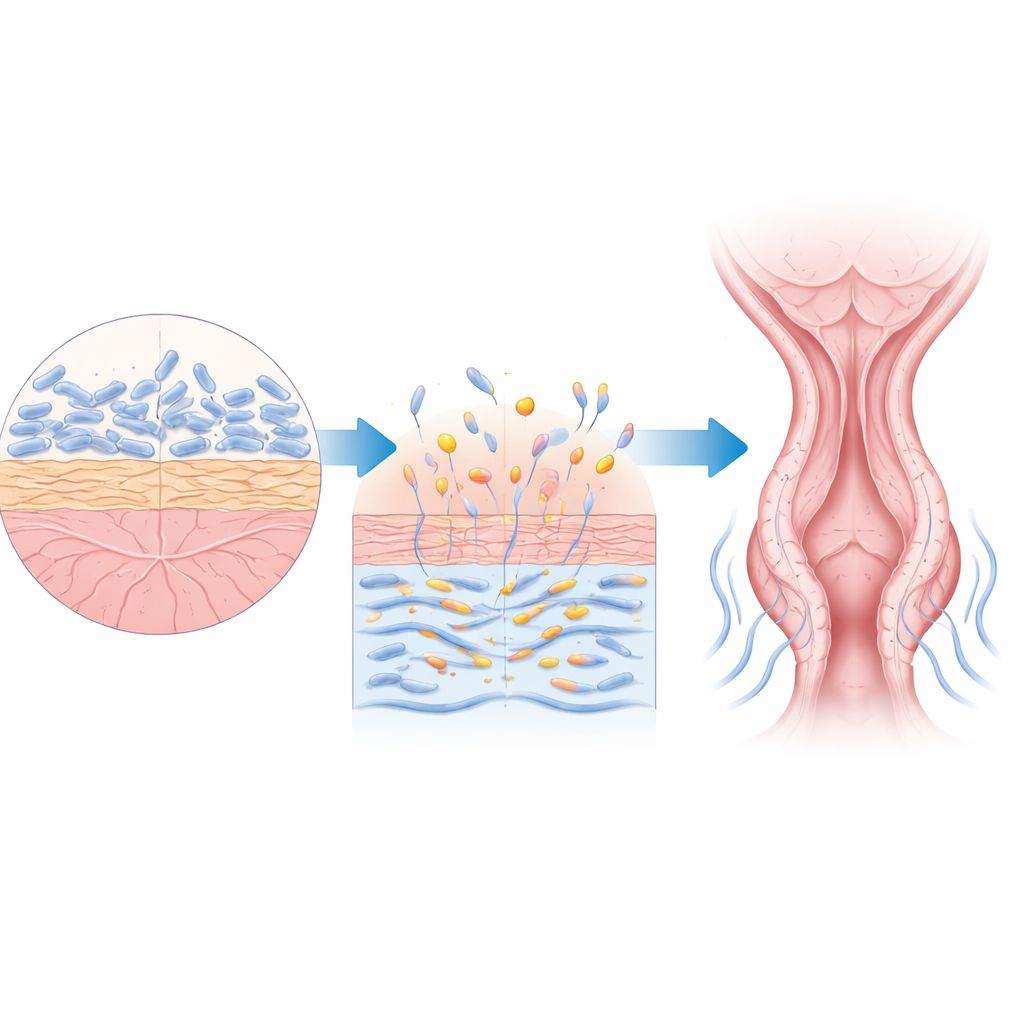
The study went beyond spotting patterns and began to uncover how this bacterium might influence the body. Using broad chemical screening of vaginal secretions, the team found that sensitive and non-sensitive women had distinct sets of small molecules. Many of these chemicals were strongly linked to the amount of L. crispatus, suggesting that this microbe reshapes the local chemical environment in ways that matter for the cervix. To probe this link, the researchers treated human cervical stromal cells in the lab with liquid taken from L. crispatus cultures. This exposure rewired the cells’ gene activity: switches controlling muscle contraction, tissue softening and remodeling, and immune balance were turned on or off in a pattern consistent with a cervix preparing for labor. Together, these changes painted a picture of a cervix becoming softer, more contractile, and better tuned to respond to prostaglandin signals.
Toward More Personalized Birth Care
In plain terms, the study suggests that having a vagina dominated by Lactobacillus crispatus helps the cervix “listen” to prostaglandin medicines used to start labor. Women rich in this friendly bacterium are more likely to respond quickly, have shorter labors, and avoid unplanned cesarean delivery, while a more disturbed bacterial community is linked to poor response. By combining microbiome profiles, metabolic fingerprints, and cell-level experiments, the authors propose a new way to personalize induction: test the vaginal bacteria beforehand, use L. crispatus as a biomarker of likely success, and eventually consider microbiome-based strategies to improve cervical readiness. If confirmed in larger studies, this microbiota–host axis could help make induced births safer and more predictable for mothers and babies.
Citation: Wang, Z., Tan, W., He, Z. et al. A microbiota–host axis mediates prostaglandin sensitivity: Lactobacillus crispatus as a biomarker and regulator of human labor induction. npj Biofilms Microbiomes 12, 92 (2026). https://doi.org/10.1038/s41522-026-00960-6
Keywords: vaginal microbiome, labor induction, Lactobacillus crispatus, prostaglandin E2, precision obstetrics