Clear Sky Science · en
Cetobacterium somerae as a microbial correlate of improved muscle quality after intestinal microbiota transplantation in Yellow River carp (Cyprinus carpio)
Why this fish story matters to you
Fish is often praised as a healthy, high‑quality protein, but not all fillets are created equal. Their firmness, juiciness, and chew can vary widely, affecting both enjoyment and market value. This study looks at an unexpected player in fish meat quality: the microbes living in the gut. Working with Yellow River carp, an important farmed species in China, the researchers show that specific gut bacteria—and the substances they produce—can make fish muscle firmer and leaner without sacrificing growth. Their findings could inform new probiotic-style feeds that improve food quality from the inside out.
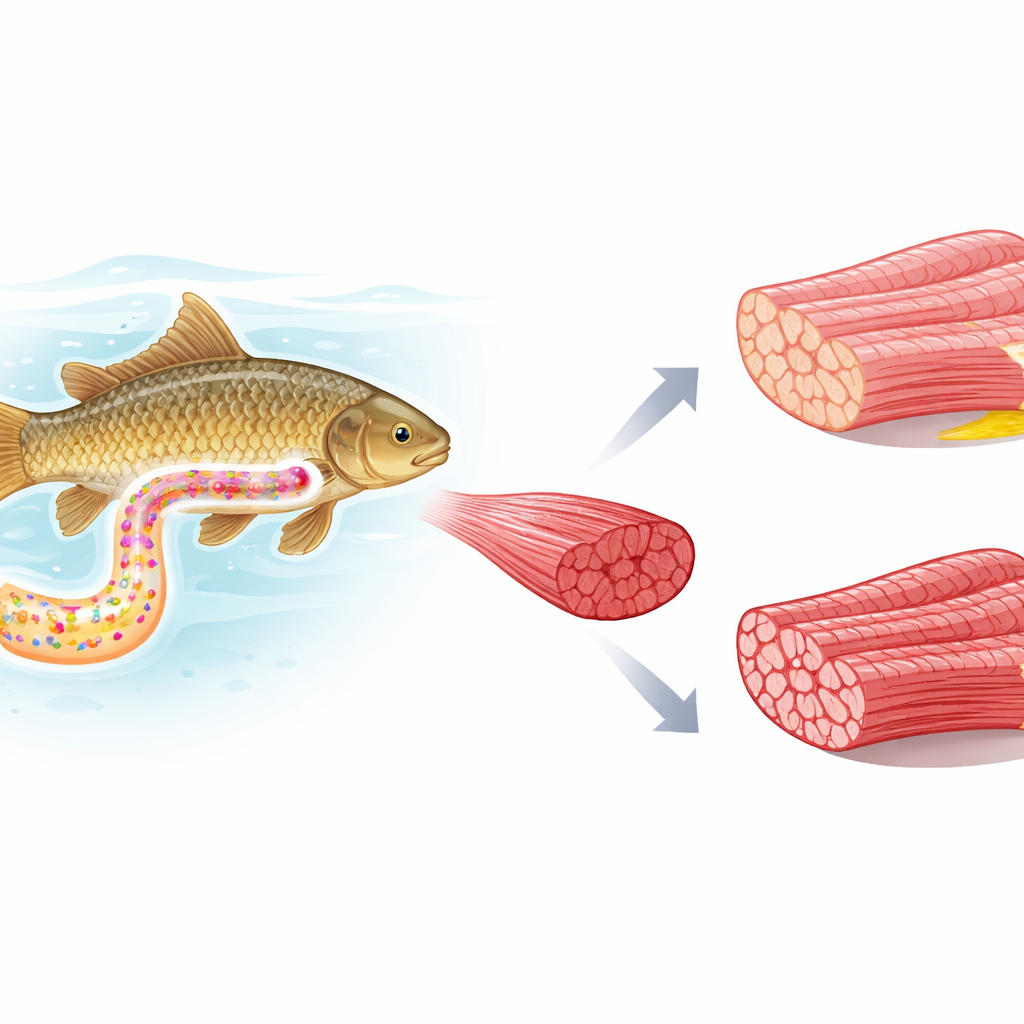
From farm feed to firmer fillets
Farmers have long known that feeding carp with faba beans makes the fish flesh pleasantly firm and chewy, but it also slows growth and stresses the animals. The team first confirmed this trade‑off: after six weeks on faba beans, carp grew more slowly yet had much tougher, springier meat with more collagen, finer muscle fibers, and less fat. At the same time, the mix of microbes in the intestine shifted. Some bacterial groups became more common, including a genus called Cetobacterium. Statistical links suggested that these gut changes traveled beyond the intestine, coinciding with better muscle texture—but the study still needed to prove cause and effect.
Testing the gut–muscle connection
To separate the influence of diet from that of microbes, the researchers collected whole intestinal contents from faba‑bean‑fed “donor” carp and transplanted this microbial community into healthy carp on a normal diet. This whole‑intestine microbiota transplantation, given daily for eight weeks, reshaped the recipients’ gut ecosystems to resemble those of the donors. Remarkably, the treated fish kept normal growth and overall health yet developed firmer, chewier fillets with more small‑diameter muscle fibers, higher collagen content, and less fat—closely echoing the desirable muscle traits seen in faba‑bean‑fed fish, but without the bean‑induced growth penalties and intestinal inflammation.
How one bacterium and its acid reshape muscle
Diving deeper, the team looked for star performers inside this complex microbial cast. One candidate clearly stood out: a species called Cetobacterium somerae. It became especially abundant after transplantation and emerged as a key “marker” of the muscle‑improved fish. Chemical analyses of gut contents showed that short‑chain fatty acids, especially acetic acid, were elevated in both donors and recipients, and C. somerae cultures produced large amounts of this same acid. Further tests revealed that transplanted microbiomes and C. somerae were associated with activation of an internal muscle control circuit often summarized as the AMPK–PGC‑1α–FoxO pathway. This network encourages cells to burn fat, maintain healthy mitochondria, recycle damaged components, and fine‑tune collagen and fiber structure—changes that collectively yield leaner, tighter, more resilient muscle.
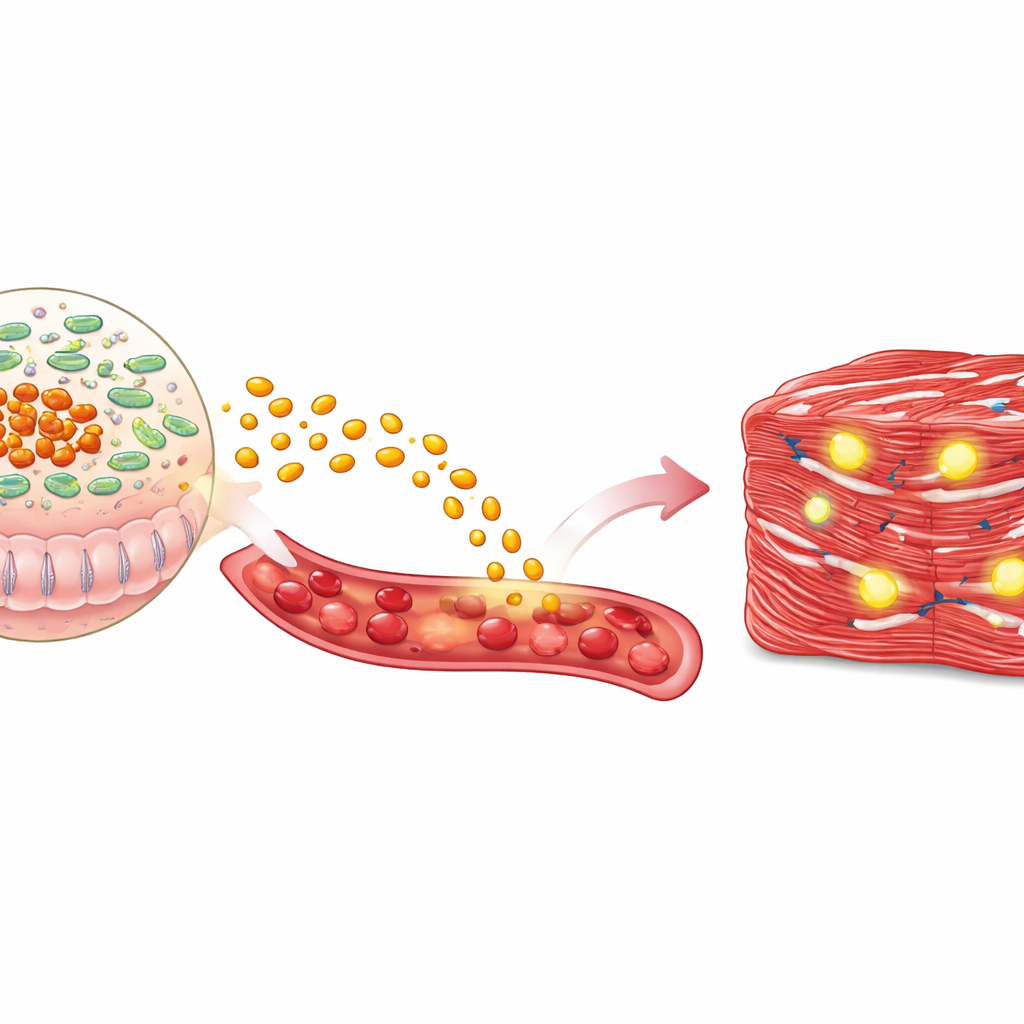
Probiotic and metabolite “helpers” for carp muscle
The researchers then tried a more practical approach: adding either live C. somerae or simple sodium acetate (a dietary form of acetic acid) directly to carp feed. Under normal conditions, both supplements reduced muscle fat, boosted protein and collagen, and improved texture, increasing hardness and chewiness of raw and cooked fillets. To mimic the stress seen with faba beans, they also challenged fish with a bacterial cell‑wall component that inflames the intestine. Even under this inflammatory pressure, C. somerae helped preserve muscle quality and activated the same energy‑sensing and fat‑burning genes as in the transplantation experiments. Sodium acetate alone produced very similar benefits, underscoring acetic acid as a crucial messenger linking gut microbes to distant muscle tissue.
What this means for future fish on the plate
In plain terms, this work shows that the “good” bacteria in a carp’s gut can tune how its muscles grow, how much fat they store, and how firm the flesh feels when you bite into it. By pinpointing C. somerae and its metabolite acetic acid as key contributors, the study offers a roadmap for developing targeted probiotics or feed additives that upgrade fish texture and nutritional quality without harming growth or gut health. Beyond carp, the findings strengthen the broader idea of a gut–muscle axis in animals: what happens in the intestines, down to the level of specific microbes and their small chemical products, can shape the quality of the meat that eventually reaches our tables.
Citation: Cheng, L., Li, Y., Zhang, Y. et al. Cetobacterium somerae as a microbial correlate of improved muscle quality after intestinal microbiota transplantation in Yellow River carp (Cyprinus carpio). npj Biofilms Microbiomes 12, 84 (2026). https://doi.org/10.1038/s41522-026-00955-3
Keywords: gut microbiota, fish muscle quality, probiotics, aquaculture, short-chain fatty acids