Clear Sky Science · en
An antifungal effector from a plant-parasitic nematode modulates host fungal community composition and supports ecological fitness
How a Tiny Worm Rewrites the Hidden Life of Pine Trees
Pine forests around the world are under siege from a microscopic worm that causes pine wilt disease, killing trees in a matter of weeks. This study reveals that the nematode behind the disease does more than just damage tree cells. It also wields a specialized antifungal protein that reshapes the tree’s internal fungal community, turning the microscopic ecosystem inside the wood into a habitat that better feeds and protects the pest. Understanding this hidden manipulation could open new paths to protect forests and manage emerging outbreaks.
A Forest Killer and Its Invisible Allies
The pine wood nematode is a migratory worm that tunnels through the water‑conducting tissue of pines. It feeds first on living plant cells and later on fungi that colonize the dying wood. Inside every tree, however, lives a rich community of endophytic fungi—some helpful, some harmful, some neutral. These fungi can slow nematode growth, attack the worms directly, or help the tree defend itself. Others act as the nematode’s food or even partners in spreading disease. Because this microbial world so strongly influences disease outcome, the authors asked whether the nematode has evolved molecular tools to edit the fungal community in its favor.
A Versatile Antifungal Tool in Microbe‑Rich Habitats
By scanning 160 nematode genomes, the researchers focused on a family of proteins called thaumatin‑like proteins, known in plants and insects for breaking down fungal cell walls. They discovered that these genes are common in nematodes that live in microbe‑rich environments such as soil and decaying plant material, but rare or absent in species that inhabit low‑microbe settings like animal hosts. Species in more diverse microbial habitats tended to have more copies of these genes, suggesting that antifungal tools are especially useful where worms must constantly negotiate crowded microbial neighborhoods.
The Nemotode’s Antifungal Effector and Food Signal Generator
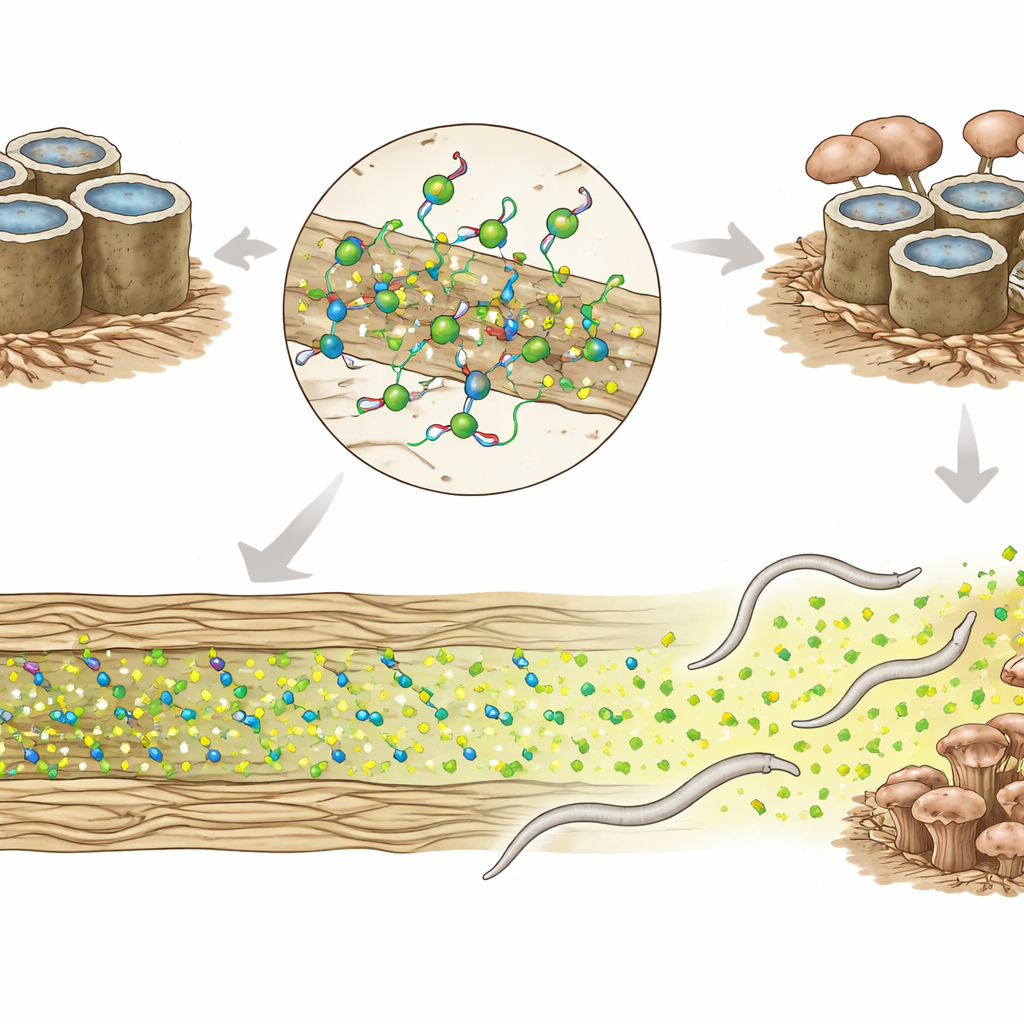
In the pine wood nematode, the team characterized one secreted protein in particular, called BxylTLP6. In laboratory tests, purified BxylTLP6 cut up key components of fungal cell walls and slowed the growth of many fungi commonly found in pine tissues. Worms produce this protein mainly in digestive and gland cells that can release it into their surroundings. When the gene for BxylTLP6 was switched off by RNA interference, the nematodes’ behavior changed: they roamed more and swept their heads faster when searching for food, as though foraging had become harder. Adding simple sugars and small sugar chains—the kinds of fragments produced when BxylTLP6 digests fungal walls—partly calmed this frantic search and attracted worms in choice tests. This suggests that the protein not only harms fungi but also generates chemical trails that guide the nematodes toward fungal food.
Re‑Engineering the Fungal Community Inside Pine Wood
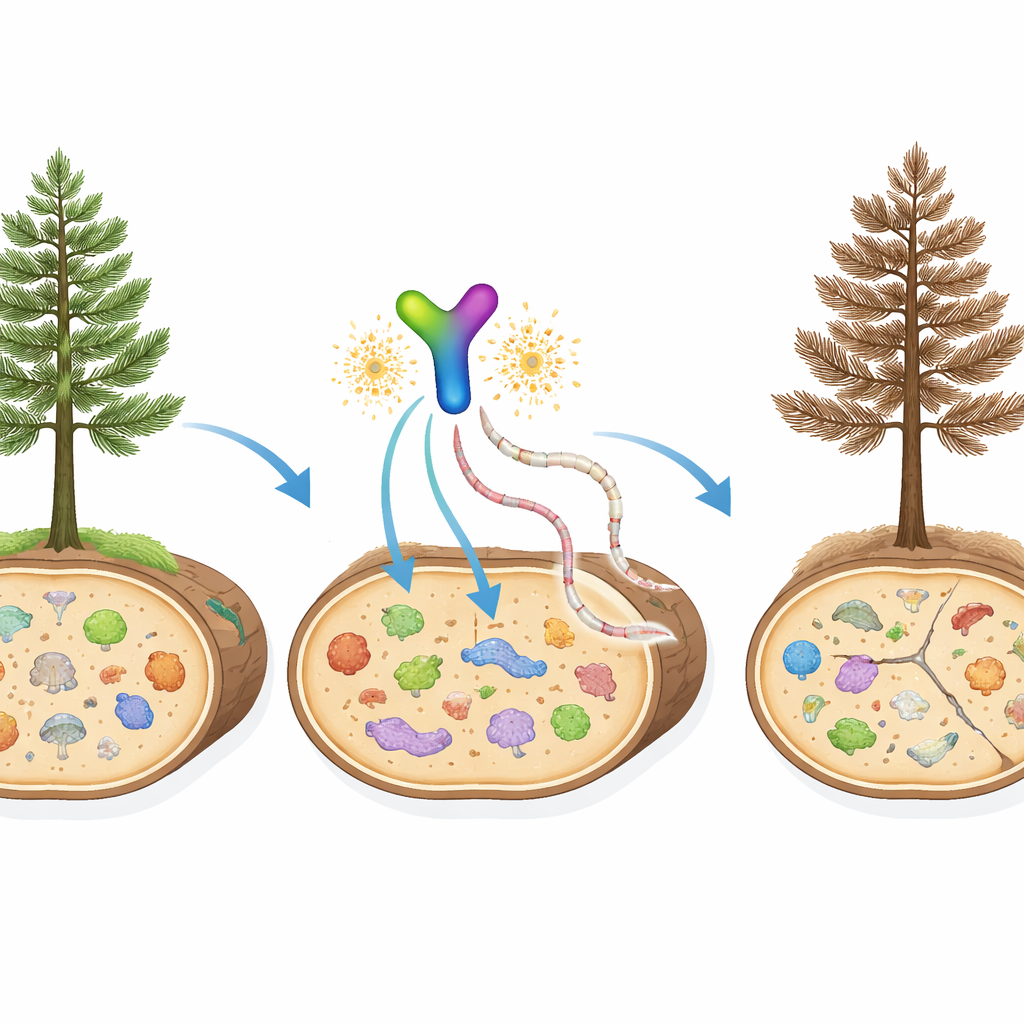
To see how this protein affects whole fungal communities inside trees, the authors infected pine seedlings with normal nematodes, nematodes lacking BxylTLP6, or injected the purified protein directly into stems. They then sequenced fungal DNA from the wood. When BxylTLP6 was active—either supplied by the nematode or injected as protein—the fungal community shifted in a consistent way. Overall richness increased, but diversity evened out around a smaller set of dominant groups. Fungi belonging to Ascomycota, which include many endophytes and plant pathogens, became more dominant, while Basidiomycota, rich in wood‑decaying species, were strongly suppressed. Several wood‑rot fungi dropped in abundance, whereas certain potentially pathogenic or parasitic fungi rose and became central players in the community network. Seedlings infected with BxylTLP6‑silenced nematodes showed delayed disease symptoms, linking these community changes to the pace of pine wilt.
Why These Hidden Shifts Matter for Forest Health
From a lay perspective, the study shows that the nematode is not simply a worm chewing through wood. It acts more like an ecosystem engineer inside the tree. By secreting BxylTLP6, it weakens or excludes wood‑decaying fungi that could destroy its habitat, while favoring fungi that both weaken the tree and serve as later food sources. At the same time, the sugar fragments released from damaged fungal walls become scent‑like cues that help worms navigate toward rich fungal patches once the tree begins to die. Together, these effects improve the nematode’s chances of surviving, multiplying, and eventually hitching a ride on beetles to new trees. Targeting this antifungal effector, or the fungal groups it promotes, could provide new strategies to slow pine wilt disease and protect vulnerable forests.
Citation: Li, DZ., Li, Y., Wang, X. et al. An antifungal effector from a plant-parasitic nematode modulates host fungal community composition and supports ecological fitness. npj Biofilms Microbiomes 12, 85 (2026). https://doi.org/10.1038/s41522-026-00954-4
Keywords: pine wilt disease, plant-parasitic nematode, fungal microbiome, antifungal effector, forest pathology