Clear Sky Science · en
Topical acacia gum reshapes staphylococcal dysbiosis and inflammation in atopic dermatitis
Why a plant fiber on your skin matters
Atopic dermatitis, often called eczema, is more than dry, itchy skin. It is a chronic condition in which the skin’s protective barrier is damaged and the surface becomes dominated by harmful bacteria, especially Staphylococcus aureus. This study explores an unexpected helper: acacia gum, a natural plant fiber already used as a food ingredient. The researchers asked whether, when applied to the skin, this gentle gum could feed friendly microbes, push back harmful ones, and calm inflammation without relying on antibiotics or strong immune-suppressing drugs.
When skin bugs fall out of balance
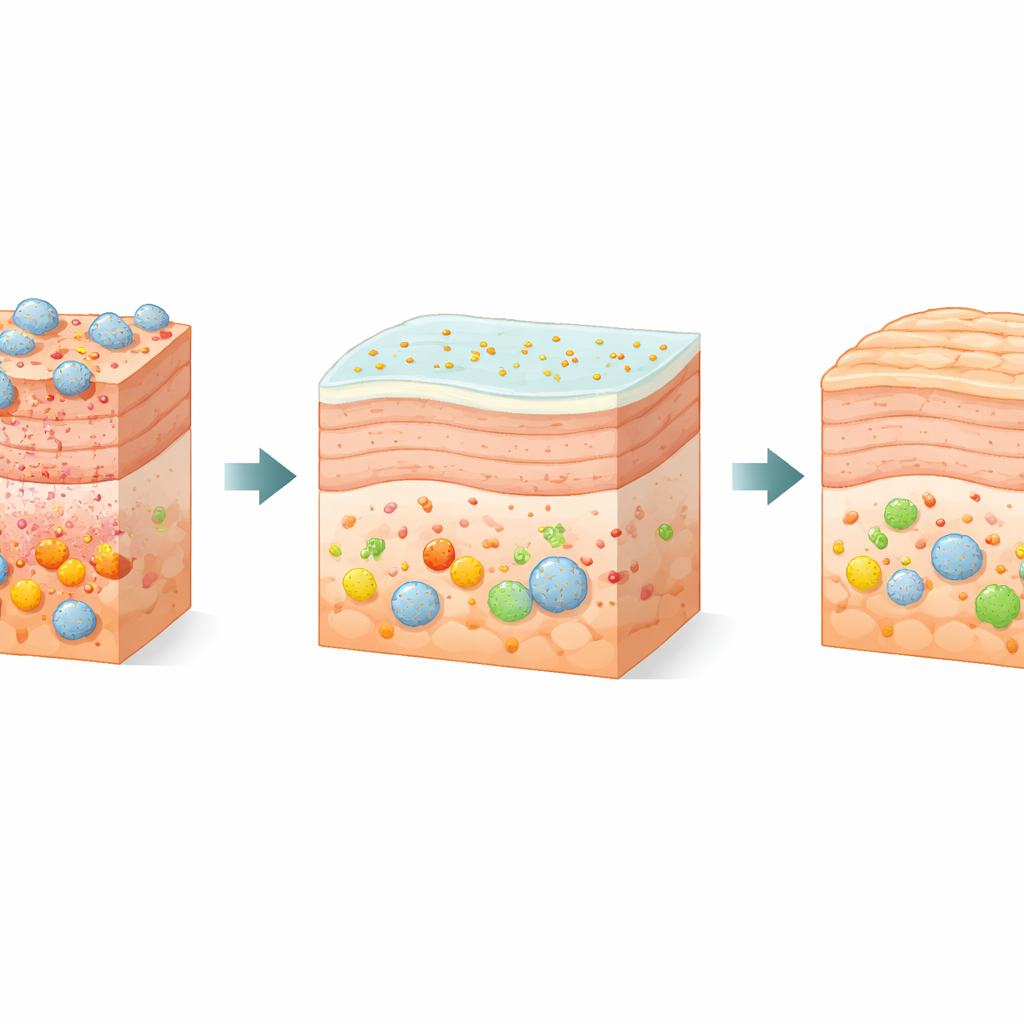
Healthy skin hosts a bustling community of microbes that help defend against invaders and support the barrier. In atopic dermatitis, this community loses diversity, and S. aureus takes over. At the same time, protective species such as Staphylococcus epidermidis decline, the barrier leaks moisture, and immune cells pour in, driving redness and itch. Conventional treatments focus mainly on dialing down the immune response, often with side effects and without fixing the underlying microbial imbalance. The authors of this paper set out to see whether reshaping the skin microbiome with a topical prebiotic, rather than adding live bacteria or killing them broadly, could break this vicious cycle.
Feeding the friendly neighbors
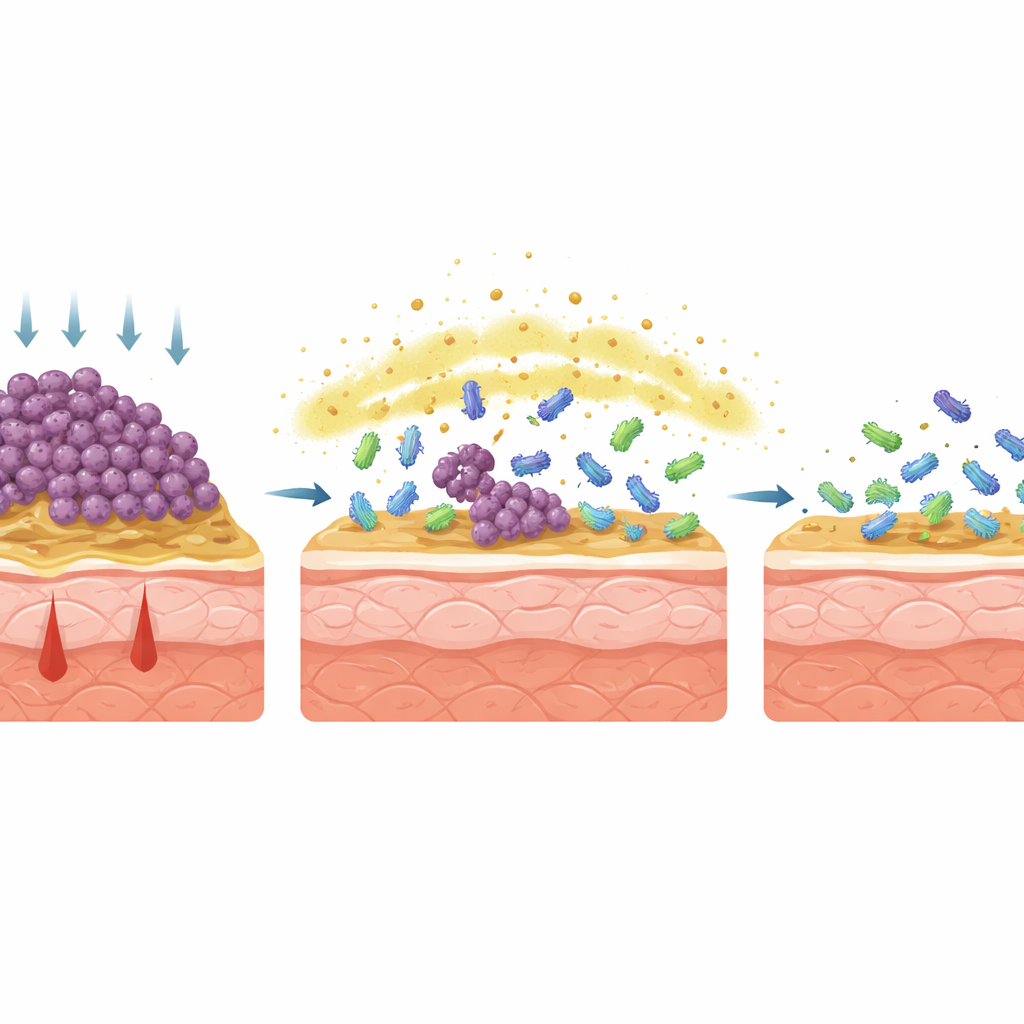
In laboratory tests, acacia gum showed a strikingly selective effect on two key skin bacteria. In simple liquid cultures, it slowed the growth of S. aureus while boosting S. epidermidis. When both species were grown together, S. aureus normally crowded out its neighbor, but adding acacia gum flipped the balance so that S. epidermidis became dominant. The gum did not kill bacteria by punching holes in their membranes; instead, it seemed to act as a nutrient that fueled the friendly species and encouraged them to produce proteins and small molecules that held S. aureus in check. One such protein, a digestive enzyme called a glutamyl endopeptidase, was produced in larger amounts by S. epidermidis exposed to acacia gum and was able to restrain S. aureus growth on its own.
Undoing stubborn bacterial strongholds
On skin and medical devices, bacteria often hunker down in biofilms—slimy, protective communities that resist both drugs and immune attack. The researchers grew biofilms from each bacterium alone and together. Acacia gum penetrated these structures and altered who lived inside them. On its own, the gum could reduce the glue-like matrix of S. aureus biofilms while still allowing S. epidermidis to thrive. In mixed biofilms, adding acacia gum repeatedly shifted the community toward the beneficial species, even when S. aureus had formed the first layer. Over time, S. epidermidis became better able to colonize and displace S. aureus, suggesting that the gum helps friendly bacteria reclaim territory on the skin surface.
Calming inflamed skin cells and immune defenders
The team then turned to human skin cells and immune cells grown in dishes. They stimulated keratinocytes (the main cells of the outer skin) and macrophages (front-line immune cells) with inflammatory triggers that mimic atopic dermatitis and psoriasis. Acacia gum, at concentrations that were not toxic to cells, reduced the production of several signaling molecules that drive itch, redness, and barrier breakdown. It also helped restore levels of filaggrin, a structural protein that keeps the outer skin layer tightly sealed. In macrophages that had swallowed antibiotic-resistant S. aureus, acacia gum reduced the number of surviving bacteria, hinting that it may help the body clear hidden reservoirs of infection that normally evade treatment.
Evidence from an eczema-like mouse model
To test these ideas in living skin, the authors used mice with chemically induced, eczema-like lesions. These animals developed red, scaly skin, a leaky barrier, and heavy S. aureus colonization—features that mimic human atopic dermatitis. When a 5% acacia gum solution was applied daily, the S. aureus burden dropped by about a thousand-fold, the skin barrier partly recovered, and the tissues showed less thickening and fewer invading immune cells. Key inflammatory molecules associated with the allergic “Th2” response were lowered toward normal levels. Separate safety tests on healthy mouse skin found no obvious irritation or damage, supporting the notion that this plant fiber can be used topically at relatively high concentrations.
What this means for people with eczema
This work suggests that a simple plant-derived fiber can act on several fronts at once: it nudges the skin’s microbial community away from a harmful imbalance, weakens the protective fortresses of a major pathogen, helps immune cells clear hidden bacteria, and softens the overactive inflammatory response. Rather than wiping out microbes indiscriminately, acacia gum seems to favor helpful residents that, in turn, keep troublemakers like S. aureus under control. While human trials are still needed, topical acacia gum emerges here as a promising, non-drug strategy that could complement existing treatments and help people with atopic dermatitis rebuild a calmer, more resilient skin ecosystem.
Citation: Fang, JY., Lin, CF., Chang, YT. et al. Topical acacia gum reshapes staphylococcal dysbiosis and inflammation in atopic dermatitis. npj Biofilms Microbiomes 12, 90 (2026). https://doi.org/10.1038/s41522-026-00953-5
Keywords: atopic dermatitis, skin microbiome, acacia gum, Staphylococcus aureus, prebiotic therapy