Clear Sky Science · en
Soil acidification dismantles a citrulline-mediated microbe-metabolite-host defense axis in watermelon, exacerbating Fusarium wilt
Why Sick Watermelons Matter
Many farmers around the world are seeing once-reliable crops suddenly struggle in the same fields where they once thrived. Watermelons are no exception: a soil-borne disease called Fusarium wilt can wipe out entire plantings. This study shows that a quiet change beneath our feet—soil becoming more acidic—can weaken the invisible microbial allies living inside roots and dismantle a natural line of defense. Understanding this hidden partnership points toward new, microbiome-based ways to protect crops without relying solely on chemicals.
When Soil Turns Sour
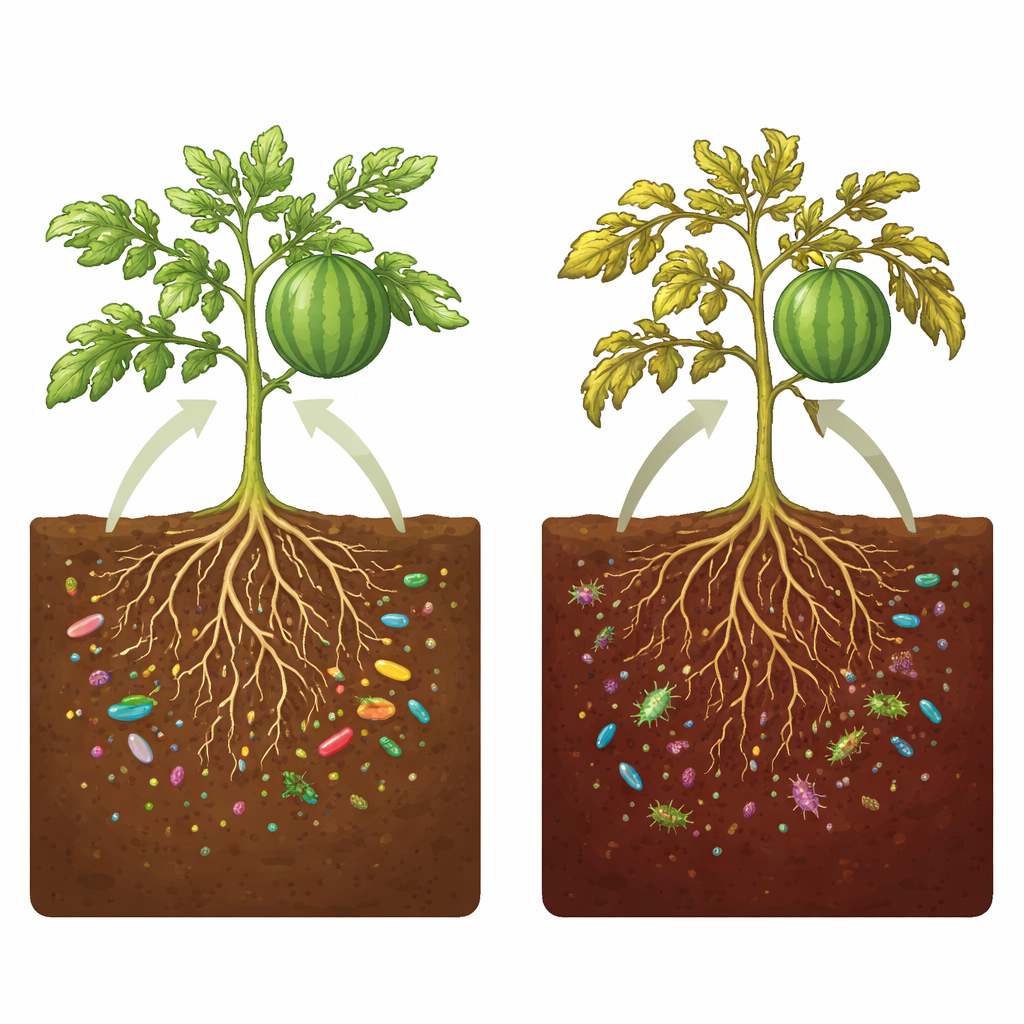
Modern agriculture and industrial emissions are steadily acidifying many soils. The researchers surveyed 21 watermelon-growing regions across eastern China and compared plant health with basic soil properties. One factor overshadowed all others: pH, a measure of acidity. In more neutral soils, plants were larger and Fusarium wilt was rare. As soils became more acidic, plants shrank and disease incidence soared. Interestingly, the overall diversity of bacteria living inside watermelon roots actually increased with acidity—but this did not translate into healthier plants. Instead, the community of root-dwelling microbes shifted in a way that favored disease.
The Vanishing Helpful Bacteria
To understand which microbes mattered most, the team sequenced bacterial DNA from surface-sterilized roots, focusing on the community living inside plant tissues. They found that a family of bacteria called Pseudomonadaceae, and especially one Pseudomonas type (later identified as Pseudomonas putida strain ZW98), was strongly associated with healthy plants in neutral soils. Statistical models showed that the abundance of this single bacterial type was one of the best predictors of both low disease and high plant biomass. As soil became more acidic, these key Pseudomonas dwindled, even though many other bacteria became more common. In other words, soil acidification did not simply kill microbes; it selectively eroded a “keystone” defender.
A Protective Molecule Called Citrulline
The scientists isolated 187 bacterial strains from watermelon roots and focused on P. putida ZW98, which genetically matched the keystone Pseudomonas type from the field survey. In greenhouse tests, adding this strain to sterile soil boosted watermelon growth and cut Fusarium wilt symptoms by more than half, even in acidic conditions. Curiously, the bacterium did not directly kill the pathogen on culture plates, so the team turned to metabolite profiling. In roots colonized by ZW98, they discovered a sharp increase in citrulline, a small nitrogen-rich molecule. Among several related compounds tested, only citrulline, when supplied to the soil, mimicked the protective effect and reduced disease without lowering the pathogen’s abundance—hinting that it strengthens the plant rather than attacking the fungus.
How the Defense Line Breaks
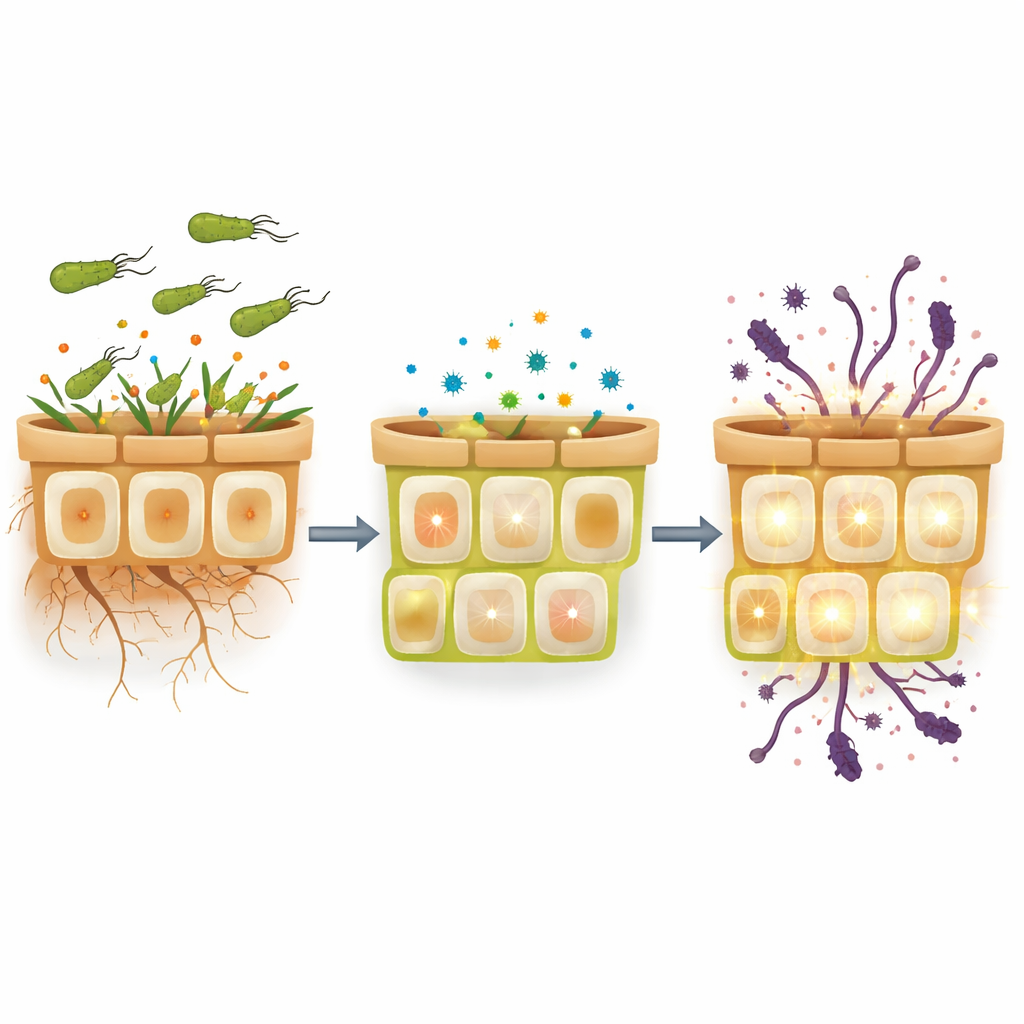
To reveal how this molecule works, the researchers created a mutant of ZW98 that could no longer make citrulline. This mutant colonized roots poorly and failed to protect plants from Fusarium wilt, whereas a repaired version regained both abilities. Adding extra citrulline restored colonization and protection even for the mutant strain, showing that citrulline acts as a signal that both helps beneficial bacteria settle in and tunes plant responses. Gene-expression analyses and staining of root tissues showed that Fusarium infection normally triggers a burst of reactive oxygen species—highly reactive molecules that can help defend against some pathogens but, in excess, cause cell death that necrotrophic pathogens exploit. ZW98 and citrulline dampened this oxidative burst and reduced cell death, depriving the fungus of the damaged tissue it needs to thrive.
What This Means for Future Harvests
Viewed simply, the study reveals a three-way partnership: the soil environment shapes which microbes can live inside roots; certain keystone bacteria produce citrulline; and citrulline helps those microbes colonize the plant while preventing an overaggressive stress response that would otherwise favor the pathogen. When soil becomes too acidic, these helpful Pseudomonas decline, citrulline levels drop, and the plant’s finely tuned defense system collapses into damaging overreaction. For farmers and researchers, this work suggests that managing soil pH, preserving beneficial root microbes, and even supplying targeted metabolites like citrulline could form new, sustainable strategies to keep crops healthy in a changing world.
Citation: Zhang, Z., Yu, L., Wu, C. et al. Soil acidification dismantles a citrulline-mediated microbe-metabolite-host defense axis in watermelon, exacerbating Fusarium wilt. npj Biofilms Microbiomes 12, 82 (2026). https://doi.org/10.1038/s41522-026-00951-7
Keywords: soil acidification, root microbiome, Fusarium wilt, watermelon disease, citrulline