Clear Sky Science · en
Maternal gut microbial legacy shapes intestinal health and susceptibility of offspring to colitis
How a Mother’s Gut Affects Her Child’s Future Health
When a woman has chronic bowel inflammation during pregnancy, it does more than cause discomfort—it may quietly shape her child’s digestive health for life. This study in mice shows that changes in a mother’s gut bacteria during pregnancy can leave a biological “memory” in her offspring’s intestines, making them more likely to develop colitis, a severe form of gut inflammation. Just as important, the research suggests that gentle, early-life tweaks to a baby’s gut microbes can help erase much of this risky legacy.
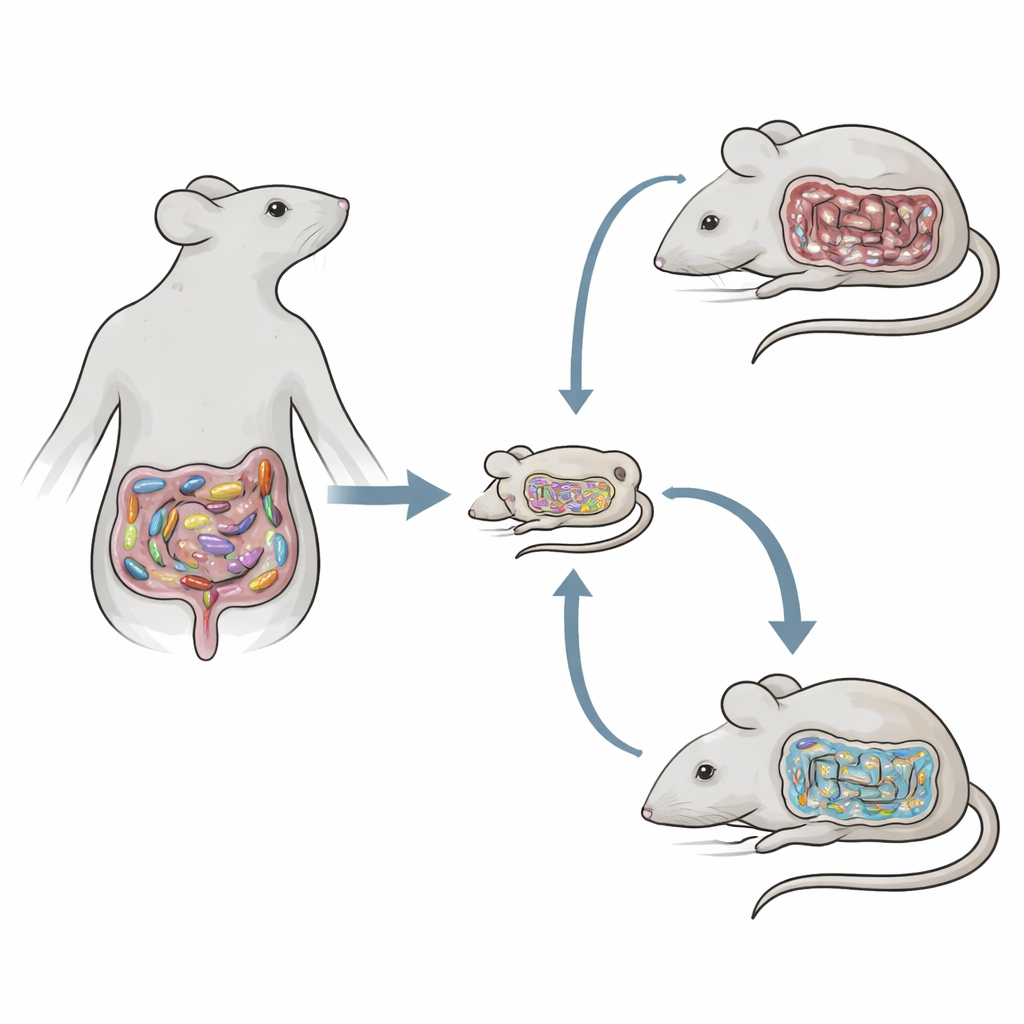
What Happens in the Mother’s Gut
The researchers began by triggering colitis in pregnant mice using a chemical that irritates the bowel. This caused a disturbance in the mothers’ gut microbes—some helpful bacteria were lost and others overgrew. Although the mothers’ own gut communities gradually recovered after delivery, their temporary imbalance during pregnancy had lasting consequences for their pups. The offspring of colitis-affected mothers were smaller around three weeks of age and, more importantly, their intestinal barrier—the thin cellular lining that keeps bacteria and toxins out of the body—became unusually leaky and inflamed.
Early Damage Inside the Offspring’s Intestine
Looking closely at the young mice, the team found that key building blocks of the gut barrier, called tight junctions, were weakened. Tiny gaps between intestinal cells allowed more material to seep through, and chemical markers in the blood and stool revealed simmering inflammation, even when the tissue looked mostly normal under a microscope. At the same time, the population of Lactobacillus—a group of friendly bacteria often found in yogurt and healthy infant guts—was sharply reduced. These bacteria help fuel the renewal of the intestinal lining, so their loss meant fewer active stem cells in the gut, weaker repair signals, and a reduced ability of intestinal “mini-organs” grown in the lab to form and thrive.
Long-Term Risk and the Power of Timing
The researchers then asked whether these early changes would matter later in life. When the offspring reached adulthood, all mice were challenged with the same bowel-irritating chemical. Those whose mothers had experienced colitis fared much worse: they lost more weight, had shorter, more damaged colons, and showed stronger inflammatory responses and deeper disruption of their gut microbes. Their microbial communities shifted toward more harmful types and struggled to bounce back after injury, while protective Lactobacillus remained scarce. These findings suggest that a disturbed prenatal and early-life environment can “pre-program” the intestine to be more fragile and reactive years later.
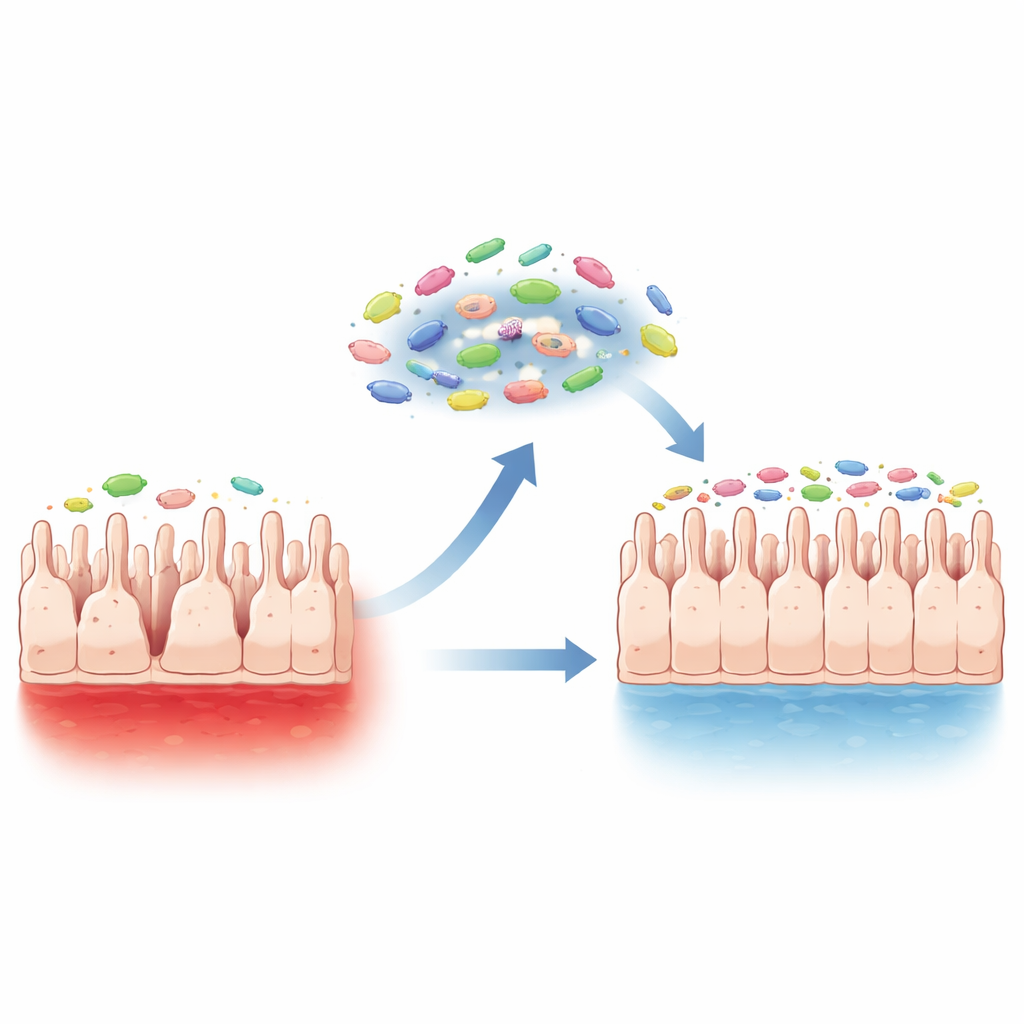
Rewriting the Microbial Legacy
The encouraging part of the study is that this legacy was not fixed. When pups born to colitis-affected mothers received weekly transfers of gut bacteria from healthy adult mice starting in their first week of life, many problems improved. Their growth caught up, their gut barriers tightened, inflammation markers dropped, and stem cell activity in the intestine rebounded. Later, as adults, these treated mice were far more resilient to colitis. A simpler approach—giving the young mice a single Lactobacillus strain—produced similar benefits, implying that restoring certain key microbes can be enough to reset intestinal development.
Why These Findings Matter for Families
In plain terms, this work suggests that when a mother’s gut is inflamed during pregnancy, her baby may inherit a more fragile intestine and a higher chance of bowel disease—but that the earliest weeks after birth offer a window to change course. Adjusting the newborn’s gut microbes, whether through targeted beneficial bacteria, carefully designed microbial mixtures, or even indirect exposure via a healthy caregiver, can strengthen the gut barrier and calm the immune system in lasting ways. While these experiments were done in mice, they point toward future strategies to protect children of parents with inflammatory bowel disease by supporting healthy microbial colonization right from the start of life.
Citation: Lee, JM., Kim, MJ., Lee, H. et al. Maternal gut microbial legacy shapes intestinal health and susceptibility of offspring to colitis. npj Biofilms Microbiomes 12, 71 (2026). https://doi.org/10.1038/s41522-026-00938-4
Keywords: maternal gut microbiome, inflammatory bowel disease, early-life microbiota, Lactobacillus, colitis risk