Clear Sky Science · en
Social isolation of aged mice drives dramatic release of inflammatory lipoxygenase-derived oxylipins
Why lonely mice matter for human aging
Many older people spend long stretches of time alone, and this social isolation has been linked to poorer health, frailty, and memory problems. In this study, scientists used aging mice to explore what happens inside the body when social contact is repeatedly taken away. They focused on tiny fat-like messenger molecules that help control inflammation, aiming to see whether isolation quietly reshapes the chemistry of aging organs in ways that may speed up decline.
Setting up a model of late life loneliness
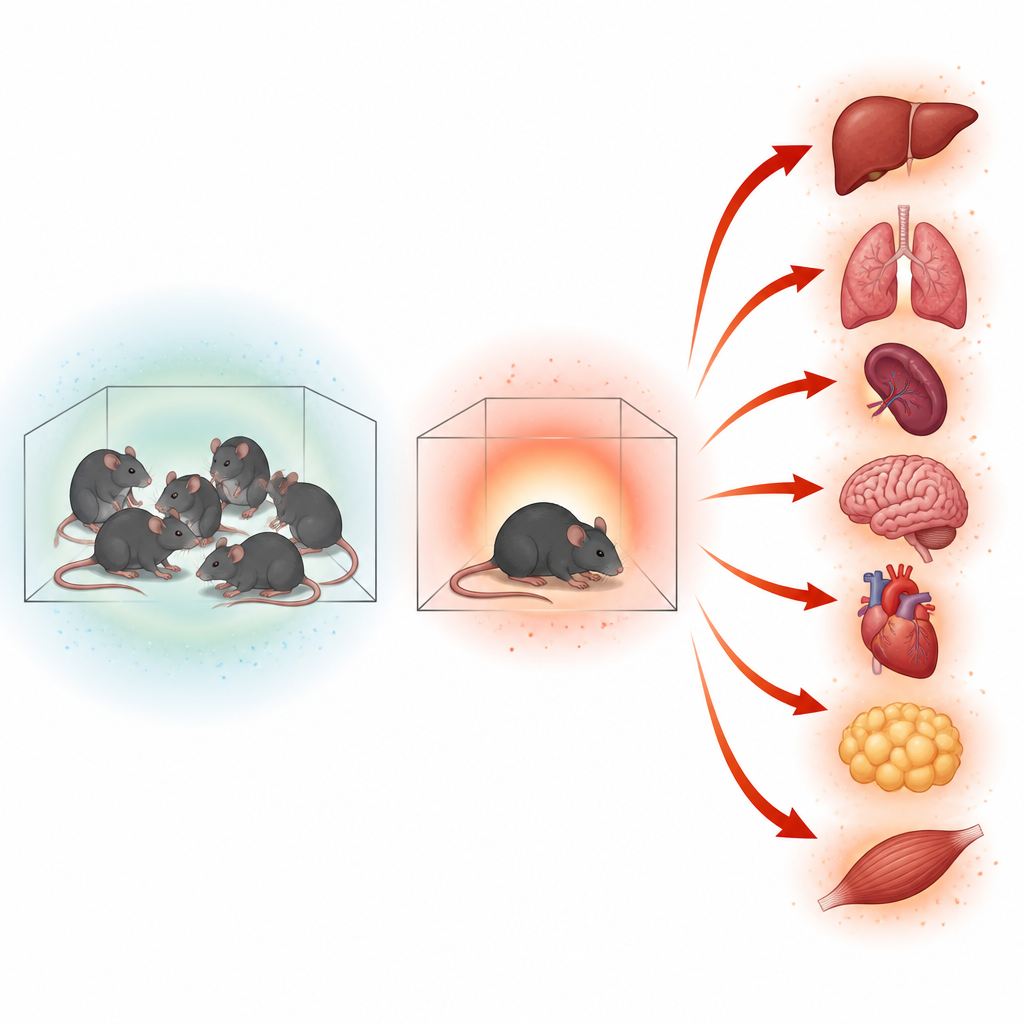
The researchers worked with adult and old male mice that normally lived together in groups. To mimic bouts of isolation in later life, they took 18 month old mice, roughly equivalent to elderly humans, and moved them into single cages for three separate nights each week over eight weeks, returning them to their littermates in between. Some of these isolated mice also had access to a running wheel during their nights alone, allowing the team to test whether voluntary exercise could offset any harmful effects. At the end, the scientists examined seven organs and blood, and tested memory and learning using a maze.
Inflammation rises across many organs
To track inflammation, the team measured well known protein messengers such as interleukin 1 beta alongside a large panel of oxylipins, a family of signaling fats made from omega 3 and omega 6 fatty acids. Aging on its own produced a mixed, organ specific pattern: in some tissues these markers went up, in others they went down. Once recurrent isolation was added, however, nearly all organs showed a clear jump in interleukin 1 beta and related inflammatory proteins. This broad shift suggested that repeated separation from cage mates reliably pushes older bodies toward a more inflamed state, even without changes in body weight.
Tiny fat messengers surge in specific tissues
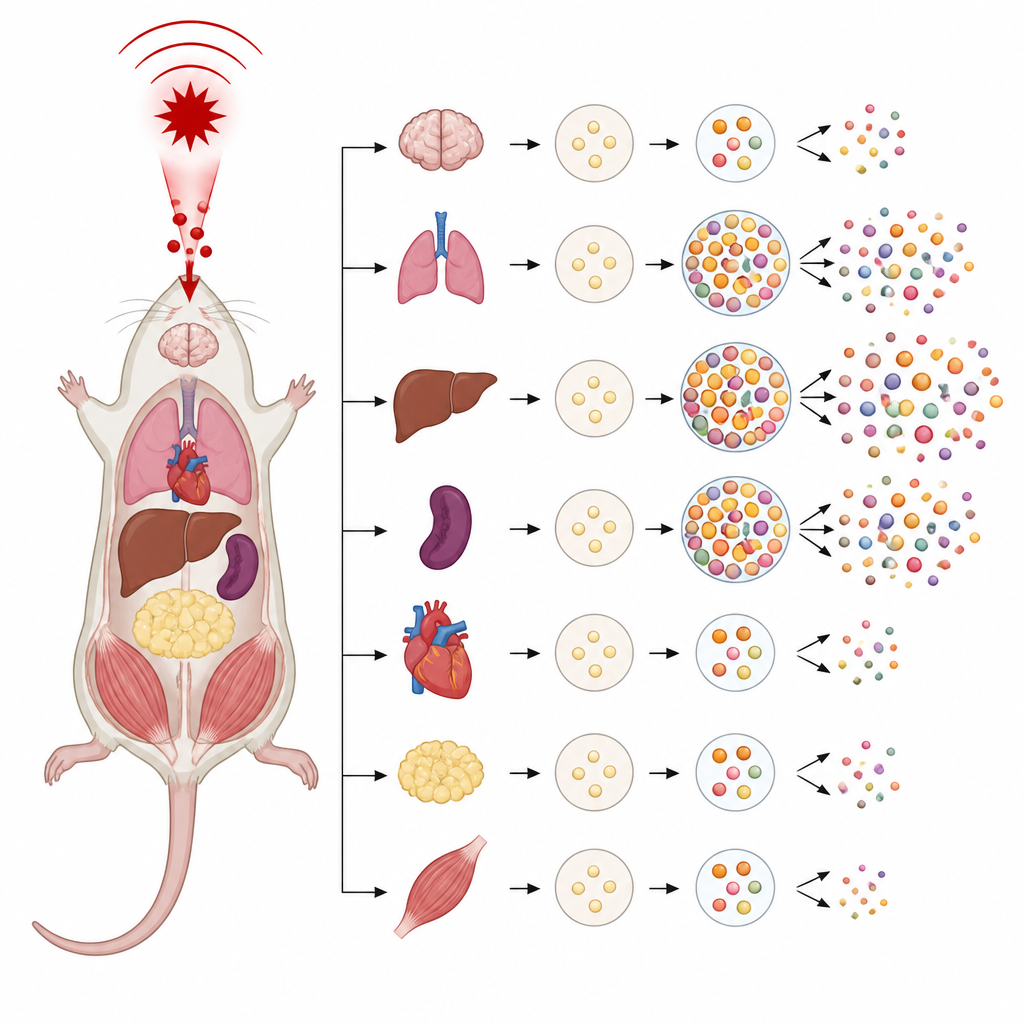
The most striking finding came from the oxylipin measurements. In organs such as the liver, lung, and spleen, isolation triggered a dramatic surge in oxylipins made by enzymes called lipoxygenases. These molecules included both pro inflammatory compounds and ones usually linked to calming and resolving inflammation, indicating that the whole system was being driven harder. Other oxylipin making enzymes, which use the same raw materials, changed little by comparison. The heart and, to a lesser extent, the brain were more resistant, showing only modest shifts. Curiously, these large organ changes were not mirrored in the blood, where oxylipin levels stayed relatively stable, meaning a simple blood test would miss much of this hidden turmoil.
Exercise offers only limited help
Regular physical activity is often recommended to support healthy aging and tame chronic inflammation. In this experiment, though, allowing isolated old mice to run freely in a wheel during their nights alone had only small effects on the chemical storm stirred up by isolation. In most organs, levels of inflammatory proteins and oxylipins looked much the same whether mice ran or not, with only subtle shifts in certain fat stores and in the liver. Memory and learning tests told a similar story: exercise did not improve how well mice remembered the maze, although it slightly helped them adapt when the goal location was moved, hinting at a modest gain in mental flexibility rather than a broad cognitive boost.
What this means for aging and social health
Taken together, the findings suggest that repeated bouts of social isolation in late life act as a potent stress that quietly reshapes the chemistry of key organs, strongly boosting the production of lipoxygenase derived oxylipins and inflammatory proteins. These changes occur locally in tissues rather than showing up clearly in the bloodstream, and they are not easily reversed by late life voluntary exercise alone. For a layperson, the message is that loneliness in old age may inflame the body from the inside in subtle but far reaching ways, and that preserving social connections could be just as important for healthy aging as staying active.
Citation: Wichmann-Costaganna, M., Petit, R., Lindner, J. et al. Social isolation of aged mice drives dramatic release of inflammatory lipoxygenase-derived oxylipins. npj Aging 12, 67 (2026). https://doi.org/10.1038/s41514-026-00405-6
Keywords: social isolation, aging, inflammation, oxylipins, exercise