Clear Sky Science · en
An in-depth analysis of the molecular changes induced by short-term calorie restriction before living kidney donation
Why eating less before surgery may matter
When someone donates a kidney, surgeons want the organ to be as healthy and resilient as possible. Animal studies suggest that briefly eating fewer calories before surgery can help organs better withstand the stress of lost blood flow and rewarming, a problem known as ischemia reperfusion injury. This study asked whether a week of short term calorie restriction is safe for living kidney donors and what it does inside human tissues and blood at the molecular level.
A small trial with dedicated kidney donors
Twelve adults who volunteered to donate a kidney were enrolled and alternately assigned either to continue eating as usual or to follow a formula diet that supplied about half of their individual daily energy needs for seven days before surgery. All donors were closely monitored, kept a food diary, and had blood, urine, fat around the kidney, kidney tissue, and samples from kidney blood vessels and ureter collected at specific times. While the main focus was on invisible molecular shifts, the researchers also tracked standard clinical outcomes such as kidney function after transplant and time spent in the hospital.
Weight loss without added surgical risk
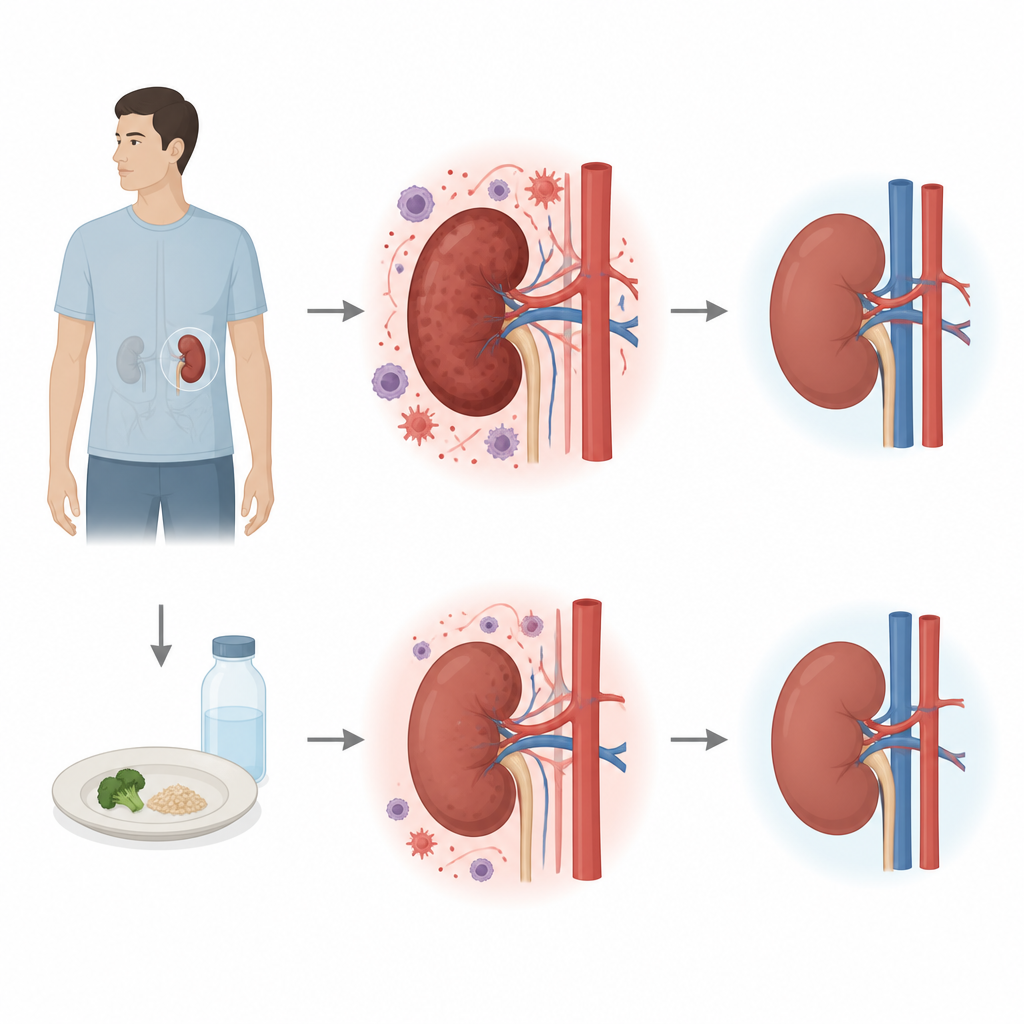
Donors who cut their calories lost on average nearly two kilograms over the week, while weight in the control group stayed essentially the same. The reduced diet was well tolerated; aside from somewhat harder stools there were no notable side effects, and no one had to stop the diet. Importantly, standard surgical measures like operation length, blood flow interruption time, early kidney function in recipients, and hospital stay were very similar between groups. This means that in this small group, a week of moderate calorie reduction before donation appeared safe and did not worsen short term transplant results.
Changes in body fat and blood signals
The scientists then looked beneath the surface with advanced chemistry tools. In fat tissue around the kidney, they found fewer storage fats made of three fatty acid chains and more intermediate breakdown products with two chains, a pattern that fits with increased fat burning. In blood serum, hundreds of proteins were measured. Although overall patterns were influenced by sex, the calorie restricted group showed signs that hormone and insulin like growth factor signaling were dialed down, while proteins linked to handling fats and certain metals were altered. Some of these shifts echoed earlier findings from mice on reduced calorie diets, hinting that similar protective programs are triggered in humans.
Kidney tissue and local inflammation respond
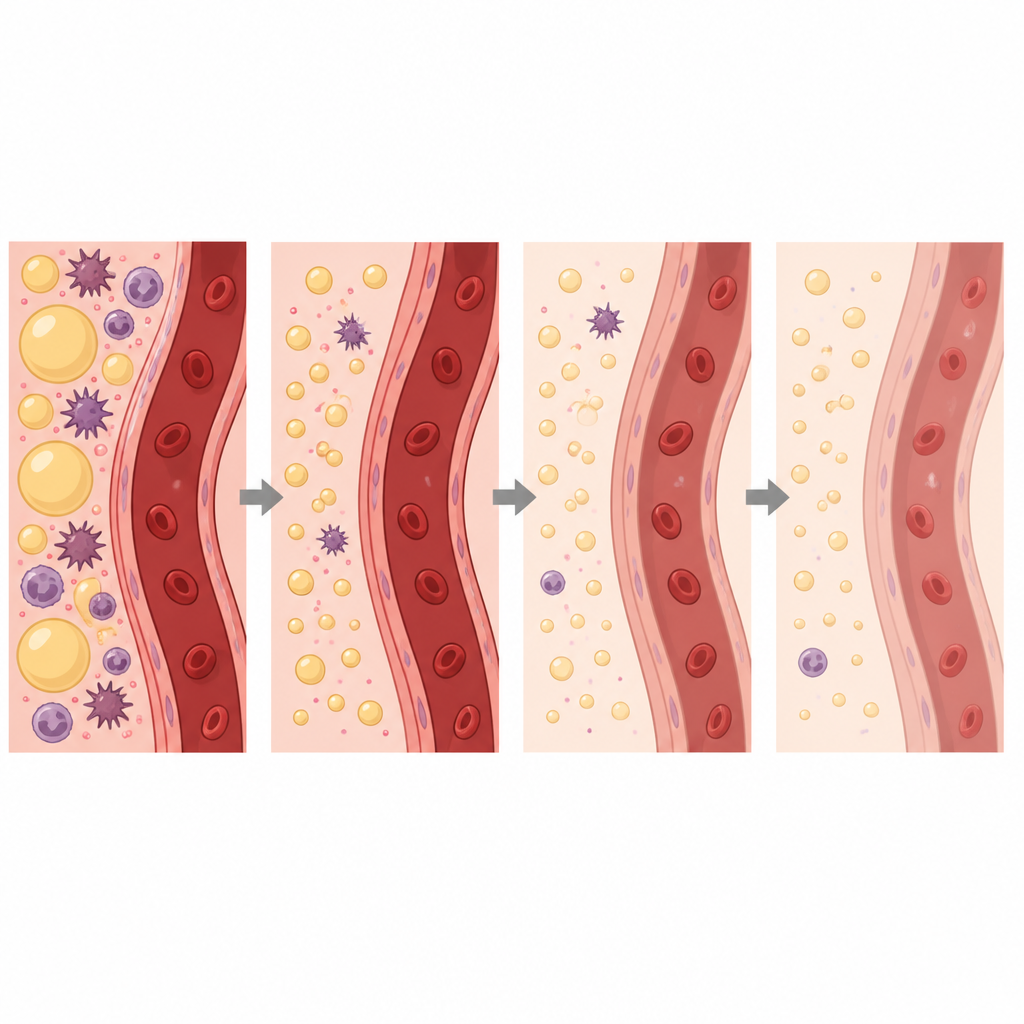
Kidney tissue itself showed clearer differences between donors who restricted calories and those who did not. Many proteins involved in energy production and small molecule processing were reduced, while others related to the cell scaffolding and control of protein quality were increased. A key protein that helps detoxify reactive oxygen by products was higher after calorie restriction, consistent with improved defense against stress. When the team measured dozens of immune signaling molecules in blood, kidney arteries, and ureter tissue, they saw lower levels of several inflammatory messengers and growth factors in donors who had eaten less, especially in the ureter. This suggests that the local environment around the kidney’s vessels becomes less inflamed after short term calorie reduction.
What this could mean for future transplants
To a lay reader, the takeaway is that a carefully supervised week of eating about half the usual calories before living kidney donation looks safe and sets off a cascade of internal changes: more fat burning, quieter insulin related signals, and dampened local inflammation. While this small pilot study was not designed to prove better transplant outcomes, its molecular clues match protective patterns seen in animals and suggest that brief dietary changes or future drugs mimicking them could help organs cope with surgical stress. Larger trials will be needed to learn whether these changes translate into clearly better kidney function for transplant recipients and whether similar strategies might one day protect other organs as people age.
Citation: Späth, M.R., Arjune, S., Bohl, K. et al. An in-depth analysis of the molecular changes induced by short-term calorie restriction before living kidney donation. npj Aging 12, 70 (2026). https://doi.org/10.1038/s41514-026-00401-w
Keywords: calorie restriction, kidney donation, ischemia reperfusion, inflammation, aging