Clear Sky Science · en
Cohort profile Davos Alzheimer’s Collaborative DAC Egypt Cohort
Why this study matters for everyday life
As people live longer around the world, many families worry about memory loss and dementia, yet most research has focused on older adults in Western countries. This article introduces the Davos Alzheimer’s Collaborative Egypt Cohort, a large, ongoing study that follows more than 1,500 older Egyptians to understand how health, lifestyle, and environment shape brain aging. By looking closely at a population with very different life experiences, education levels, and medical risks than those in Europe and North America, the study aims to reveal new clues for preventing Alzheimer’s disease and protecting memory in later life.
Who is being followed and why Egypt is unique
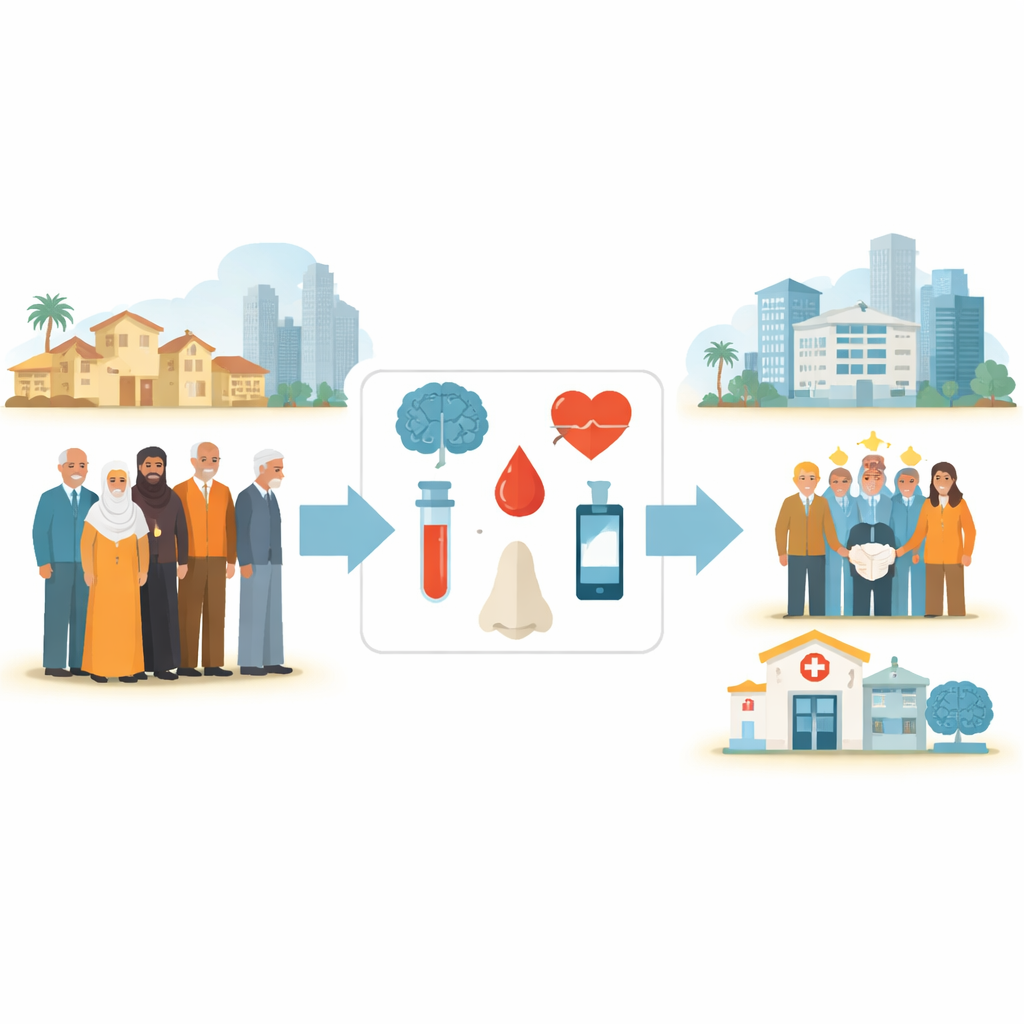
The study tracks 1,530 adults aged 55 to 98 from across eight Egyptian governorates, with a deliberate focus on people living in rural villages. This mirrors the country’s reality, where many older adults live outside big cities and in multigenerational homes. More than half of participants cannot read or write, and only a small fraction completed college, making this cohort very different from typical research samples. Egypt also faces what the authors call a "triple burden" of risk: widespread diabetes and high blood pressure, exposure to environmental hazards such as air pollution and agricultural chemicals, and deep socioeconomic inequalities. Together, these conditions create a powerful natural laboratory for studying how everyday hardships influence brain health.
Family life, health problems, and daily habits
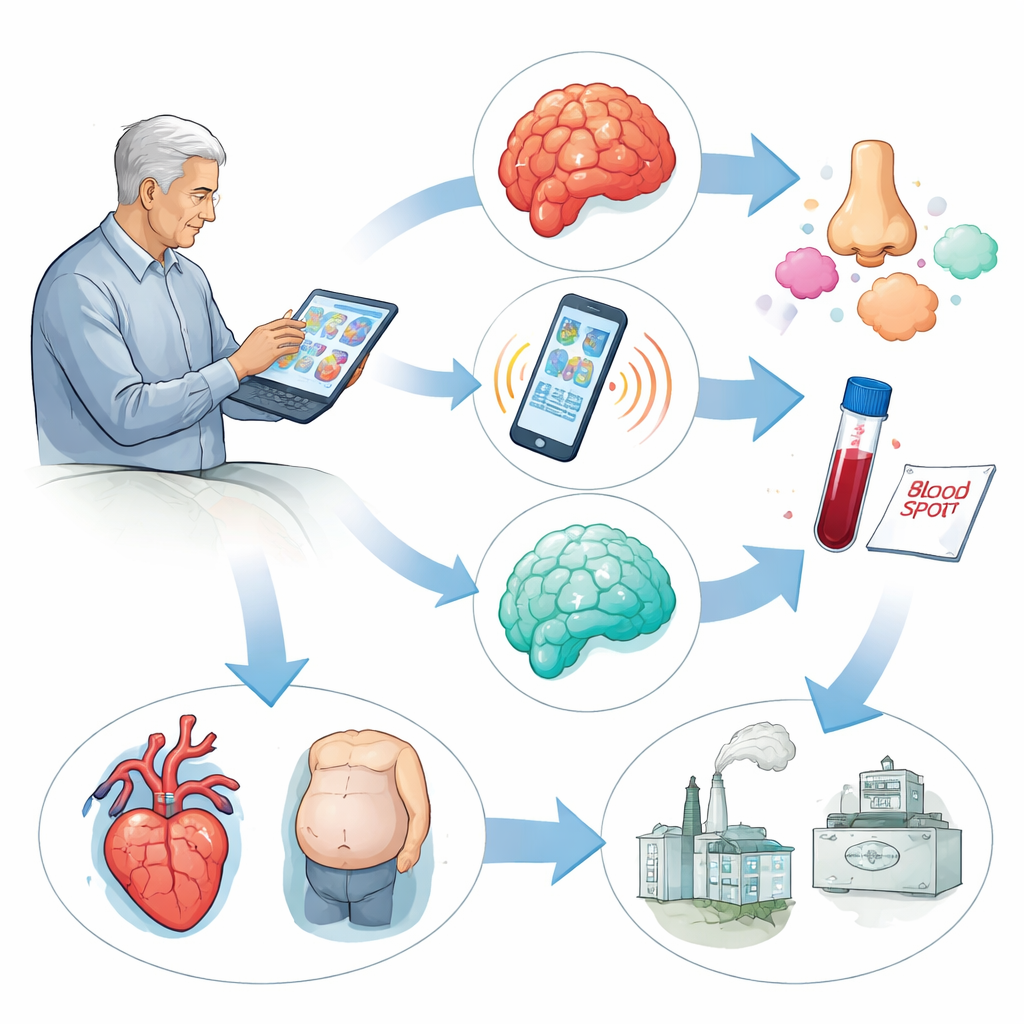
The researchers found that nearly 90 percent of participants live with close family members, most often spouses and children, confirming that care for older adults in Egypt happens mainly inside the home. At the same time, the burden of chronic illness is heavy: about seven in ten participants report at least one long-term health condition, almost half have high blood pressure, and nearly one in three has diabetes. Excess body weight is common, particularly among women, many of whom are overweight or obese and have few opportunities for regular physical activity. Smoking is widespread among men but rare among women, reflecting local customs. These overlapping health issues—especially heart and metabolic problems—are well-known risks for future memory decline and dementia, suggesting that many participants face multiple threats to brain health at once.
How thinking skills and new digital tests are measured
To capture a clear picture of memory and thinking, the team uses a specially adapted set of tests designed for the Egyptian context. Because more than half the participants never went to school, the researchers rely on tasks that do not require reading, writing, or math and compare people only with peers who have similar education levels. They also interview someone who knows each participant well to detect real-life problems with daily tasks, which helps distinguish normal aging from dementia. A striking feature of the project is its use of digital tools: a smartphone app that records short speech exercises and another that tests the sense of smell using a scent kit. Despite low education levels, more than three-quarters completed the speech app and over half used the smell test, showing that with support, older adults can engage with technology-based health checks.
Early patterns and what they reveal about inequality
Initial results show that people with more years of schooling perform better on memory and thinking tasks, supporting the idea that education builds a "reserve" that helps the brain cope with aging. At first glance, city dwellers also seem to score higher than rural residents, but this gap largely disappears once education is taken into account. In other words, schooling and economic opportunity, rather than place of residence alone, drive many of the differences in brain health. Men tend to do better on number-based tasks, while women often match or slightly outperform men on verbal memory when they have similar education, hinting at the influence of gender roles over a lifetime. These patterns suggest that improving access to quality education and lifelong learning could be as important for brain health as treating medical conditions.
What this means for the future of brain health
Beyond describing today’s older Egyptians, the cohort is designed to follow participants over many years, combining cognitive tests, digital speech and smell measures, and blood samples that can later be used to study genes, inflammation, and other biological markers. Because the methods match similar aging studies in other regions, researchers will be able to compare how risk factors play out in Egypt versus Europe, Asia, and the Americas. The authors argue that their findings should reshape public health planning: controlling high blood pressure and diabetes, strengthening rural clinics, and supporting family caregivers could all help delay or reduce dementia. In simple terms, this study shows that memory loss is not an inevitable part of getting older; it is strongly tied to treatable health problems and lifelong social disadvantages, and understanding these links in diverse populations is essential for finding fair and effective solutions.
Citation: Moustafa, S.A., Mowafi, S., Fawi, G. et al. Cohort profile Davos Alzheimer’s Collaborative DAC Egypt Cohort. npj Aging 12, 58 (2026). https://doi.org/10.1038/s41514-026-00378-6
Keywords: Alzheimer’s disease, cognitive aging, Egypt, dementia risk factors, digital health tools