Clear Sky Science · en
Mitorubin, berberrubine-based compounds that improve mitochondrial function, exhibit cardioprotective effects against age-related cardiac dysfunction
Why Keeping Tiny Power Plants Young Matters
As we age, the heart—our body’s tireless pump—gradually loses strength. A big part of this slowdown comes from wear and tear on mitochondria, the microscopic “power plants” inside heart cells. This study describes a new family of compounds, nicknamed Mitorubin, derived from a traditional herbal ingredient. These compounds appear to refresh tired mitochondria, protect the aging heart, and even extend life in mice under metabolic stress, offering a glimpse of future treatments for age-related diseases.
From Traditional Roots to Modern Chemistry
The story begins with plants long used in East Asian medicine, particularly Coptis japonica and Phellodendron amurense. When researchers tested many herbal extracts and bioactive molecules on human skin cells, extracts from these plants strongly boosted levels of a protein called MITOL, which helps oversee mitochondrial shape and quality. Surprisingly, the well-known plant compound berberine itself did not have this effect. Instead, its major breakdown product in the body, berberrubine, turned out to be the key. Berberrubine increased MITOL and other mitochondrial proteins across several tissues in mice, flagging it as a promising starting point for a mitochondria-targeted therapy. 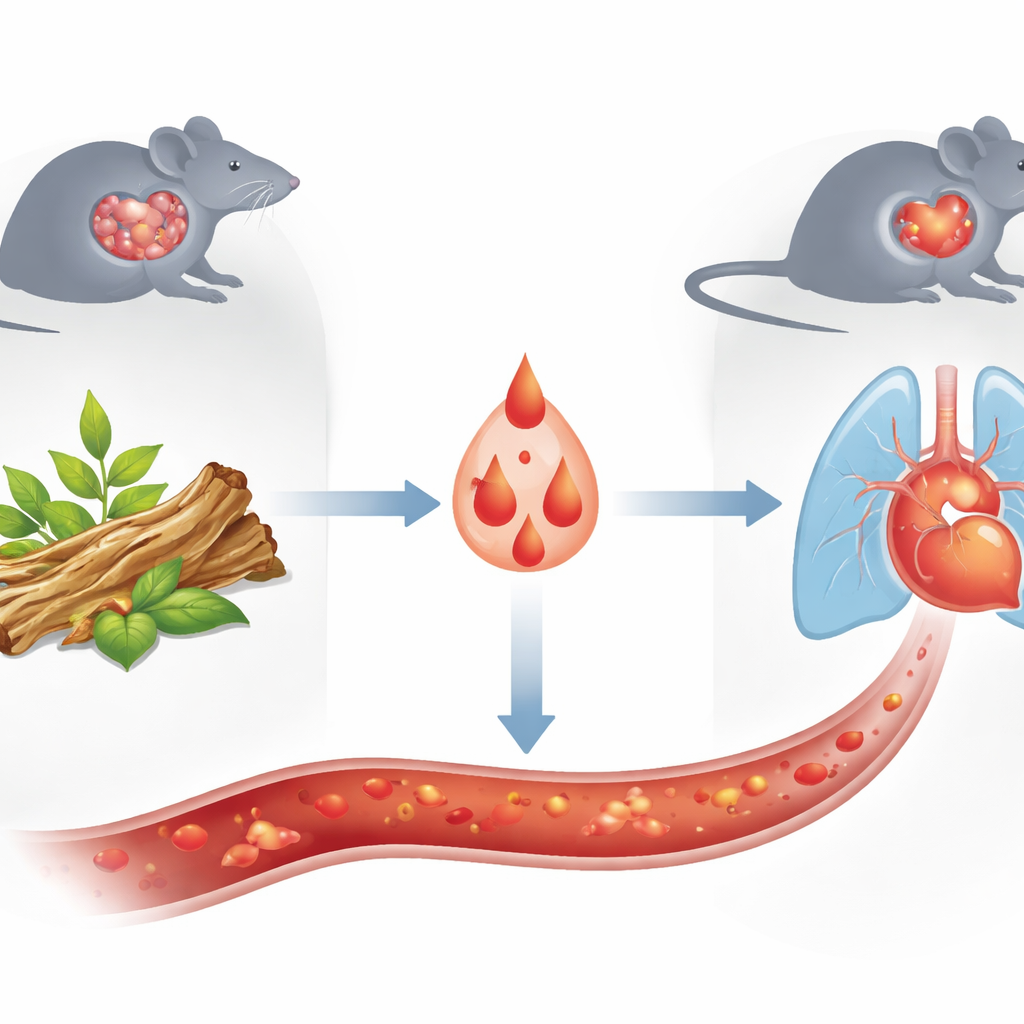
Making an Insoluble Molecule Drinkable
There was a major practical hurdle: berberrubine barely dissolves in water, making it ill-suited for oral treatment. The team tackled this with careful chemistry, reacting berberrubine with acetic acid (a simple organic acid) to create new solid forms. One form, called the berberrubine acetic acid adduct, was exceptionally water-soluble—about a gram per milliliter—while maintaining the same active core structure. Laboratory tests showed that this soluble form and the original “quinoid” berberrubine behaved similarly in cell systems and in mouse metabolism. Together with related derivatives, these berberrubine-based compounds were grouped under a single name: Mitorubin, a candidate class of drugs aimed at reviving mitochondrial function.
How Mitorubin Recharges Cells
In cultured muscle and heart-like cells, Mitorubin did more than just raise MITOL levels. It boosted the number of mitochondria, increased mitochondrial DNA, and raised levels of many mitochondrial proteins involved in energy production. Under the microscope, mitochondria in treated cells shifted from short, fragmented shapes to longer, more networked forms, a pattern often associated with healthier function. When researchers measured oxygen consumption, a direct indicator of mitochondrial activity, cells exposed to Mitorubin showed higher baseline respiration, greater ATP production, and greater maximum capacity. Importantly, while mitochondrial reactive oxygen species—the chemically reactive byproducts of respiration—increased modestly, the mitochondrial membrane potential remained stable and antioxidant defenses were upregulated. This pattern fits a concept called “mitohormesis,” in which mild stress provokes a beneficial strengthening of cellular defenses instead of damage. 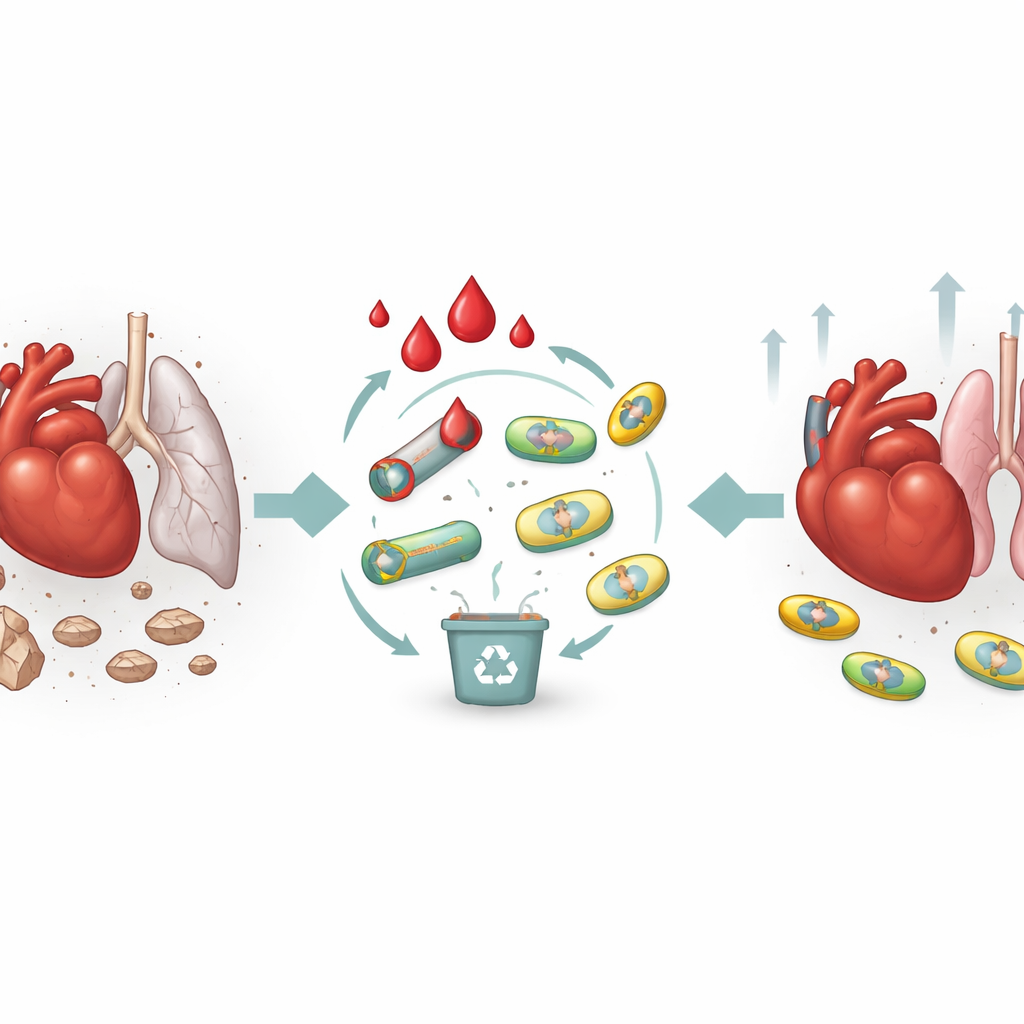
Protecting the Aging Heart and Extending Life Under Stress
To test whether these cellular benefits translate to whole animals, the team gave an oral Mitorubin solution to very old mice already showing age-related heart dysfunction. Over 12 weeks, treated mice showed better pumping function, less enlargement of the heart chambers, less thickening of the heart muscle, and reduced lung congestion—signs that the heart was working more efficiently. Heart tissue from treated animals expressed higher levels of genes tied to mitochondrial biogenesis, dynamics, and recycling, and isolated heart mitochondria consumed oxygen more effectively. In normal aged mice, long-term treatment did not shorten life, suggesting acceptable safety at the tested dose. In a separate experiment, mice fed a long-term high-fat diet—which strains the heart and metabolism—lived significantly longer when given Mitorubin in their drinking water, implying that the compound can buffer the heart against chronic metabolic stress.
What This Could Mean for Healthy Aging
Put simply, the study shows that Mitorubin, a water-soluble family of compounds built from berberrubine, can fine-tune mitochondrial function in ways that protect the aging heart and improve survival when metabolism is under heavy load. By nudging mitochondria into a more active, resilient state—rather than merely suppressing stress—Mitorubin appears to help maintain the heart’s energy supply and structural integrity over time. While these results are in mice and much remains unknown about the exact molecular target and long-term safety in humans, the work highlights mitochondria as powerful levers for slowing age-related decline and points toward new drug strategies rooted in both traditional medicine and modern biochemistry.
Citation: Sato, M., Tanabu, D., Torigoe, D. et al. Mitorubin, berberrubine-based compounds that improve mitochondrial function, exhibit cardioprotective effects against age-related cardiac dysfunction. npj Aging 12, 56 (2026). https://doi.org/10.1038/s41514-026-00366-w
Keywords: mitochondria, cardiac aging, berberrubine, mitohormesis, heart failure